
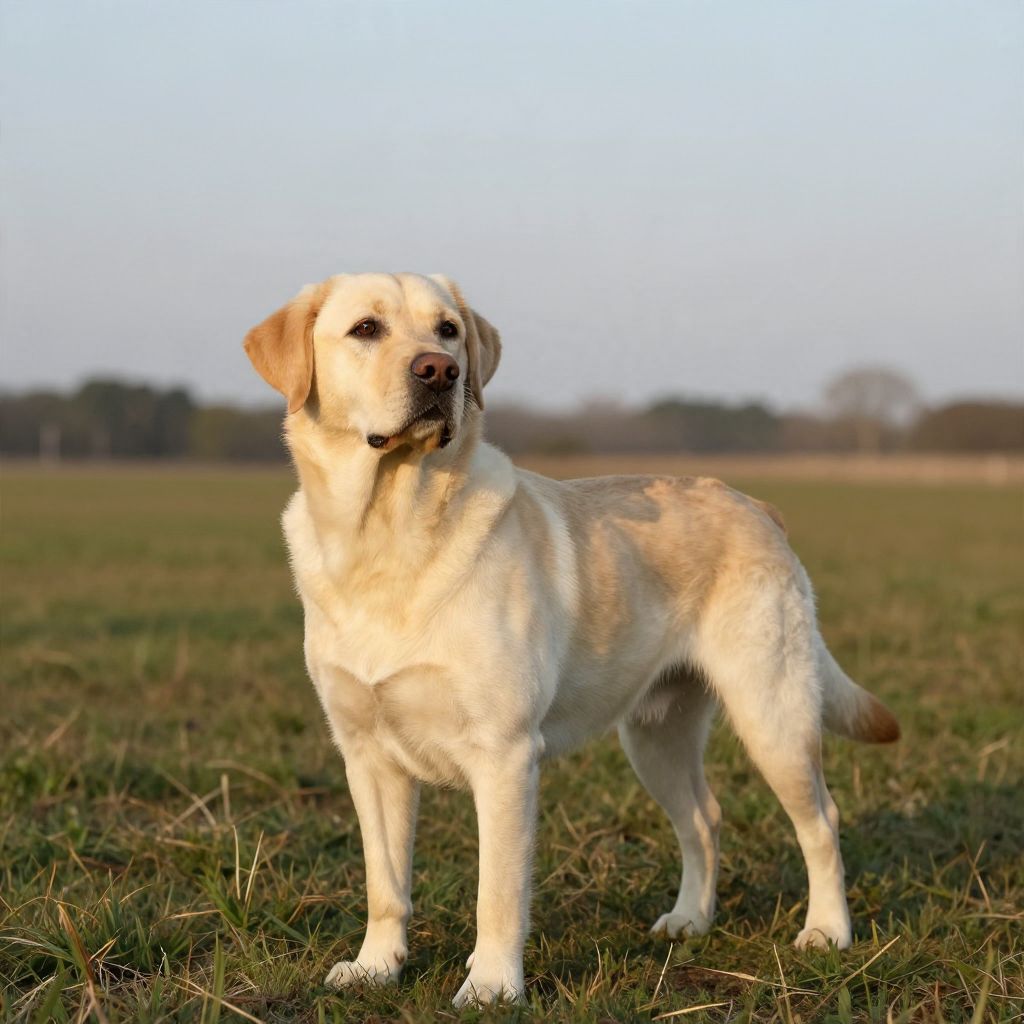
How far can dogs see? In general, dogs can see much farther than many people realize, but their vision is tuned more for motion, contrast, and low light than for fine detail. What they notice at long range depends on lighting, weather, eye health, age, and the individual dog.
That means a dog may spot a moving person or animal from a surprising distance, yet still miss details that are obvious to you. Understanding how canine vision works can help you train better, walk more safely, and notice when a change in eyesight needs veterinary attention.
How far can dogs see?
Dogs can often detect large moving objects at long distances, especially outdoors in good light, but they do not see fine detail as sharply as humans. Their distance vision varies by breed, eye structure, age, and health. In practical terms, many dogs notice motion before they recognize exactly what they are seeing.
What dogs see best at a distance
Dog vision is built for survival, not reading signs or spotting tiny details. They are usually better at noticing movement, changes in shape, and contrast than still objects far away.
Why motion stands out
A dog may react to a squirrel, cyclist, or person moving across a field long before you think they have seen anything. Motion is often easier for them to detect than a stationary object at the same distance.
Why detail is harder
Dogs generally do not see fine details as clearly as humans do. A face, a toy, or a hand signal may become more recognizable only when the dog is closer, especially if lighting is poor or the object blends into the background.
What affects how far a dog can see?
There is no single distance that applies to every dog. Several factors change how well a dog can see far away, and some of these can shift over time.
- Breed and eye shape: Some dogs have facial and eye structures that may favor wider peripheral vision or stronger focus on movement, while others may have features that affect how they see straight ahead.
- Age: Puppies are still developing vision, and senior dogs may have age-related changes that reduce clarity or contrast.
- Eye health: Cataracts, dry eye, retinal disease, glaucoma, corneal injury, and other problems can reduce distance vision.
- Lighting: Dogs often do well in dim light, but glare, darkness, fog, and shadows can still make seeing harder.
- Environment: Open spaces make it easier to detect distant movement than cluttered areas with visual distractions.
- Individual variation: Just like people, dogs differ in eyesight even within the same breed.
How dog vision compares with human vision
Dogs usually have less visual sharpness than humans, but they often excel at detecting movement and seeing in lower light. Their vision is adapted for noticing what is happening around them, rather than focusing on tiny details far away.
That is why your dog may seem to “see” a visitor, deer, or delivery person before you do, yet still fail to recognize a familiar face from far across a park. Distance alone is only part of the picture.
Signs your dog may not be seeing well
If your dog is struggling to see at a distance, you may notice behavior changes before you notice an obvious eye problem. These signs can be subtle at first.
- Bumping into furniture, walls, or doorframes
- Hesitating on stairs or in new places
- Startling easily when approached
- Having trouble finding toys, bowls, or treats
- Becoming less confident outdoors, especially at dusk or night
- Squinting, pawing at the eyes, or excessive tearing
- A cloudy, red, or unusually reflective look in one or both eyes
- Reluctance to go into dim areas or unfamiliar spaces
If these changes appear suddenly, or if your dog seems painful or disoriented, contact a veterinarian promptly.
When vision changes are urgent
Some eye problems can become emergencies. Do not wait if your dog has sudden vision loss, a very red or painful eye, a swollen eye, a visibly injured eye, or signs of severe discomfort.
Seek urgent veterinary care if you notice:
- Sudden blindness or bumping into objects all at once
- One eye that looks cloudy, enlarged, or bulging
- Marked squinting, rubbing, or keeping an eye shut
- Blood in the eye or around the eye
- Unequal pupils, especially with behavior changes
- Head tilt, circling, or other neurological signs along with vision changes
How to help your dog if vision is limited
If your dog does not see well at long range, you can still keep life safe and comfortable. Small changes at home and on walks make a big difference.
- Keep furniture and pathways consistent. Avoid frequent rearranging so your dog can learn the layout.
- Use clear verbal cues. Pair words with predictable routines so your dog can rely less on sight.
- Approach calmly and speak first. This helps prevent startling a dog who may not notice you right away.
- Use high-contrast toys. Bright or textured toys may be easier to see and track.
- Choose well-lit walking times. Good lighting can improve confidence and safety.
- Keep your dog leashed in unfamiliar areas. This reduces the risk of collisions or panic if they cannot clearly see hazards.
- Protect the eyes. Ask your veterinarian whether eye protection is appropriate for your dog’s activities.
Training tips that work with canine vision
Because dogs often notice motion before detail, training is usually easier when you make cues clear and consistent. Reward-based methods are the safest and most effective choice.
- Use large, deliberate hand signals instead of tiny gestures.
- Stand where your dog can see you clearly, with good contrast behind you.
- Reward eye contact and calm checking-in behavior.
- Practice recalls in safe, enclosed spaces before trying them in distracting environments.
- Do not rely only on visual cues if your dog may have limited eyesight; add voice cues and routines.
If your dog seems confused during training, the issue may be visibility rather than stubbornness. Adjust the setup before assuming they are ignoring you.
Do puppies see far away well?
Puppies are still developing coordination and visual skills. Very young puppies may not track distance or motion as reliably as adult dogs, and they can be clumsy in new environments.
For young puppies, keep training simple, use close-range rewards, and avoid overwhelming spaces. As they grow, their confidence and visual tracking usually improve, but any persistent clumsiness, eye discharge, or unusual squinting should be checked by a veterinarian.
What about senior dogs?
Older dogs may still see reasonably well at a distance, but age-related changes can make vision less sharp. You may notice they rely more on memory, smell, and sound to navigate familiar places.
Support senior dogs by keeping walk routes predictable, using night lights indoors, and scheduling regular veterinary exams. Eye disease is more common with age, and early detection can help preserve comfort and function.
Common mistakes owners make
When people ask how far can dogs see, they sometimes assume every dog sees the same way or that poor response means poor behavior. In reality, vision differences are common and worth considering.
- Assuming a dog is being disobedient when they may not have seen the cue
- Using tiny hand signals from too far away
- Ignoring cloudy eyes or sudden confidence changes
- Letting a dog off leash in poor visibility when recall is not reliable
- Expecting all breeds or all ages to see equally well
When to ask your veterinarian for help
Make an appointment if you notice gradual changes in vision, repeated collisions, new hesitation in dim light, or any eye appearance that seems different from normal. A veterinarian can check for eye disease, pain, and other causes of visual change.
You should also ask for help if your dog’s behavior changes suddenly around stairs, curbs, doorways, or moving objects. Those changes can reflect vision trouble, not just anxiety or aging.
The bottom line
Dogs can often see much farther than you might expect, especially when they are tracking movement outdoors. But their distance vision is not the same as yours, and it can be affected by age, breed, lighting, and eye health. If your dog seems to struggle with distance vision, get a veterinary exam and adjust your handling, training, and home setup to keep them safe.
If you want to learn more, you may also find these helpful: can dogs see colors? and how dogs see humans.