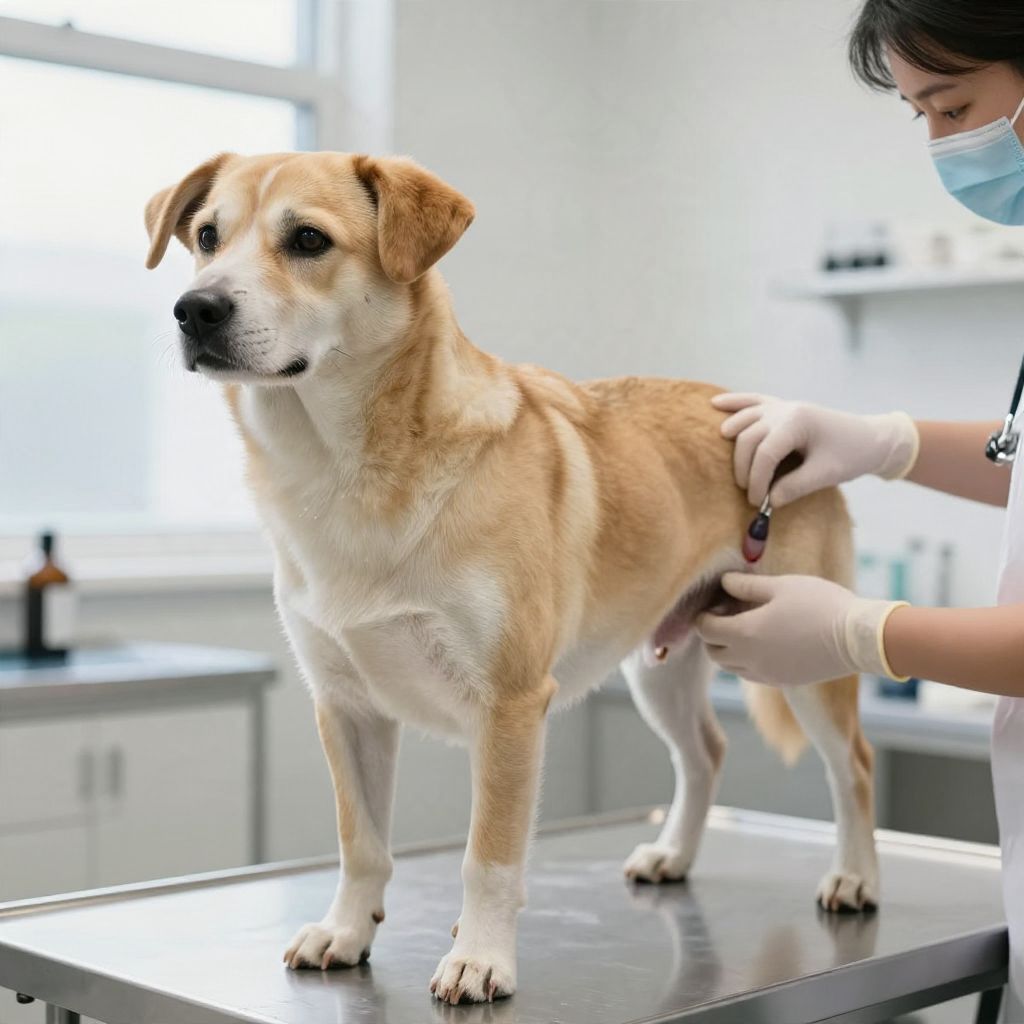
If you’re wondering how to express dog’s glands externally, the short answer is that it’s a delicate task best done only when your veterinarian has shown you the correct technique. Anal gland expression can cause pain, injury, or infection if done incorrectly, so many dogs are safer with professional care.
Some dogs need it occasionally, while others never do. The right approach depends on your dog’s symptoms, anatomy, and medical history, so it’s important to know when external expression is appropriate and when a vet visit is the safer choice.
How do you express a dog’s glands externally?
External anal gland expression means gently applying pressure from the outside of the anus to help empty the sacs. It should be done only if your veterinarian has confirmed it’s needed and has taught you the method. If your dog is painful, swollen, bleeding, or very distressed, stop and contact a vet.
What are dog glands, and why do they need expressing?
Most people mean the anal glands, also called anal sacs. These small scent glands sit just inside the anus and normally empty on their own when a dog passes stool.
When stool is too soft, the sacs may not empty well. Some dogs also have anatomy, inflammation, allergies, or chronic skin issues that make gland problems more likely, but this varies from dog to dog.
Signs your dog may have anal gland trouble
- Scooting or dragging the rear on the floor
- Licking or biting under the tail
- Fishy odor from the rear end
- Straining or discomfort when sitting
- Swelling, redness, or discharge near the anus
These signs do not always mean the glands simply need expressing. They can also point to infection, impaction, abscess, allergies, parasites, or other problems that need veterinary assessment.
Before you try external expression at home
External expression is not a routine grooming skill for every dog owner. It is usually safer when a veterinarian or experienced groomer first confirms that your dog’s glands are full and shows you exactly where to place your hands.
Do not try at home if your dog has:
- Severe pain when the rear is touched
- Blood, pus, or open sores
- A swollen lump near the anus
- Fever, lethargy, or loss of appetite
- Repeated gland problems without a diagnosis
Urgent veterinary care is needed if the area is very swollen, draining, bleeding, or your dog cannot sit, defecate, or seems unwell. These can be signs of infection or abscessation.
Step-by-step: how to express dog’s glands externally
If your veterinarian has approved home expression, keep the process calm, brief, and gentle. If your dog resists strongly, stop rather than forcing it.
- Prepare supplies. Use disposable gloves, paper towels, and a pet-safe cleaning wipe or warm damp cloth.
- Choose a calm location. Have your dog stand or remain comfortably still. A second person can help steady a nervous dog if needed.
- Lift the tail gently. Look for the anus and the two gland areas, usually around the 4 o’clock and 8 o’clock positions just under the skin.
- Place your fingers externally. Using a soft, controlled touch, position your thumb and forefinger on the tissue outside the anus where the sacs sit.
- Apply very gentle pressure inward and slightly upward. The goal is to encourage drainage, not squeeze hard. If nothing happens quickly, do not keep pressing harder.
- Watch for discharge. The fluid may be thin or thick and often has a strong odor. Use a towel to protect the area and your clothing.
- Stop if your dog shows pain. Yelping, tensing, snapping, or trying to escape means you should stop immediately.
- Clean the area. Wipe away residue and wash your hands thoroughly.
External expression should be quick and gentle. Repeated squeezing, prolonged pressure, or “trying harder” can irritate tissue and make the problem worse.
How to know if you’re doing it correctly
When done properly, a small amount of fluid may release and your dog may seem more comfortable afterward. You should not see bleeding, marked swelling, or ongoing pain.
If nothing comes out, that does not automatically mean you failed. The sacs may not be full, the technique may be wrong, or the issue may be something other than simple fullness.
Common mistakes to avoid
- Using too much force
- Trying to express glands that are already inflamed or infected
- Repeating the procedure too often without veterinary guidance
- Assuming scooting always means full anal glands
- Ignoring odor, swelling, or discharge after the procedure
When external expression is not the right solution
Some dogs need more than routine expression. If the glands keep filling, become infected, or need frequent emptying, your vet may look for an underlying cause such as soft stools, allergies, chronic skin inflammation, or an anatomic issue.
Breed, body shape, age, and overall health can influence risk, but there is no guarantee that a particular dog will or won’t develop gland trouble. Individual variation matters more than breed labels alone.
Possible next steps a veterinarian may recommend
- Rectal exam and gland assessment
- Treatment for infection or inflammation
- Diet review to improve stool quality
- Allergy evaluation if itching is also present
- Referral for recurrent or complicated cases
How often should dog glands be expressed?
There is no universal schedule. Many dogs never need manual expression, while others may need occasional help based on symptoms and veterinary advice.
Routine, unnecessary expression can irritate the glands and may make them more dependent on manual emptying. A vet can help you decide whether your dog truly needs it and how often.
Can you prevent anal gland problems?
You may be able to reduce flare-ups, but prevention is not always possible. The goal is to support normal stool formation and catch problems early.
- Keep your dog at a healthy weight
- Feed a complete, balanced diet
- Address chronic diarrhea or soft stools promptly
- Manage allergies or skin irritation with veterinary help
- Monitor for scooting, licking, or odor changes
Do not add supplements or fiber products without asking your veterinarian first, especially if your dog has digestive disease or is on a special diet.
When to call the vet instead of trying it yourself
Call your veterinarian if your dog has repeated gland issues, seems painful, or you are unsure whether the glands are actually the problem. It is also wise to ask for a demonstration before attempting external expression at home.
Seek prompt veterinary care if you notice pus, a ruptured lump, significant swelling, fever, or your dog is acting ill. These signs can mean the sacs are infected or abscessed and need professional treatment.
Practical tips for a safer experience
- Keep sessions calm and brief.
- Use gentle restraint only if needed.
- Stop at the first sign of pain.
- Wear gloves and clean the area afterward.
- Schedule a vet recheck if symptoms return quickly.
If your dog also has itching, hair loss, or skin irritation, it may help to learn about related conditions such as how to treat mange in dogs at home, since skin problems can sometimes overlap with rear-end discomfort. For another common care topic, see how to clean dog’s teeth.
The safest answer to how to express dog’s glands externally is: only do it if a veterinarian has shown you how and confirmed it’s appropriate for your dog. If you see pain, swelling, discharge, or repeated problems, skip the home attempt and get professional help.