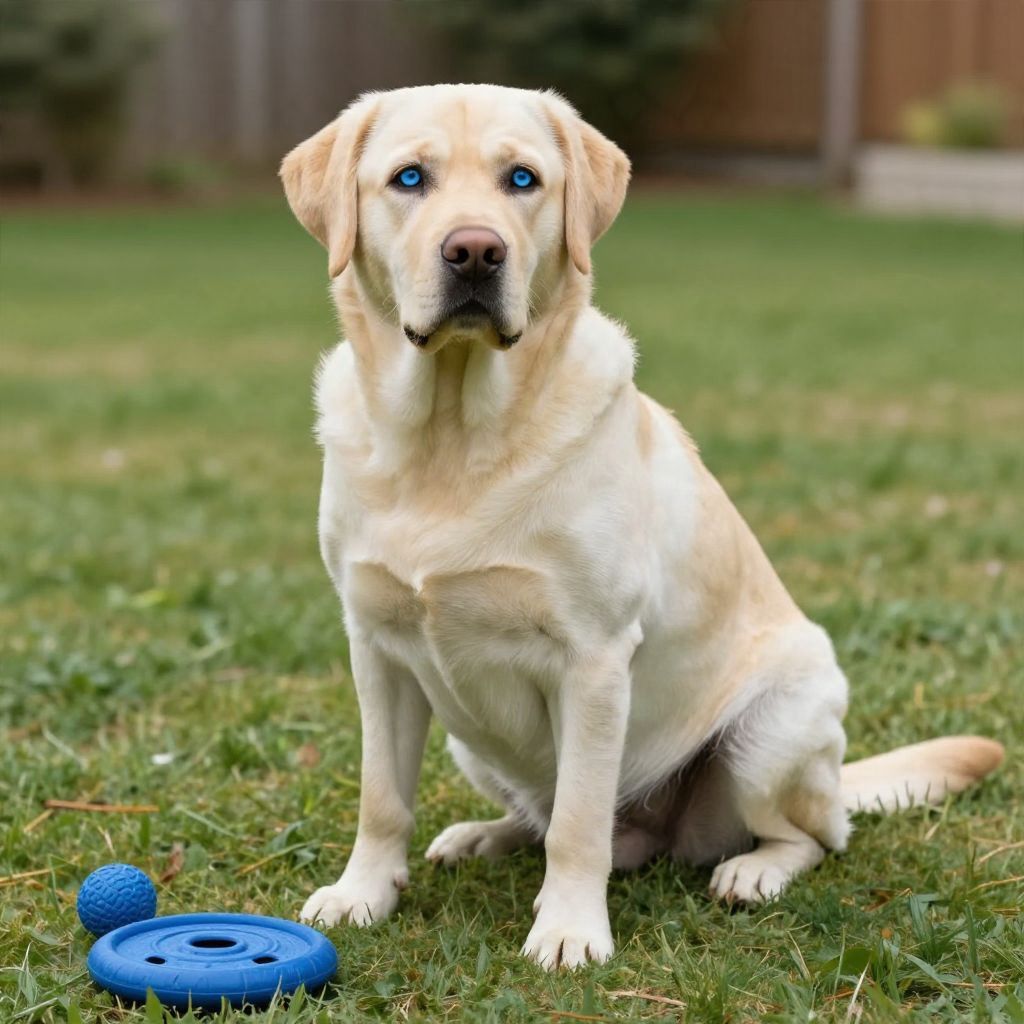
Can dogs see blue? Yes—dogs can see blue, and they also see some other colors differently from people. Their vision is not colorless, but it is more limited than human color vision, so blue and yellow are usually easier for them to distinguish than red or green.
This matters for toys, training gear, and safety choices. If you pick colors with your dog’s vision in mind, you can make fetch, recall, and enrichment easier to follow.
Can dogs see blue?
Yes. Dogs can see blue because their eyes detect blue wavelengths well, but they do not see the full rainbow the way humans do. Blue often stands out clearly to dogs, while reds and greens may blend into dull brownish or grayish shades.
How dog color vision works
Dogs have fewer color-detecting cells than people, so their color range is narrower. They are often described as having dichromatic vision, which means they rely more on blue and yellow tones and on brightness, contrast, and motion.
That does not mean dogs have “bad” vision overall. In many situations, they are very good at noticing movement, low-light changes, and contrast against the background.
What this means in everyday life
- Blue toys are often easier for dogs to spot on grass or indoors.
- Red toys may disappear into green grass or look less distinct.
- Yellow items can also be fairly visible to many dogs.
- Shape, size, and movement often matter as much as color.
Why blue can be useful for toys and training
If you want your dog to find a toy faster, blue is often a smart choice. A blue ball, bumper, or tug toy may stand out better than a red one, especially outdoors where grass and dirt can reduce contrast.
For training, better visibility can make it easier for your dog to track a target, follow a thrown object, or locate a reward. That said, individual dogs vary, and some may rely more on scent or motion than color.
Good color choices for different settings
- Grass: blue or yellow usually stands out better than red.
- Snow: darker blue objects may be easier to see.
- Indoor floors: choose a color that contrasts with the floor and furniture.
- Low light: brightness and reflective edges may matter more than color alone.
Does every dog see blue the same way?
No. General color-vision patterns are similar across dogs, but individual differences are real. Age, eye health, breed-related eye conditions, and overall vision can affect how clearly a dog sees any color, including blue.
Puppies may still be developing visual skills, and older dogs may develop cloudiness, reduced contrast sensitivity, or other eye changes that make objects harder to spot. If your dog suddenly seems unsure, bumps into things, or stops tracking toys well, a veterinary exam is a good idea.
When vision differences matter more
- Puppies: they may need larger, high-contrast toys and short, easy sessions.
- Senior dogs: they may benefit from predictable layouts and brighter contrast.
- Dogs with eye disease: cataracts, retinal disease, or corneal problems can reduce visibility.
- Working or sporting dogs: clear contrast can improve performance and safety.
How to choose toys and gear your dog can see
When you shop for toys, think about contrast first and color second. A toy that is blue but blends into a dark carpet may still be hard to find, while a yellow toy on dark grass may be easier to locate.
- Pick a color that contrasts with the main background where your dog plays.
- Choose a size your dog can safely carry and see without straining.
- Look for durable materials that match your dog’s chewing style.
- Use simple, consistent toys for training so your dog learns what to track.
For safety, avoid toys with small parts that can break off. Visibility is helpful, but the toy also needs to be appropriate for your dog’s mouth size and chewing habits.
Can dogs see blue at night or in dim light?
Dogs generally see better than humans in low light, but that does not mean they see color perfectly in the dark. In dim conditions, brightness and movement become more important than color, so even a blue object may be harder to identify if the lighting is poor.
If you walk or play at dusk or night, use reflective gear, lights, and safe, enclosed spaces. A brightly colored collar is useful, but reflective material often helps more than color alone after sunset.
Common mistakes people make about dog vision
One common mistake is assuming dogs see the world like humans do. Another is thinking that any bright color will automatically be easy for a dog to find.
- Choosing a toy based only on human preference instead of contrast.
- Using tiny, hard-to-see items during fetch or training.
- Ignoring eye problems when a dog starts missing familiar objects.
- Assuming breed alone predicts vision quality in every dog.
It is also easy to overlook that smell and motion are powerful cues for dogs. Many dogs will find a toy by scent even if the color is not ideal.
When poor vision may be a health concern
If your dog suddenly struggles to find blue toys, misjudges steps, or seems hesitant in familiar places, do not assume it is just a color-vision issue. Vision changes can be caused by eye disease, pain, neurologic problems, or age-related changes.
Call your veterinarian promptly if you notice:
- Sudden bumping into furniture or walls
- Cloudy, red, swollen, or painful-looking eyes
- Squinting, pawing at the eyes, or excessive tearing
- Unequal pupils or a sudden change in eye appearance
- Reluctance to go into dark areas or down stairs
Seek urgent veterinary care if vision loss appears sudden, if the eye looks very painful, or if your dog has an obvious injury to the eye. Eye emergencies can worsen quickly and should not wait.
How to support a dog with limited vision
If your dog has reduced eyesight, you can still make life comfortable and enriching. The goal is to reduce confusion and help your dog use other senses confidently.
- Keep furniture and pathways consistent.
- Use verbal cues and scent-based games.
- Choose toys with strong contrast and larger size.
- Use mats, gates, and baby barriers to protect stairs or hazards.
- Approach your dog with sound or gentle touch before handling.
For training, reward-based methods work well. Clear cues, repetition, and predictable routines help dogs learn without stress.
Blue visibility and behavior: what to expect
Seeing blue clearly does not guarantee that your dog will instantly understand a toy or command. Behavior depends on training history, motivation, age, confidence, and environment.
Some dogs love bright toys but ignore them if they are tired, anxious, or overstimulated. Others prefer scent games, food puzzles, or tug over fetch. Matching the activity to your dog’s temperament is often more important than color alone.
Try these simple enrichment ideas
- Hide a blue toy partly under a towel for a find-it game.
- Use a blue target mat for station training.
- Switch between blue and yellow items to see what your dog tracks best.
- Reward calm searching rather than frantic chasing.
Bottom line: can dogs see blue?
Yes, dogs can see blue, and blue is usually one of the easiest colors for them to distinguish. For the best results, choose toys and gear based on contrast, lighting, and your dog’s individual vision needs. If your dog’s sight seems to change, schedule a veterinary checkup.
If you want to learn more, you may also find these guides helpful: colors dogs can see and what colors dogs can not see.