
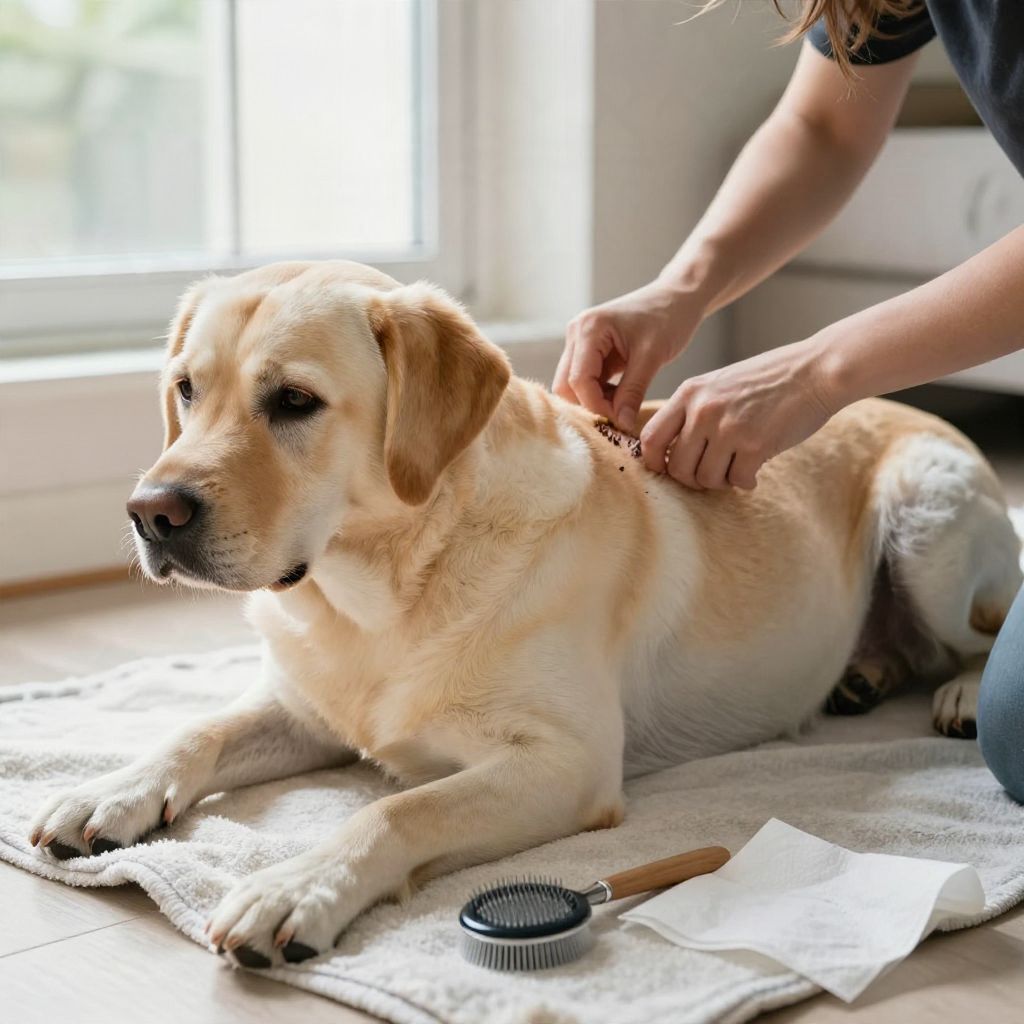
Wondering how to know if your dog has fleas? The earliest signs are often itchiness, frequent scratching, and tiny black specks in the coat. You may also notice red skin, hair loss, or your dog biting at the base of the tail, belly, or thighs.
The best way to check is to look closely through the fur and use a flea comb. If you find live fleas, flea dirt, or irritated skin, your dog may need prompt parasite control and a vet check if the skin looks inflamed or your dog seems unwell.
How To Know If Your Dog Has Fleas
Look for persistent scratching, chewing, or restlessness, then part the coat and check for live fleas or flea dirt. A flea comb, especially around the neck, back, tail base, and belly, can help you spot signs. If you see skin sores, heavy itching, or anemia signs, contact your veterinarian.
What Flea Signs Look Like on Dogs
Fleas do not affect every dog exactly the same way. Some dogs itch intensely, while others show only mild irritation or no obvious scratching at first.
Common signs to watch for
- Frequent scratching or licking
- Chewing at the base of the tail, thighs, or belly
- Restlessness or trouble settling down
- Small red bumps or scabs on the skin
- Hair thinning from repeated scratching or biting
- Black specks in the coat that may be flea dirt
Some dogs develop flea allergy dermatitis, which means even a few bites can trigger intense itching and skin inflammation. Puppies, seniors, and dogs with sensitive skin may show more obvious discomfort, but any dog can react strongly.
Step-by-Step: How To Check Your Dog for Fleas
A careful home check can help you confirm whether fleas are the problem. Use good lighting and take your time, especially if your dog has a thick or long coat.
- Start where fleas like to hide. Check the neck, back, belly, groin, and base of the tail.
- Part the fur down to the skin. Fleas and flea dirt often hide close to the skin.
- Use a flea comb. Comb slowly and wipe the comb onto a white paper towel.
- Look for live fleas. They are small, fast-moving, and may jump away.
- Check for flea dirt. Tiny black specks that turn reddish-brown when moistened can be digested blood.
- Inspect the skin. Red spots, crusts, or irritated patches can support the suspicion of fleas.
If your dog has a dark coat, flea dirt and small fleas can be harder to see. In that case, a flea comb and white towel or paper are especially useful.
How to Tell Flea Dirt From Ordinary Dirt
Flea dirt is one of the most useful clues when you are trying to figure out how to know if your dog has fleas. It often looks like pepper-like black specks in the coat.
To check it, place the specks on a damp white paper towel. If they leave a rusty red or brown stain, that suggests digested blood and makes fleas more likely.
Where Fleas and Flea Bites Usually Show Up
Fleas tend to gather where the coat is warm and where the dog can reach to scratch or bite. The exact pattern can vary with coat type, grooming habits, and how sensitive your dog is.
- Base of the tail: a very common spot for itching and biting
- Belly and groin: often irritated because the skin is thinner there
- Neck and shoulders: fleas may move through these areas while feeding
- Inner thighs: dogs may lick or chew here repeatedly
You may also notice small red bumps or scabs in these areas. For a visual reference, it can help to compare with what flea bites look like on dogs.
When It Might Be More Than Fleas
Itching does not always mean fleas. Dogs can also scratch because of allergies, dry skin, mites, skin infections, or other parasites.
Consider a veterinary exam if your dog has:
- Intense itching but you cannot find fleas
- Hair loss, thickened skin, or a foul odor
- Ear scratching or head shaking
- Repeated skin infections
- Itching that continues despite flea prevention
Because several skin problems can look similar, a veterinarian can help identify the real cause instead of guessing.
Why Puppies and Adult Dogs May Show Different Signs
Age can affect how fleas show up. Puppies may become uncomfortable quickly because they are smaller and more vulnerable to blood loss, while adult dogs may hide discomfort longer or scratch less obviously.
Dogs with chronic illness, thin coats, or weakened immune systems may also react more strongly. If your puppy is very young, lethargic, or not eating well, do not wait to get veterinary advice.
How to Check the Rest of Your Home
If you find fleas on your dog, the environment may also be involved. Fleas lay eggs that can fall into bedding, carpets, furniture, and cracks in the floor.
Practical home-check steps
- Inspect your dog’s bedding and favorite resting spots
- Look for tiny white eggs or black specks in fabric seams
- Vacuum floors, rugs, and upholstered furniture thoroughly
- Wash washable bedding in hot water if the fabric allows it
- Monitor other pets in the home, since fleas can spread easily
If you want help identifying flea eggs, this guide on what flea eggs look like on a dog may be useful.
What Not to Do If You Suspect Fleas
When you are trying to solve a flea problem, it is easy to make it worse with the wrong products or incomplete treatment.
- Do not use dog products on cats or cat products on dogs unless a veterinarian says it is safe.
- Do not assume one bath will fix it. Fleas often require ongoing control.
- Do not use random home remedies that may irritate the skin or be unsafe if licked.
- Do not forget the environment. Treating only the dog may not solve the issue.
Because flea control products vary, ask your veterinarian which option fits your dog’s age, size, health history, and whether other pets live in the home.
When Fleas Need Urgent Veterinary Care
Most flea cases are not emergencies, but some signs should not wait. Flea infestations can be more serious in puppies, small dogs, and dogs with other health issues.
Seek urgent veterinary care if your dog has:
- Weakness, pale gums, or collapse
- Very heavy flea burden, especially in a puppy or small dog
- Open sores, swelling, or pus from scratching
- Signs of infection such as fever, pain, or lethargy
- Vomiting, trouble breathing, or a reaction after using a flea product
Pale gums, severe weakness, or breathing trouble are especially important red flags. These can indicate significant blood loss or another urgent problem.
How to Prevent Fleas From Coming Back
Prevention is usually easier than repeated treatment. Your veterinarian can help you choose a flea-control plan that matches your dog’s lifestyle and local parasite risk.
Helpful prevention habits
- Use a veterinarian-recommended flea preventive consistently
- Check your dog after walks, dog parks, or time outdoors
- Wash bedding regularly
- Vacuum frequently during and after an infestation
- Keep all pets in the household on an appropriate parasite plan
Dogs that spend time in grassy, wooded, or high-traffic pet areas may need closer monitoring. Even indoor dogs can get fleas if eggs or adults are brought in on clothing, other pets, or used fabrics.
Quick Answer: What to Do Next
If you think your dog has fleas, check the coat with a flea comb, look for flea dirt, and inspect the skin for irritation. Then contact your veterinarian for the right flea-control plan, especially if your dog is very itchy, has sores, or seems weak.
For the best results, act quickly, treat all pets as advised by your vet, and clean the environment at the same time. That gives you the best chance of stopping the itch and preventing fleas from returning.