
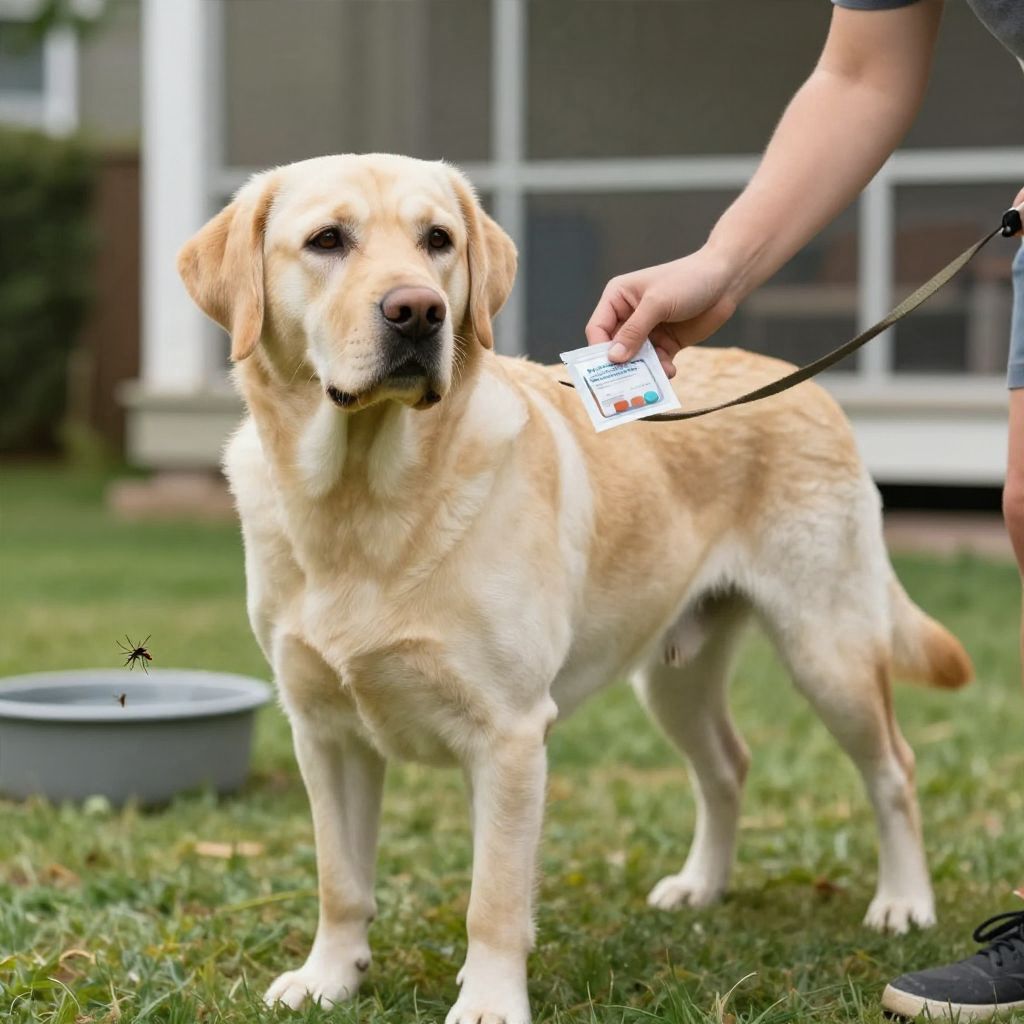
Is heartworm contagious between dogs or from your dog to you? The short answer is no: heartworm does not spread by direct contact, coughing, licking, sharing bowls, or being near another dog.
Heartworm is transmitted by mosquitoes, so prevention focuses on year-round protection, testing, and mosquito control. If your dog may have been exposed, a veterinarian should guide testing and treatment.
Is heartworm contagious?
No. Heartworm is not contagious in the usual sense, because dogs do not pass it directly to other dogs, people, or pets through touch, saliva, urine, or shared spaces. The parasite spreads only when a mosquito bites an infected animal, then bites another dog and transmits infective larvae.
How heartworm spreads in dogs
Heartworm transmission depends on mosquitoes, not dog-to-dog contact. An infected dog can carry immature or adult worms in the heart and blood vessels, and mosquitoes can pick up microscopic larvae from that dog’s blood.
The basic transmission cycle
- A mosquito bites an infected animal and picks up heartworm larvae.
- The larvae develop inside the mosquito.
- The mosquito bites another dog and deposits the larvae.
- The larvae mature over time inside the new dog.
This is why a dog living indoors can still be at risk if mosquitoes get inside the home or kennel.
Can you catch heartworm from your dog?
No. People cannot catch heartworm directly from dogs, and your dog does not spread it to you by cuddling, grooming, or sharing the couch. Humans are not the normal host for canine heartworm, so the main concern is keeping your dog protected and reducing mosquito exposure.
Signs that may suggest heartworm disease
Early heartworm infection may cause no obvious signs, which is one reason routine prevention and testing matter. As disease progresses, symptoms can become more noticeable and more serious.
- Persistent cough
- Reduced stamina or tiring easily
- Reluctance to exercise
- Weight loss or poor body condition
- Labored breathing
- Swollen abdomen in advanced cases
- Fainting or collapse
Urgent veterinary care is needed if your dog has trouble breathing, collapses, has a pale or blue-tinged tongue or gums, or seems suddenly weak. These can be emergencies, whether or not heartworm is the cause.
What to do if your dog may have been exposed
If your dog has missed prevention, was newly adopted, or may have been exposed to mosquitoes without protection, schedule a veterinary visit. A heartworm test is the only reliable way to know whether infection is present, and your vet can tell you when testing is appropriate based on your dog’s history.
- Call your veterinarian and explain the prevention history.
- Ask whether your dog needs a heartworm test now or later.
- Follow your vet’s guidance before restarting or changing prevention.
- Keep your dog calm and avoid strenuous exercise if infection is suspected.
Do not assume a dog is safe just because there are no symptoms. Heartworm can be present before signs appear.
Why testing matters even if your dog seems healthy
Many infected dogs look normal at first. Heartworm tests help detect infection before severe damage develops in the heart, lungs, and blood vessels.
Testing is especially important if your dog:
- Has missed monthly prevention doses
- Was adopted and previous prevention is unknown
- Has moved to or traveled through a heartworm-endemic area
- Shows coughing, exercise intolerance, or unexplained fatigue
Prevention is the safest approach
Because heartworm is not contagious from dog to dog, prevention is about stopping mosquito-borne infection before it starts. Most veterinarians recommend year-round prevention, since mosquitoes can be active longer than many owners expect.
Helpful prevention habits
- Use veterinarian-recommended heartworm prevention consistently.
- Keep your dog on schedule all year, not just during warm months.
- Reduce standing water around your home when possible.
- Use screens, doors, and other barriers to limit mosquito entry.
- Ask your vet about testing frequency for your dog’s lifestyle and region.
Dogs with different lifestyles may face different risk levels. Outdoor dogs, dogs in mosquito-heavy areas, and dogs that travel often may need especially careful prevention planning.
Common mistakes dog owners make
Heartworm prevention is straightforward, but a few common mistakes can leave dogs unprotected.
- Assuming indoor dogs do not need prevention
- Stopping prevention during cooler months without veterinary guidance
- Skipping doses and not asking about retesting
- Using leftover medication without confirming it is still appropriate
- Waiting for symptoms before seeing a vet
If your dog has missed prevention, do not simply restart on your own without asking your veterinarian whether testing is needed first. Starting the wrong product at the wrong time can complicate care.
Does age, breed, or size change the answer?
Heartworm is not more or less contagious based on breed, because it is not spread by direct contact at all. However, age, overall health, and lifestyle can affect how serious infection becomes and how your veterinarian plans prevention or treatment.
Puppies
Puppies can become infected if mosquitoes bite them, so they are not automatically protected because they are young. Your vet can advise when to start prevention and when testing is needed as the puppy grows.
Adult and senior dogs
Older dogs may have more complex health needs, and heartworm disease can be harder on dogs with existing heart or lung issues. Senior dogs should still receive prevention unless your veterinarian advises otherwise.
Dogs with other health problems
Dogs with chronic illness, immune concerns, or limited exercise tolerance may need individualized care. Your veterinarian can help choose the safest prevention and testing plan for your dog’s specific situation.
If your dog is already diagnosed with heartworm
A diagnosis does not mean your dog is contagious to others. It does mean your dog needs prompt veterinary management, because treatment can be serious and must be carefully supervised.
Important care points often include:
- Following the treatment plan exactly as prescribed by your veterinarian
- Restricting exercise if your vet recommends it
- Keeping follow-up appointments and retesting as directed
- Watching for worsening cough, weakness, or breathing changes
Never use home remedies or delay treatment in hopes the infection will clear on its own. Heartworm disease can cause lasting damage if not treated appropriately.
When to contact a veterinarian right away
Call your veterinarian promptly if you notice possible heartworm signs, missed prevention, or uncertain exposure history. Seek urgent care immediately if your dog has severe breathing difficulty, collapse, extreme weakness, or a swollen abdomen with distress.
Fast action matters because heartworm disease is easier to manage earlier than after it has advanced.
Bottom line
Heartworm is not contagious from dog to dog or from dogs to people. It spreads through mosquito bites, so the best protection is consistent prevention, routine testing, and quick veterinary attention if your dog shows concerning signs.
If you want to read more about related dog health risks, you may also find can dogs get parvo? helpful for understanding another serious infectious disease in dogs.