
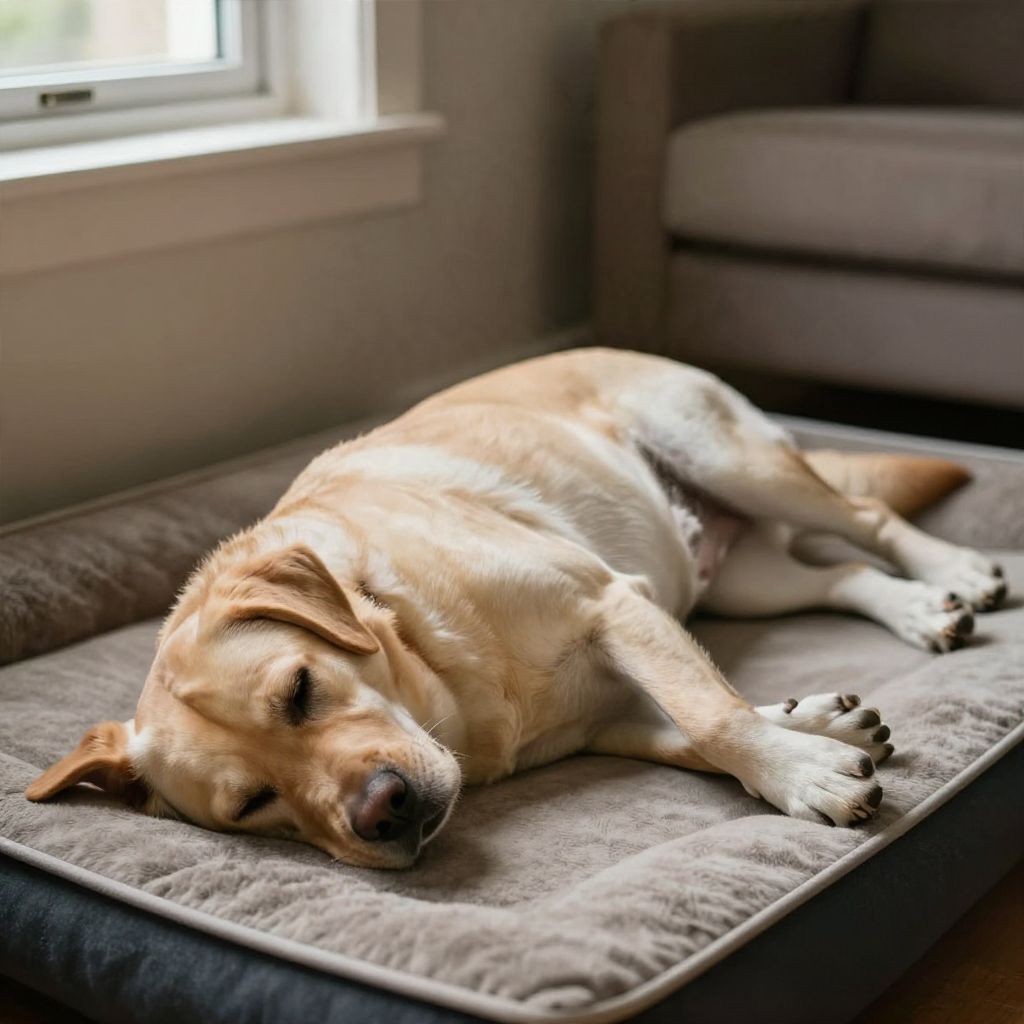
If you’ve noticed your dog sleeping on his back, you may wonder whether it’s normal or a sign of a problem. In many cases, this is a harmless sleeping position that reflects comfort, trust, and heat regulation.
Still, the reason can vary by dog. Age, body shape, room temperature, joint comfort, and medical issues can all influence how your dog chooses to rest.
Why does my dog sleep on his back?
Most dogs sleep on their backs because they feel safe, relaxed, and cool enough to expose their belly. It can also be a comfortable position for some dogs with certain body shapes or flexibility. If the posture is new and paired with discomfort, breathing changes, or pain, talk to your veterinarian.
Common reasons dogs sleep belly-up
Back-sleeping is often normal, but the exact reason depends on your dog’s individual needs and habits. Here are the most common explanations.
1. Your dog feels safe and secure
A dog that sleeps on his back is often showing complete relaxation. The belly is a vulnerable area, so this position usually means your dog trusts the environment and feels comfortable enough to let his guard down.
2. He’s trying to stay cool
Dogs release heat through their paws and less-furred areas of the body. Lying on the back can expose the belly to cooler air or a cool floor, which may help your dog regulate body temperature.
3. It’s simply the most comfortable position
Some dogs naturally prefer this posture because it lets their muscles relax. Others may shift into it after stretching, playing, or settling down for a deep sleep.
4. Breed, build, and flexibility can play a role
There is no single “back-sleeping breed,” but body shape can influence sleeping habits. Dogs with looser joints, longer limbs, or a more flexible spine may find this position easier than dogs with stiffer bodies or certain orthopedic issues.
5. Age and life stage matter
Puppies may sleep in odd positions because they are still developing coordination and muscle control. Adult dogs often settle into a preferred sleep style, while senior dogs may change positions if arthritis or stiffness makes one posture less comfortable.
When back-sleeping is normal
In most cases, a dog sleeping on his back is nothing to worry about. It’s usually normal if your dog:
- Wakes easily and acts comfortable
- Has normal appetite, energy, and bathroom habits
- Moves around without signs of pain
- Breathes quietly and normally during sleep
- Uses other sleeping positions too
Many dogs rotate between side-sleeping, curled-up sleeping, and back-sleeping depending on temperature and how tired they are.
When it may signal discomfort or a health issue
Sometimes a dog sleeping on his back is related to discomfort rather than relaxation. This is more likely if the position appears suddenly or your dog seems unable to settle in other ways.
Possible concerns to watch for
- Stiffness or limping when getting up
- Whining, panting, or restlessness at night
- Tensing, flinching, or avoiding touch
- Changes in breathing, coughing, or snoring that is new or severe
- Excessive scratching, skin irritation, or signs of itchiness
- Frequent position changes as if he cannot get comfortable
If your dog seems painful, unusually tired, or behaviorally different, schedule a veterinary exam. Back-sleeping alone is not a diagnosis, but it can be one clue among many.
Red flags that need urgent veterinary care
Some signs should never be ignored. Seek urgent veterinary care right away if your dog sleeping on his back is accompanied by:
- Labored breathing or open-mouth breathing at rest
- Blue, gray, or very pale gums
- Collapse, weakness, or inability to stand
- A swollen or hard abdomen
- Severe pain, crying out, or sudden inability to move normally
- Seizures or unresponsiveness
- Heatstroke signs such as heavy panting, drooling, vomiting, or confusion
These are emergencies, not situations to monitor at home.
How to tell if your dog is just comfortable
Look at the whole picture rather than the sleeping position alone. A comfortable dog usually has loose muscles, relaxed facial features, and easy breathing.
Helpful signs include:
- Soft, loose body posture
- Normal breathing without effort
- Good energy when awake
- Interest in food, walks, and play
- No signs of pain when handled gently
If your dog is otherwise well, back-sleeping is usually just a quirky habit.
What you can do at home
You usually do not need to change anything if your dog is healthy and comfortable. A few simple adjustments can make sleep even better.
- Keep the sleeping area comfortable. Offer a clean bed in a quiet spot with enough room for your dog to stretch out.
- Watch the room temperature. If your dog sleeps on his back more in warm weather, he may be trying to cool off.
- Provide regular exercise. A dog that gets enough physical activity and mental enrichment often settles more easily at night.
- Check for skin or coat irritation. If your dog seems itchy or restless, look for fleas, redness, or flaky skin.
- Notice changes over time. A sudden shift in sleep posture, especially with other symptoms, deserves attention.
Common mistakes to avoid
It’s easy to overreact to a harmless sleeping habit. Try not to make these mistakes:
- Assuming every back-sleeping dog is in pain
- Ignoring new symptoms because the posture seems “cute” or normal
- Forcing your dog to sleep in one position
- Using punishment if your dog is restless at night
- Delaying a vet visit when breathing, mobility, or appetite changes appear
Reward-based routines and sensible management are safer and more effective than trying to “correct” a sleep position.
What if your puppy sleeps on his back?
Puppies often sleep in unusual positions because they tire quickly and have not yet developed consistent sleep habits. Back-sleeping in a puppy is usually normal if the puppy is growing well, eating normally, and acting playful when awake.
However, puppies can become chilled more easily than adult dogs. Make sure the sleeping area is warm enough, dry, and draft-free, especially for small or short-coated puppies.
What if your senior dog starts doing this more often?
Older dogs may change sleep positions as their bodies change. If your senior dog now sleeps on his back more often, it may simply be a comfort preference, but it can also reflect stiffness, arthritis, or trouble getting comfortable in other positions.
Watch for slower movement, trouble rising, reluctance to jump, or stiffness after rest. These are good reasons to ask your veterinarian about pain management and mobility support.
When to call the vet
Contact your veterinarian if the back-sleeping is new and you notice any of the following:
- Pain, stiffness, or limping
- Breathing changes
- Restlessness or inability to settle
- Skin irritation, itching, or hair loss
- Behavior changes, appetite loss, or lethargy
- Any sudden change in sleep habits that concerns you
Your vet can help determine whether the posture is just a preference or part of a broader health issue.
Bottom line
Why does my dog sleep on his back? Most of the time, it means your dog feels safe, comfortable, and maybe a little warm. If he is otherwise healthy, there is usually no reason to worry. If the posture comes with pain, breathing trouble, or sudden behavior changes, contact your veterinarian promptly.
If you want to learn more about related sleep habits, you may also find why dogs sleep on their backs and why dogs sleep so much helpful.