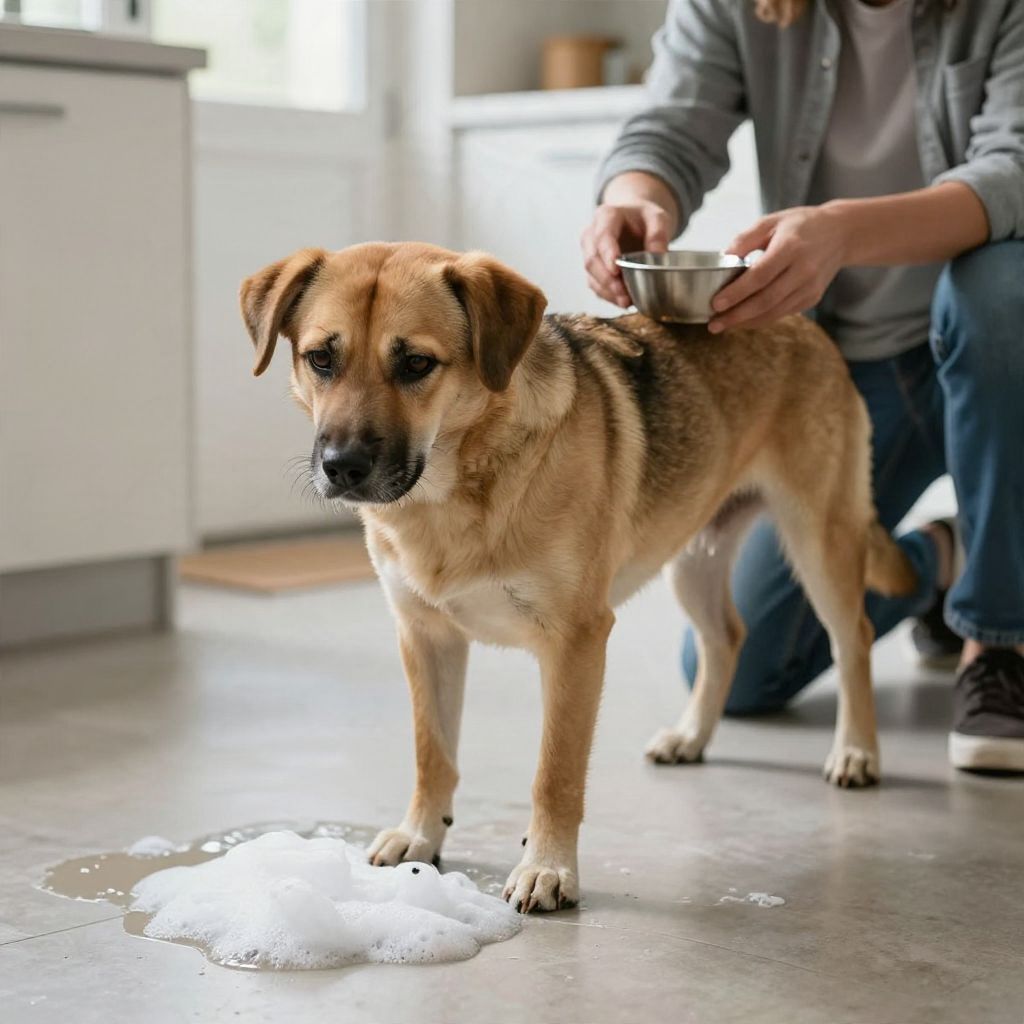
My dog is throwing up white foam, and that can be alarming. In many cases, it happens when the stomach is empty, but it can also point to irritation, nausea, or a more serious problem.
Watch for other symptoms, how often it happens, and whether your dog can keep water down. If vomiting is repeated, your dog seems weak, bloated, painful, or has trouble breathing, contact a veterinarian right away.
My Dog Is Throwing Up White Foam: What Does It Mean?
White foam vomit often means your dog is bringing up saliva, mucus, and stomach fluid. It can happen from an empty stomach, mild stomach upset, coughing, or irritation, but it can also signal poisoning, obstruction, pancreatitis, bloat, or another urgent medical issue.
Common Reasons Dogs Vomit White Foam
White foam is a symptom, not a diagnosis. The cause depends on your dog’s age, size, breed tendencies, diet, activity level, and whether there are other signs like diarrhea, coughing, or lethargy.
An Empty Stomach
Some dogs vomit white foam in the morning or after long gaps between meals. When the stomach is empty, bile and gastric fluid can irritate the stomach lining and trigger nausea.
This is more likely if the vomiting happens once, your dog otherwise seems normal, and the episode improves after eating or later in the day. Still, repeated vomiting should be checked.
Stomach Irritation or Mild Gastrointestinal Upset
Dogs may vomit foam after eating something unusual, scavenging, sudden diet changes, or mild stomach irritation. Stress can also upset some dogs’ stomachs, though it is not the only cause.
If your dog also has soft stool, reduced appetite, or drooling, a simple upset stomach may be involved. If symptoms continue, your vet should evaluate the cause.
Coughing, Gagging, or Reverse Sneezing
Sometimes what looks like vomiting is actually coughing up foam or mucus. Kennel cough, throat irritation, or airway problems can cause a dog to retch and produce white froth.
If your dog is coughing repeatedly, has noisy breathing, or seems unable to settle, that needs veterinary attention. Breathing issues should never be watched at home if they are significant.
Foreign Body or Intestinal Blockage
If a dog swallows toys, bones, fabric, corn cobs, or other objects, white foam vomiting can be an early sign of blockage. This is especially concerning if your dog cannot keep food or water down.
Blockages can become life-threatening. Puppies, curious dogs, and dogs that chew destructively may be at higher risk, but any dog can swallow something dangerous.
Pancreatitis or Other Abdominal Illness
Inflammation of the pancreas can cause vomiting, nausea, abdominal pain, and weakness. Dogs may drool, refuse food, or stand in a hunched posture.
Some dogs are more prone to pancreatitis than others, but it can happen in many breeds and sizes. A high-fat meal is not the only trigger, and the condition should be treated by a veterinarian.
Toxin Exposure
White foam vomiting can happen after exposure to toxic foods, plants, chemicals, or medications. The exact signs vary depending on what was ingested.
If you suspect poisoning, do not wait for more symptoms. Call your veterinarian, an emergency clinic, or a pet poison helpline right away.
When White Foam Vomit Is an Emergency
Seek urgent veterinary care if your dog is vomiting white foam and also has any of these signs:
- Repeated vomiting or vomiting that will not stop
- Bloated or swollen abdomen
- Retching with little or nothing coming up
- Weakness, collapse, or severe lethargy
- Difficulty breathing, coughing fits, or blue-tinged gums
- Blood in vomit or black, tarry stool
- Signs of pain, such as whining, guarding the belly, or a hunched posture
- Known or possible toxin exposure
- A puppy, senior dog, or dog with another serious health condition who is vomiting repeatedly
These signs can indicate a medical emergency. Do not wait to see if the problem resolves on its own.
What You Can Do Right Now
If your dog vomited white foam once, seems otherwise comfortable, and is acting normally, you can monitor closely while arranging a vet visit if it happens again. Focus on safety and avoid doing anything that could worsen the problem.
- Remove food for a short period only if your veterinarian has previously advised this for your dog and your dog is an otherwise healthy adult.
- Offer small amounts of fresh water so your dog does not gulp a large volume at once.
- Keep your dog calm and prevent exercise, rough play, or scavenging.
- Check for access to trash, toys, bones, plants, medications, or chemicals.
- Note the time, how much foam was produced, and whether there was coughing, diarrhea, or pain.
- Call your veterinarian if vomiting happens again, your dog seems unwell, or you are unsure what caused it.
Do not force food or water if your dog is actively vomiting. If your dog cannot keep even small sips of water down, contact a veterinarian promptly.
What Not to Do
When your dog is throwing up white foam, some common “quick fixes” can make things worse.
- Do not give human anti-nausea, pain, or cold medications unless a veterinarian specifically prescribed them for your dog.
- Do not use home remedies that could delay proper treatment.
- Do not let your dog keep eating grass, trash, or unknown objects.
- Do not ignore repeated vomiting just because the foam is white.
- Do not assume all vomiting is caused by an empty stomach.
How Age, Size, and Health History Matter
The right response depends on your dog’s individual situation. A young puppy, a toy breed, a giant breed, and a senior dog may all need different levels of caution.
Puppies
Puppies can become dehydrated quickly and are more likely to swallow foreign objects. Even one episode of vomiting foam may deserve a call to the vet, especially if the puppy is not eating, seems tired, or has diarrhea.
Adult Dogs
Healthy adult dogs sometimes vomit once from an empty stomach or mild upset. If the episode repeats, or if your dog has a history of digestive disease, food sensitivities, or pancreatitis, veterinary guidance is wise.
Senior Dogs
Older dogs may have more complex health issues, including kidney disease, liver disease, dental pain, or medication side effects. Because of that, white foam vomiting in a senior dog should be taken seriously, especially if appetite or energy changes.
Dogs With Chronic Conditions
Dogs with diabetes, kidney disease, Addison’s disease, reflux, or a history of GI problems may vomit for reasons that need prompt medical assessment. If your dog is on medications, ask the vet whether vomiting could be a side effect or a sign the condition is worsening.
How Vets Usually Evaluate White Foam Vomiting
Your veterinarian will look at the full picture, not just the foam. They may ask about diet, recent diet changes, access to trash or toxins, coughing, stool changes, and whether your dog could have swallowed something.
Depending on the case, the vet may recommend a physical exam, bloodwork, imaging, stool testing, or other diagnostics. Treatment depends on the cause and may include fluids, anti-nausea medication, stomach protection, or urgent procedures if there is a blockage or bloat.
How to Help Prevent It From Happening Again
Prevention depends on the cause, but a few habits can reduce the chance of repeat episodes.
- Feed consistent meals on a regular schedule.
- Avoid sudden diet changes.
- Keep trash, bones, toys, and household toxins out of reach.
- Use puzzle feeders or slow-feed bowls if your dog gulps food too quickly.
- Monitor dogs that chew aggressively or swallow items whole.
- Keep up with parasite prevention and routine veterinary care.
If your dog tends to vomit first thing in the morning, ask your veterinarian whether a different feeding schedule may help. Some dogs do better with a smaller bedtime snack, but that is not right for every dog.
When It May Be Less Urgent, But Still Worth Watching
A single episode of white foam vomit with no other symptoms may be less urgent, especially if your dog quickly returns to normal. Even then, keep a close eye on appetite, energy, stool, and drinking over the next 24 hours.
If the vomiting happens again, becomes more frequent, or is paired with any concerning sign, call your veterinarian. Repeated episodes are not something to dismiss.
Bottom Line
If your dog is throwing up white foam, the cause may be minor, but it can also be a warning sign of something serious. Watch closely, remove possible hazards, and contact a veterinarian promptly if the vomiting repeats or your dog seems unwell.
For more help deciding what is normal and what needs attention, you may also find these guides useful: my dog is throwing up and dog vomiting: when to worry.