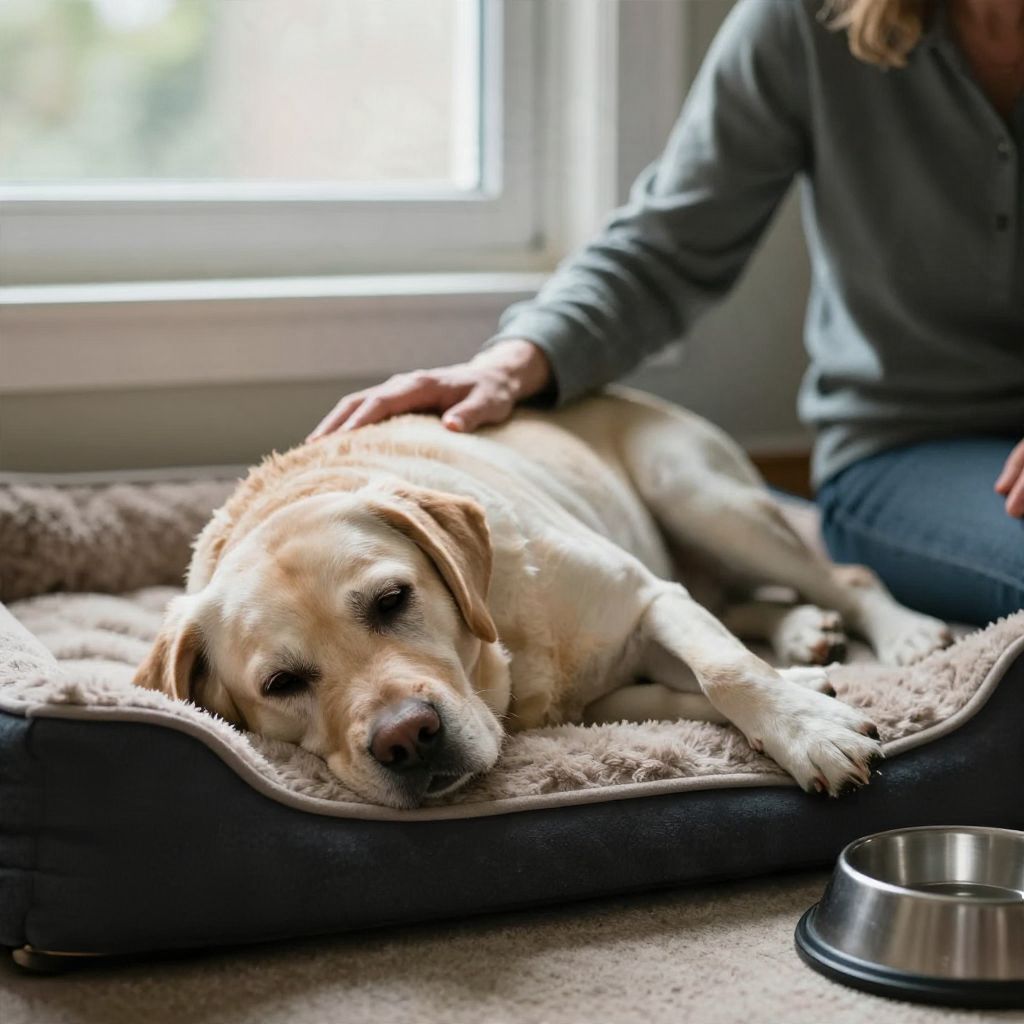
If you’re wondering about signs your dog is dying of old age, the hardest part is that many changes happen gradually. Some are part of normal aging, while others can signal pain, illness, or a crisis that needs a vet right away.
The goal is to watch for patterns: less interest in food, water, walks, or family; worsening weakness; trouble breathing; confusion; and a clear drop in comfort or quality of life. A veterinarian can help you tell natural decline from a treatable problem.
What are the signs your dog is dying of old age?
Common end-of-life signs include extreme fatigue, loss of appetite, weight loss, trouble standing or walking, incontinence, confusion, and withdrawal from interaction. These changes do not always mean “old age” alone; many are also caused by pain or disease, so a veterinary exam is important.
How to tell normal aging from serious decline
Older dogs often slow down, sleep more, and need more help with stairs or long walks. That is different from a sudden or steady loss of function, which can mean your dog is nearing the end of life or has a medical problem that needs treatment.
Common aging changes that may be expected
- More napping and less stamina
- Stiffness after rest
- Slower walking or trouble with jumping
- Cloudy eyes or hearing loss
- Less interest in intense play
Changes that are more concerning
- Refusing food or water for more than a short period
- Repeated vomiting or diarrhea
- Labored breathing or persistent coughing
- Collapse, severe weakness, or inability to rise
- Confusion, disorientation, or new accidents indoors
- Obvious pain, crying, trembling, or restlessness
Physical signs a senior dog may be nearing the end of life
Many dogs show a combination of body changes rather than one single sign. The more signs that appear together, the more likely your dog needs prompt veterinary assessment and comfort-focused care.
1. Eating and drinking less
A dog that is dying of old age may stop showing interest in meals, treats, or water. Some dogs eat only tiny amounts, while others refuse food altogether.
- Notice whether your dog is still interested in favorite foods.
- Watch for dry gums, sunken eyes, or very dark urine, which can suggest dehydration.
- Call your vet if your dog stops eating or drinking, especially if this lasts more than a day or is paired with weakness.
2. Weight loss and muscle loss
Older dogs may lose muscle over time, especially in the hind legs, shoulders, and spine. If your dog looks bony, has a sunken face, or seems much thinner despite eating, that is a reason to speak with a veterinarian.
3. Weakness and reduced mobility
You may notice your dog struggling to stand, slipping on floors, or avoiding stairs. Some dogs begin to fall often or can no longer get up without help.
- Watch for dragging paws or knuckling over.
- Look for a reluctance to walk, even for bathroom breaks.
- If your dog suddenly cannot stand, treat it as urgent.
4. Breathing changes
Breathing that becomes faster, shallower, noisy, or visibly effortful can be a serious warning sign, not just aging. Open-mouth breathing at rest, blue gums, or a stretched-out posture to breathe are emergencies.
If you want more general guidance on breathing changes, see why a dog may be breathing heavy.
5. Incontinence or loss of house training
A senior dog may start having accidents because of weakness, confusion, or medical issues. This can be upsetting, but it is often not a behavior problem.
- Use washable bedding and easy-to-clean flooring.
- Take your dog out more often.
- Ask your vet whether a urinary tract issue, pain, or cognitive decline could be involved.
6. Confusion or disorientation
Some older dogs develop cognitive decline and may seem lost in familiar places, stare at walls, get stuck behind furniture, or sleep more during the day and pace at night. These changes can also happen with pain or neurologic disease, so they should be checked.
Behavioral and emotional signs to watch for
End-of-life changes are not only physical. Many dogs become quieter, less engaged, or more dependent on you as their comfort zone shrinks.
- Less excitement when you come home
- Reduced interest in toys, walks, or social time
- Hiding more often or choosing isolated spots
- Restlessness, pacing, or inability to settle
- Clinginess or unusual neediness
These changes can reflect pain, anxiety, or confusion. A veterinarian can help you decide whether your dog needs medication changes, pain relief, or palliative care support.
When it may be more than old age
It is easy to assume a senior dog is “just old,” but many treatable conditions can look similar to dying. Heart disease, kidney disease, cancer, diabetes, infections, arthritis, and neurologic problems can all cause decline.
Call a veterinarian promptly if you notice:
- Rapid weight loss
- New vomiting or diarrhea
- Blood in stool, urine, or vomit
- Persistent coughing
- Fainting or collapse
- Severe pain or yelping when touched
- Sudden behavior changes
Seek urgent veterinary care now if your dog has:
- Difficulty breathing
- Blue, gray, or very pale gums
- Seizures
- Unresponsiveness
- Inability to stand
- Repeated vomiting with weakness
- A bloated, hard abdomen
If you suspect a stroke or sudden neurologic event, do not wait. Read more about whether dogs can have strokes and contact a veterinarian immediately if symptoms are sudden.
How veterinarians assess quality of life
When a dog is declining, your vet may focus on comfort, mobility, appetite, hydration, breathing, and pain control. They may also discuss whether testing could uncover a treatable condition or whether hospice-style care is the kindest option.
Helpful questions to ask your vet
- Is my dog in pain?
- Is there a treatable cause for these changes?
- What signs mean my dog is suffering?
- What can I do at home to keep my dog comfortable?
- When should I consider euthanasia?
Many families find it helpful to track good days and bad days. If bad days are becoming more frequent and your dog can no longer enjoy basic comforts, that is an important quality-of-life signal.
How to support a dying senior dog at home
If your veterinarian agrees your dog is in the final stage of life, the focus shifts to comfort, safety, and calm. Small adjustments can make a meaningful difference.
- Provide soft bedding in a quiet, warm place.
- Keep food, water, and potty access easy to reach.
- Use rugs or traction mats on slippery floors.
- Help with short, gentle walks only if your dog wants them.
- Keep a routine, but avoid forcing activity.
- Offer affection in the way your dog prefers.
Do not force food, water, or movement if your dog resists and seems distressed. Your vet can tell you whether assisted feeding, medication adjustments, or a different comfort plan is appropriate.
Common mistakes to avoid
When you are worried about signs your dog is dying of old age, it is easy to overcorrect or delay action. Both can add stress for you and your dog.
- Assuming every change is “just old age”
- Waiting too long to call the vet
- Giving human medications without veterinary guidance
- Forcing exercise when your dog is weak or painful
- Ignoring breathing changes, collapse, or confusion
- Using punishment for accidents or disorientation
What to expect in the final days
Every dog is different, but many near the end of life become very quiet, sleep most of the time, and show little interest in food or surroundings. Some dogs seek closeness, while others prefer solitude.
Breathing may change, body temperature may feel cooler, and your dog may be less responsive. If your dog appears distressed, cannot rest comfortably, or has any emergency signs, contact a veterinarian right away.
Final thoughts
Signs your dog is dying of old age often include deep fatigue, loss of appetite, weakness, confusion, and withdrawal, but these changes can also point to treatable illness. The safest approach is to monitor closely, speak with your veterinarian early, and focus on comfort if your dog is nearing the end.
If you are facing this now, write down the changes you see, call your vet, and ask about pain control and quality-of-life support. Clear guidance can help you make calm, loving decisions for your dog.