
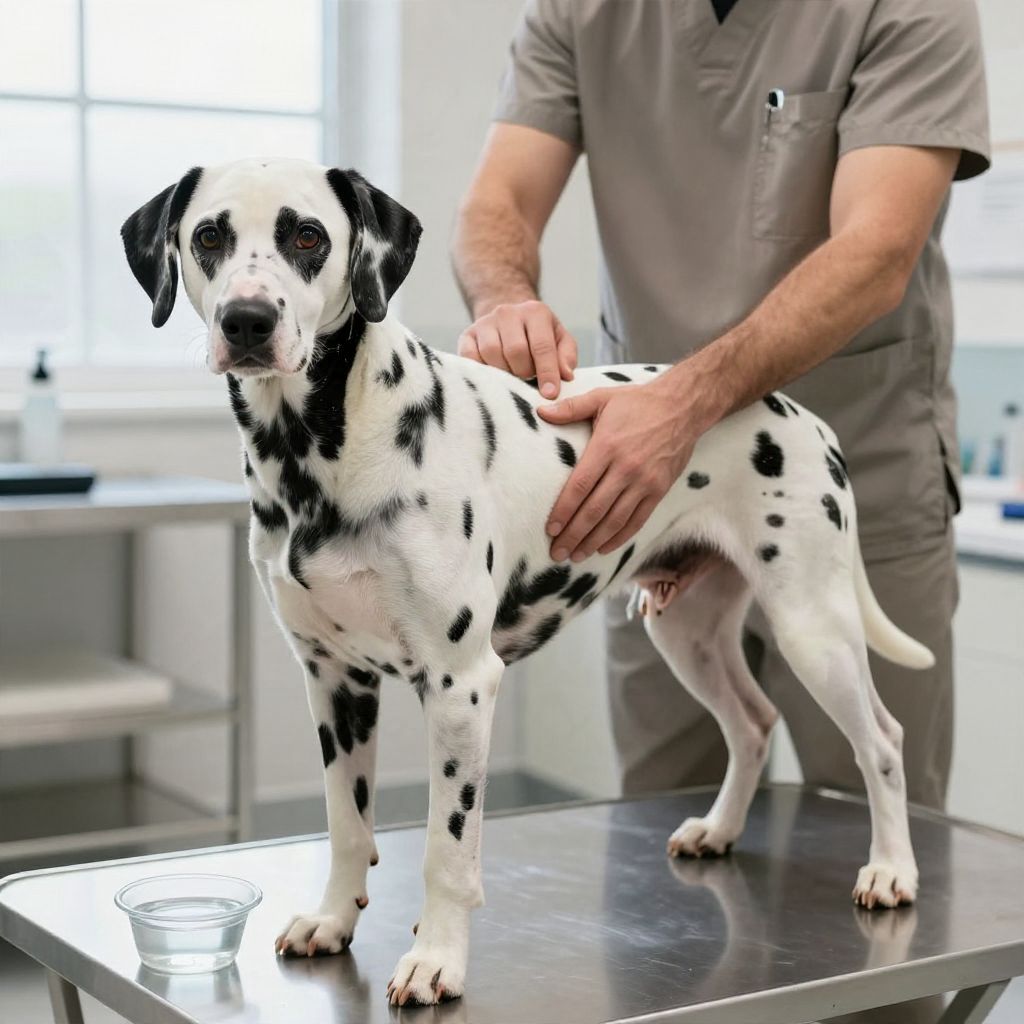
What causes bladder stones in dogs? They usually form when minerals in the urine clump together, often because of changes in urine concentration, pH, infection, diet, genetics, or an underlying medical problem. Some dogs are more prone than others, but any dog can develop them.
Bladder stones can irritate the urinary tract, cause pain, and sometimes block urine flow. If your dog is straining to urinate, passing blood, or unable to pee, that is an urgent veterinary problem.
What causes bladder stones in dogs?
Bladder stones in dogs form when crystals build up and harden in the bladder. Common contributors include urinary tract infections, dehydration, certain diets, breed-related risk, and medical conditions that change urine chemistry. The exact cause varies by stone type, so your veterinarian may recommend testing to find the reason and prevent recurrence.
How bladder stones form
The bladder stores urine, and minerals naturally present in urine can sometimes crystallize. When urine is too concentrated, too alkaline or too acidic, or infected, those crystals may stick together and grow into stones.
Not every dog with crystals will develop stones. Risk depends on the dog’s overall health, water intake, diet, and whether the urinary tract is inflamed or infected.
Common stone types
- Struvite stones are often linked to urinary tract infection in dogs.
- Calcium oxalate stones may be associated with urine chemistry, breed tendency, and some medical conditions.
- Urate stones can occur in dogs with certain liver issues or inherited risks.
- Cystine stones are less common and may be linked to inherited traits in some dogs.
Because different stone types have different causes, treatment and prevention are not one-size-fits-all.
Risk factors that can lead to bladder stones
Several factors can make bladder stones more likely. Some are temporary, while others are related to a dog’s anatomy or health history.
- Not drinking enough water, which makes urine more concentrated.
- Urinary tract infections, especially with struvite stones.
- Diet that does not match the dog’s urinary needs.
- Breed predisposition in some dogs, though not every dog of a breed will be affected.
- Age and sex, since risk patterns can vary by stone type.
- Underlying disease such as liver disorders, metabolic problems, or hormonal conditions.
- Incomplete bladder emptying or urinary retention.
Dogs with a history of stones are also more likely to have them again, so prevention matters after the first episode.
Signs your dog may have bladder stones
Bladder stones can cause irritation long before they cause a blockage. Some dogs show only mild signs at first, while others become obviously uncomfortable.
- Straining to urinate
- Frequent attempts to urinate with little coming out
- Blood in the urine
- Accidents in the house
- Pain or whining when urinating
- Licking the genital area more than usual
- Restlessness or discomfort
Emergency warning: if your dog cannot pass urine, produces only drops, seems painful, or becomes weak, lethargic, or vomiting, seek urgent veterinary care right away. A urinary blockage can become life-threatening.
Why diet can matter
Food does not cause every bladder stone, but diet can influence urine concentration and mineral balance. Some commercial diets are designed to help manage certain stone types, while others may increase risk in susceptible dogs.
What matters most is the full picture: the stone type, your dog’s water intake, and any medical conditions. A diet that helps one dog may be wrong for another, so it is best to follow your veterinarian’s recommendation rather than guessing.
Helpful feeding habits
- Encourage more water intake with fresh bowls or a pet fountain.
- Feed measured meals rather than free-feeding if your veterinarian suggests it.
- Do not switch diets repeatedly without guidance.
- Ask your vet whether wet food, prescription urinary diets, or a mix may help.
Never rely on supplements or home remedies to dissolve stones unless your veterinarian specifically recommends them.
How infections affect bladder stone risk
Urinary tract infections can change urine chemistry and create conditions that favor stone formation, especially struvite stones. In some dogs, the infection is the main trigger. In others, stones and infection happen together.
If your dog has recurring urinary signs, your veterinarian may recommend a urinalysis, urine culture, and imaging to check for stones and infection at the same time. Treating only one problem may not solve the other.
Breed, age, and individual risk
Some breeds are more commonly seen with certain stone types, but breed is only one piece of the puzzle. Individual factors such as diet, hydration, and health history still matter a great deal.
Small dogs may be diagnosed more often with some stone types, partly because they can be more prone to concentrated urine or urinary issues, but any size dog can be affected. Older dogs may also have more underlying conditions that influence risk.
What to remember about breed tendencies
- Breed can raise risk, but it does not determine destiny.
- Mixed-breed dogs can also develop bladder stones.
- Your dog’s personal medical history is often more important than breed alone.
How veterinarians diagnose bladder stones
Your veterinarian will usually start with a physical exam and urine testing. Depending on the case, they may also use X-rays, ultrasound, or other imaging to confirm stones and estimate their size and location.
They may also check for infection, inflammation, or other health issues that could be contributing to the problem. Identifying the stone type is important because prevention depends on the cause.
Treatment options your vet may discuss
Treatment depends on the type, size, and location of the stones, plus whether your dog has a blockage or infection. Some stones may be managed medically, while others need removal.
- Prescription urinary diets may help dissolve certain stones or reduce recurrence risk.
- Antibiotics may be needed if there is a confirmed infection.
- Fluid therapy may help support hydration in some cases.
- Surgery or a procedure may be needed for stones that do not dissolve or are causing obstruction.
- Ongoing monitoring helps catch recurrence early.
Do not try to treat suspected bladder stones at home without veterinary guidance. A dog that is blocked or in pain needs prompt care, not watchful waiting.
How to help prevent bladder stones from coming back
Prevention focuses on reducing the conditions that allow stones to form. The best plan depends on the stone type, but several habits are commonly helpful.
- Follow the exact diet plan your veterinarian recommends.
- Make water easy to access in several places.
- Take your dog out often so urine does not sit in the bladder for long periods.
- Keep up with follow-up urine tests or imaging if advised.
- Treat urinary infections completely and recheck if your vet recommends it.
- Watch for early urinary changes, especially if your dog has had stones before.
Regular follow-up is especially important for dogs with a history of stones, because recurrence is common enough to justify monitoring.
Common mistakes to avoid
When people first ask what causes bladder stones in dogs, they often want a quick fix. Unfortunately, some common shortcuts can make the problem worse.
- Assuming all urinary signs are a simple bladder infection.
- Changing food repeatedly without a diagnosis.
- Limiting water because of accidents in the house.
- Waiting for symptoms to “go away on their own.”
- Using human medications or supplements without veterinary approval.
Early veterinary care is usually less stressful and safer than waiting until a stone blocks urine flow.
When to call the vet right away
Contact your veterinarian promptly if your dog has blood in the urine, repeated straining, frequent small urinations, or new accidents. These signs deserve evaluation even if your dog still seems otherwise normal.
Go to an emergency clinic immediately if your dog cannot urinate, seems increasingly painful, has a swollen belly, vomits, collapses, or becomes very lethargic. A urinary blockage can become an emergency within hours.
Bottom line
Bladder stones in dogs are usually caused by a mix of urine chemistry, hydration, infection, diet, genetics, and underlying disease. Because the cause and treatment depend on the stone type, your veterinarian is the best source for diagnosis and prevention. If your dog shows urinary pain or cannot pee, seek help right away.
If you want to learn more about related dog health concerns, you may also find these helpful: what to do if your dog is constipated and why is my dog having diarrhea.