
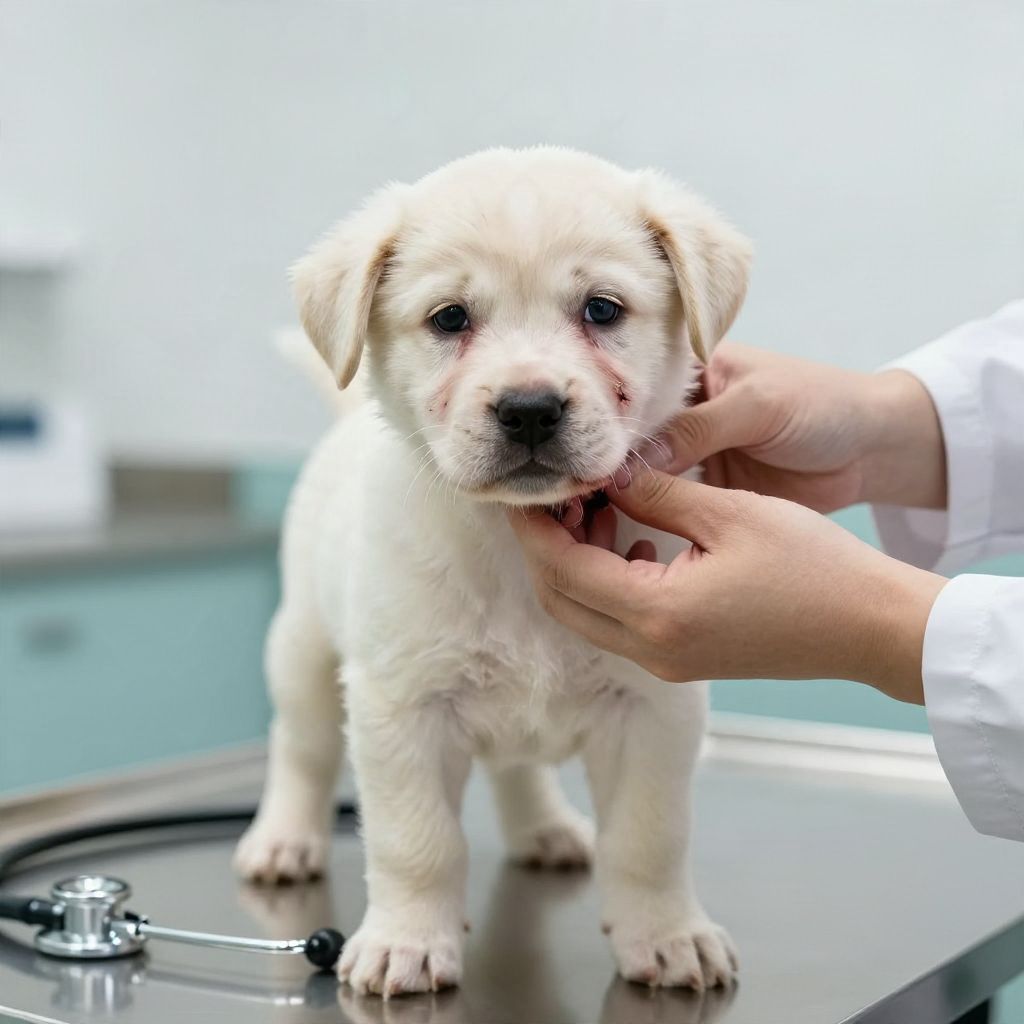
Puppy strangles is a serious inflammatory skin condition that affects young dogs, usually puppies. It causes sudden swelling, painful pustules, crusting, and sometimes fever or lethargy, so it should be checked by a veterinarian promptly.
Although the name sounds dramatic, puppy strangles is not caused by bad care or poor hygiene. Early veterinary treatment matters because the condition can worsen quickly and may leave scarring if it is not managed properly.
What Is Puppy Strangles?
Puppy strangles is an immune-mediated skin disease that mainly affects puppies, often between about 3 weeks and 6 months of age. It causes inflammation around the face, ears, muzzle, and sometimes the lymph nodes, and it usually needs veterinary diagnosis and prescription treatment.
What Puppy Strangles Looks Like
The first signs can appear suddenly and may look alarming. Because the condition often involves the face, many owners notice it right away.
- Swelling of the muzzle, eyelids, lips, or face
- Pustules or pimples that may break open and crust
- Hair loss around the face or ears
- Pain when touched, especially around the head
- Enlarged lymph nodes under the jaw
- Fever, tiredness, or reduced appetite
Some puppies also develop sores on the ears, neck, or other areas of the body. The skin can look infected, which is one reason a veterinary exam is so important.
Why Puppy Strangles Happens
The exact cause is not fully understood, but it is thought to be an overactive immune response. It is not usually contagious, and it is not the same as a simple bacterial skin infection, even though infection can sometimes develop secondarily.
Because the underlying trigger is uncertain, you should not assume your puppy “caught” it from another dog. It is also not something you can reliably prevent by changing shampoo, food, or grooming products alone.
Common Signs That Need a Vet Visit
If you are wondering what is puppy strangles because your puppy suddenly has facial swelling or crusty sores, arrange a veterinary visit as soon as possible. A vet can rule out other problems that may look similar, such as bites, allergic reactions, demodex mites, bacterial infections, or fungal disease.
Get urgent veterinary care if your puppy has:
- Rapidly worsening facial swelling
- Difficulty breathing or swallowing
- Severe pain
- Not eating or drinking
- Marked lethargy or collapse
- Eye involvement, especially if the eyes seem swollen shut or painful
These signs can indicate a medical emergency, and waiting at home is not safe.
How Veterinarians Diagnose It
There is no single at-home test for puppy strangles. Your veterinarian will usually diagnose it by examining your puppy and may recommend skin tests or samples to rule out other causes of similar lesions.
Depending on the case, your vet may suggest:
- Skin cytology to look for inflammation or infection
- Skin scrapings to check for mites
- Culture or additional testing if infection is suspected
- Other diagnostics if the signs are unusual or severe
This process matters because treatment can differ depending on whether the problem is puppy strangles or another skin disease.
How It Is Treated
Treatment is guided by a veterinarian and often focuses on reducing inflammation and managing discomfort. Because this is an immune-mediated condition, prescription therapy is commonly needed.
Your vet may also treat secondary infection if the skin has opened or become infected. Do not use leftover medications or human creams unless your veterinarian specifically directs you to do so.
Supportive care may include:
- Keeping the skin clean as directed by your vet
- Preventing scratching or rubbing
- Using an e-collar if needed to protect sores
- Following all recheck appointments
Never stop prescribed treatment early without veterinary guidance, even if your puppy looks better. Some cases improve quickly at first and then flare again if therapy is reduced too soon.
What You Should Not Do at Home
It is natural to want to help right away, but some common home responses can make things worse. Avoid guessing at the cause or trying multiple remedies at once.
- Do not pop pustules or pick crusts off the skin.
- Do not apply random ointments, essential oils, or harsh antiseptics.
- Do not give human pain relievers or anti-inflammatories unless a vet says they are safe.
- Do not wait several days if the swelling is spreading or your puppy seems unwell.
Gentle, calm handling is best. If your puppy is painful, keep interactions minimal until a veterinarian has examined them.
Can Puppy Strangles Go Away on Its Own?
Some mild cases may improve over time, but that does not mean it is safe to ignore the signs. Untreated puppy strangles can be painful, can scar the skin, and can lead to complications if infection develops.
Because other conditions can look similar, it is risky to assume your puppy will simply outgrow it. A veterinary diagnosis helps you avoid unnecessary suffering and helps protect your puppy’s skin and overall health.
Will It Come Back?
Many puppies recover and never have another episode, but recurrence can happen in some dogs. Your veterinarian may want to monitor your puppy after recovery, especially if the initial case was severe or if the diagnosis was uncertain.
If your puppy develops similar signs again later, contact your vet promptly. Recurrent facial swelling or crusting should always be checked rather than assumed to be the same issue.
How to Support Your Puppy During Recovery
Recovery is usually smoother when you keep life low-stress and follow the treatment plan carefully. Most puppies do best with predictable routines and close observation.
- Give medications exactly as prescribed.
- Watch for changes in swelling, appetite, energy, and comfort.
- Prevent scratching, rubbing, or rough play that could damage the skin.
- Keep follow-up appointments so your vet can adjust treatment if needed.
- Ask before bathing, grooming, or using any skin products.
If your puppy seems more painful, develops new sores, or stops improving, let your veterinarian know. Do not wait for the next scheduled visit if the condition is worsening.
How Puppy Strangles Differs From Other Puppy Skin Problems
Several conditions can resemble puppy strangles, and that is one reason veterinary evaluation is so important. The right diagnosis depends on the full pattern of signs, your puppy’s age, and test results when needed.
- Allergic reactions often cause itching, hives, or sudden swelling.
- Infections may cause redness, odor, discharge, or pain.
- Parasites can cause hair loss, crusting, and irritation.
- Trauma or insect bites may cause localized swelling or sores.
Because the treatments are not the same, it is not safe to self-diagnose based on appearance alone.
When to Contact Your Veterinarian
You should contact your veterinarian the same day if you notice sudden facial swelling, pustules, or crusty sores in a puppy. The sooner the problem is assessed, the sooner your puppy can get relief and the less likely complications become.
Call immediately or seek urgent care if your puppy has breathing trouble, severe swelling, marked lethargy, or cannot eat or drink. Those are not signs to monitor at home.
Bottom Line
Puppy strangles is a serious but treatable inflammatory skin condition in young dogs. If you see sudden facial swelling, crusting, or painful sores, schedule a veterinary exam promptly so your puppy can get the right diagnosis and care.
If you are also dealing with digestive upset during puppy recovery or want help recognizing other illness signs, you may find what to do if your dog has diarrhea and how to help a dog with diarrhea useful for related guidance.