
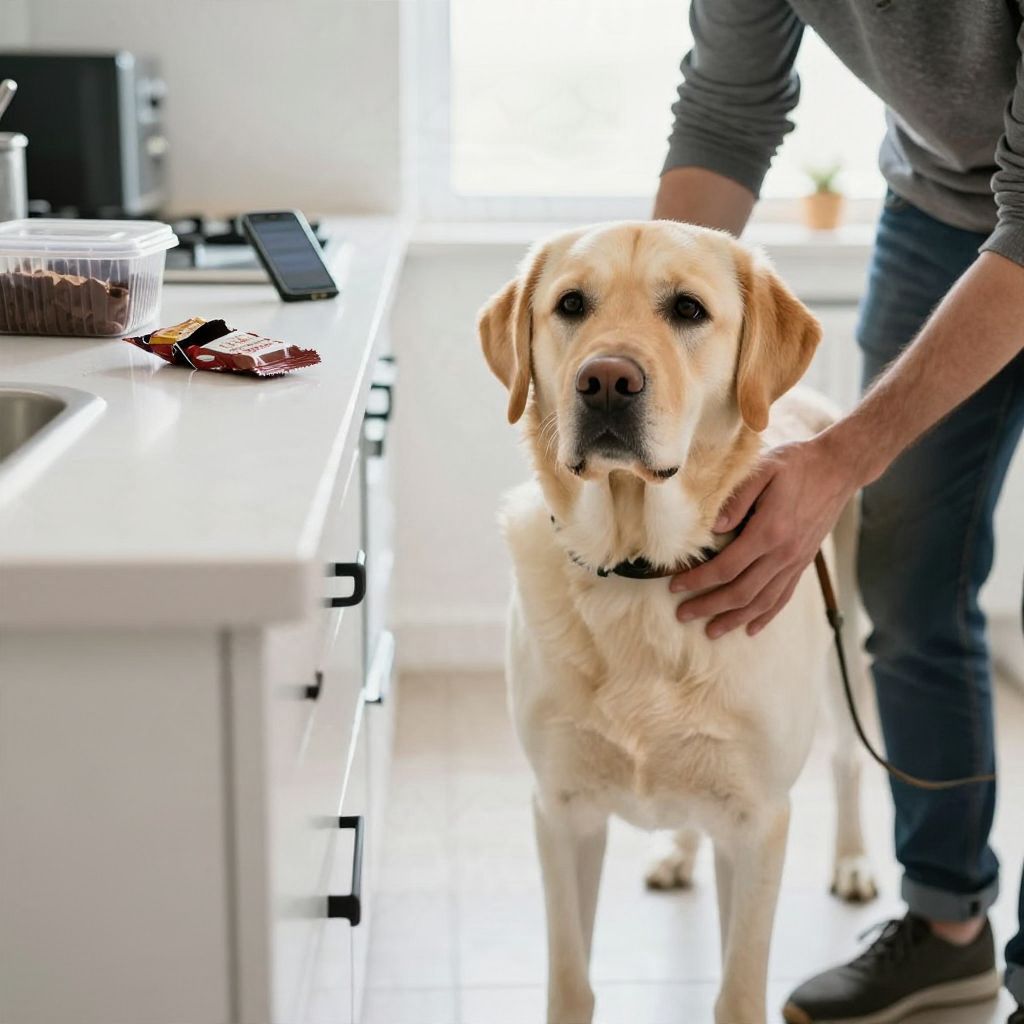
If your dog eats chocolate, treat it as a potential poisoning and act quickly. The right next step depends on the type of chocolate, how much was eaten, your dog’s size, and whether any symptoms have started.
Do not wait for signs to appear if your dog ate a large amount or a dark chocolate product. Call your veterinarian, an emergency clinic, or a pet poison helpline right away for guidance.
What to do if my dog eats chocolate?
Remove any remaining chocolate, check the package for the type and amount, and contact a veterinarian or pet poison professional immediately. Chocolate can be toxic to dogs, especially dark chocolate, baking chocolate, cocoa powder, and products with other risky ingredients. If your dog is vomiting, shaky, weak, or having seizures, seek urgent emergency care now.
Why chocolate is dangerous for dogs
Chocolate contains theobromine and caffeine, which dogs process more slowly than people. That can lead to stomach upset, restlessness, fast heart rate, muscle tremors, or more serious poisoning.
The risk varies with:
- Type of chocolate — baking chocolate and dark chocolate are generally more concerning than milk chocolate.
- Amount eaten — more chocolate increases risk.
- Your dog’s size — smaller dogs may be affected by less chocolate.
- Age and health — puppies, seniors, and dogs with heart or neurological problems may be more vulnerable.
Chocolate products can also contain other hazards, such as raisins, xylitol, or wrappers, which may create separate emergencies.
First steps to take right away
- Take the chocolate away so your dog cannot eat more.
- Check what was eaten: milk chocolate, dark chocolate, baking chocolate, cocoa powder, brownies, cookies, or candy.
- Estimate the amount missing and note your dog’s weight.
- Call a veterinarian or pet poison service for specific advice.
- Watch closely for symptoms while you are waiting for instructions.
If possible, keep the wrapper or ingredient list nearby. That information helps your vet assess the risk more accurately.
Signs of chocolate poisoning in dogs
Symptoms can start within a few hours, but timing varies. Mild cases may look like stomach upset, while more serious cases can affect the nervous system and heart.
Common warning signs
- Vomiting
- Diarrhea
- Restlessness or hyperactivity
- Excessive thirst
- Rapid breathing
- Fast heart rate
- Tremors or muscle twitching
- Weakness
- Unsteady walking
Emergency red flags
- Seizures
- Collapse
- Severe tremors
- Marked agitation or panic
- Difficulty breathing
- Repeated vomiting
- Extreme weakness or inability to stand
If any of these signs appear, go to an emergency veterinarian immediately.
Should you make your dog vomit?
Do not induce vomiting unless a veterinarian or poison expert tells you to do so. In some situations, making a dog vomit can be unsafe, especially if your dog is already showing signs, is sleepy, has breathing problems, or may have eaten something else along with the chocolate.
Never use home remedies without professional guidance. The safest plan is to get tailored advice based on your dog and the exact product involved.
What the veterinarian may do
Depending on the situation, your vet may recommend observation at home, an exam at the clinic, or emergency treatment. The approach depends on the type and amount of chocolate, the time since ingestion, and your dog’s symptoms.
- Assessment of your dog’s heart rate, temperature, and neurological status
- Treatment to reduce absorption if the ingestion was recent and appropriate to manage medically
- Fluids or medications to control vomiting, tremors, or heart effects
- Monitoring for complications in more serious cases
Follow the veterinarian’s instructions exactly. If your dog was sent home for monitoring, ask what symptoms mean you should return right away.
What not to do after a chocolate ingestion
Well-meaning mistakes can make the situation worse. Avoid these common errors:
- Do not “wait and see” if your dog ate a large amount or a dark chocolate product.
- Do not give human medications unless a veterinarian specifically prescribes them.
- Do not feed a big meal to “soak it up.”
- Do not rely on internet remedies or unverified advice.
- Do not assume your dog is safe because they have eaten chocolate before without problems.
How breed, age, and health can affect risk
Any dog can be affected by chocolate, but individual factors matter. Smaller dogs may show signs after eating less, and puppies may be more likely to get into food and wrappers because they are curious and still learning household rules.
Older dogs or dogs with heart disease, seizures, or other medical conditions may have a harder time coping with the effects of chocolate. A dog’s temperament or breed does not guarantee how they will react, so the safest response is always to assess the actual exposure.
How to prevent chocolate accidents
Prevention is much easier than treatment. Many chocolate exposures happen during holidays, birthdays, or when food is left within reach.
- Store chocolate in closed cabinets or high, secure containers.
- Keep purses, backpacks, and gift baskets out of reach.
- Teach visitors not to share sweets with your dog.
- Use trash cans with secure lids.
- Supervise counters, coffee tables, and low shelves.
- Train a reliable “leave it” cue using reward-based methods.
For dogs that are highly food-motivated, management matters as much as training. Even a well-trained dog may still grab food if it is left unattended.
When to call your vet even if your dog seems fine
Call for guidance if your dog ate chocolate and you are unsure about the type, amount, or timing. A dog can look normal at first and still develop symptoms later, especially after darker chocolate or a larger exposure.
You should also call if your dog is very small, very young, elderly, pregnant, medically fragile, or has eaten chocolate together with another dangerous ingredient.
Quick takeaway
If your dog eats chocolate, act quickly, gather details, and contact a veterinarian or pet poison expert. Watch closely for vomiting, restlessness, tremors, or any emergency signs, and do not try unsafe home treatments. Fast, informed action gives your dog the best chance of staying safe.
If you want more dog safety guidance, you may also find what happens when a dog eats chocolate and what to do if your dog eats chocolate at home helpful for understanding the next steps.