
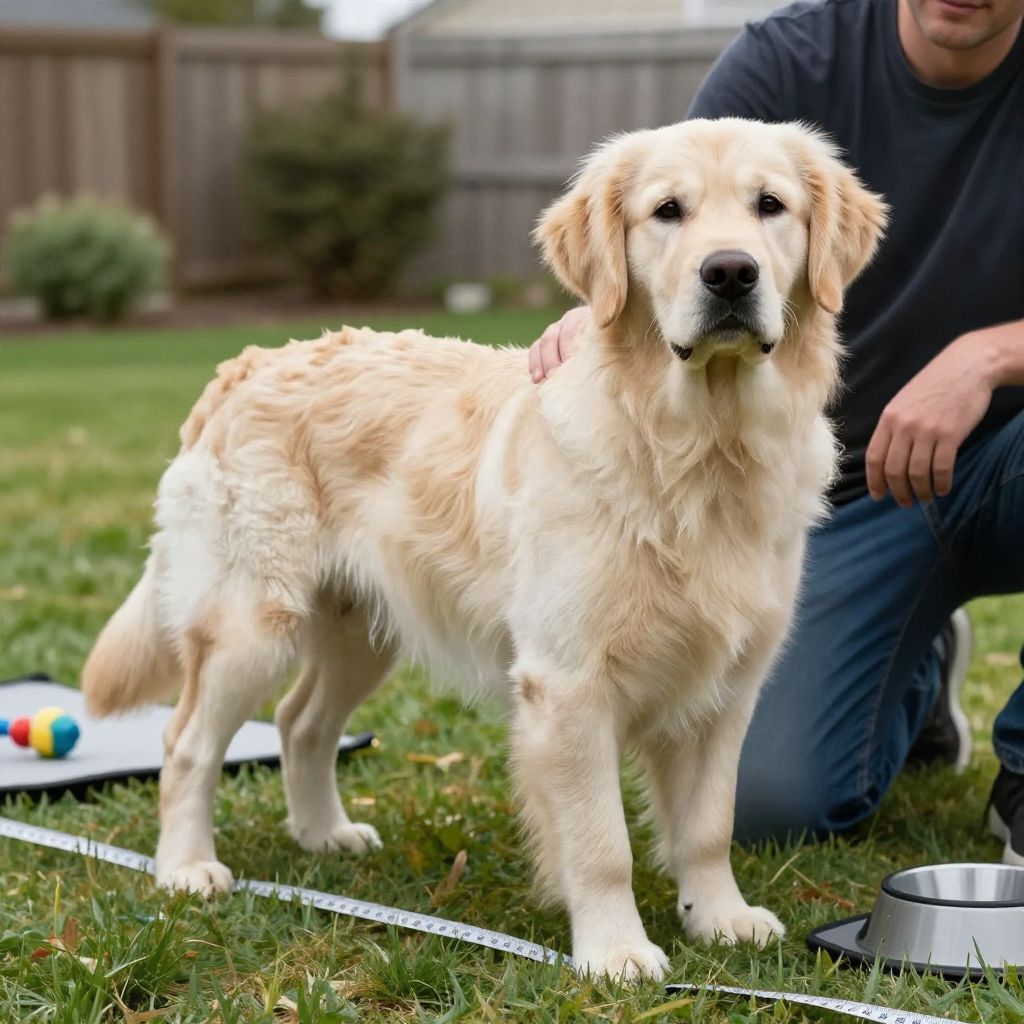
If you’re asking when Golden Retrievers stop growing, the short answer is that most finish most of their height by about 12 months, but many keep filling out until 18 to 24 months. Some individuals mature a little sooner or later depending on genetics, diet, activity, and overall health.
That means your dog may look “adult-sized” at one year and still become broader, more muscular, and more settled over the next several months. Watching growth over time is more useful than comparing your puppy to a fixed timeline.
When do Golden Retrievers stop growing?
Most Golden Retrievers reach their adult height around 12 months, then continue developing muscle, chest depth, and body condition until about 18 to 24 months. Smaller or early-maturing dogs may slow down sooner, while larger or slower-maturing dogs can keep changing a bit longer. Growth is gradual, not sudden.
What growth looks like month by month
Golden Retriever puppies usually grow fast in the first several months, then their rate slows as they approach adolescence. Even after the big height gains are over, they may still look lanky or “unfinished” for a while.
Typical growth pattern
- 0 to 6 months: Rapid height and weight gain; legs often seem long and awkward.
- 6 to 12 months: Growth slows, but the puppy still changes quickly.
- 12 to 18 months: Height is usually close to adult size; muscle and width continue to develop.
- 18 to 24 months: Many Goldens finish filling out and look more like mature adults.
This timeline is a general guide, not a guarantee. A veterinarian can help you judge whether your puppy is growing normally if you have concerns.
Why some Golden Retrievers grow differently
Not every Golden Retriever follows the same schedule. Individual variation is normal, and a dog’s final size can be influenced by several factors.
- Genetics: Parents and close relatives give the best clue about adult size.
- Nutrition: Balanced puppy food supports steady growth, while overfeeding can cause unhealthy weight gain.
- Health: Parasites, digestive issues, or chronic illness can affect growth.
- Sex: Males are often larger than females, but there is plenty of overlap.
- Activity level: Exercise does not make a puppy “grow bigger,” but it does affect muscle development and body condition.
If your puppy seems much smaller or larger than expected, or if growth seems to stall unexpectedly, it is worth discussing with your veterinarian.
How to tell if your Golden Retriever is still growing
It can be hard to notice changes day to day, especially when you see your dog every day. A few simple checks can help you track progress.
- Measure height at the shoulders every few weeks.
- Weigh your puppy regularly, using the same scale when possible.
- Notice whether the chest is widening and the body is becoming more muscular.
- Compare collar, harness, and bed fit over time.
- Watch for a “gangly” look that gradually turns into a more balanced adult shape.
Remember that some dogs gain body mass after their height has nearly stopped changing. That is normal as long as the dog stays lean and active.
Feeding a growing Golden Retriever the right way
Good nutrition supports healthy development, but more food is not always better. Golden Retriever puppies need a complete, balanced puppy diet that matches their life stage and expected adult size.
Helpful feeding habits
- Choose a high-quality puppy food formulated for growth.
- Feed measured meals rather than free-feeding whenever possible.
- Follow the feeding guide on the package, then adjust based on body condition.
- Keep treats limited so they do not crowd out balanced nutrition.
- Ask your vet when to transition from puppy food to adult food.
Golden Retrievers can be prone to becoming overweight, and excess weight can stress growing joints. You should be able to feel the ribs easily without seeing them sharply, and your puppy should have a visible waist from above.
Exercise and growth: what is safe for a Golden Retriever puppy?
Exercise is important, but growing joints need protection. Golden Retriever puppies benefit from regular movement, mental enrichment, and play, but too much high-impact activity can be a problem.
Safer activity ideas
- Short leash walks
- Gentle play sessions
- Training games and scent work
- Controlled socialization with calm dogs
- Low-impact exploration on varied surfaces
Be cautious with repetitive jumping, long forced runs, stairs in excess, and rough play on slippery floors. If your puppy tires easily, limps, or seems sore after exercise, stop and ask your vet for guidance.
Common mistakes during Golden Retriever growth
Many growth concerns come from well-intentioned but unhelpful habits. Avoiding these mistakes can support healthier development.
- Overfeeding: Extra weight can make joints work harder.
- Underfeeding: Not enough calories or nutrients can slow healthy development.
- Too much intense exercise: High-impact activity may strain growing bodies.
- Ignoring body condition: A puppy that looks “big” may actually be carrying excess fat.
- Skipping vet visits: Routine checks help catch growth problems early.
It is also common to expect a puppy to “look grown” too early. Many Golden Retrievers are still mentally and physically immature well past the point when their height appears close to adult size.
When growth concerns need a veterinarian
Some variation is normal, but certain signs should not be ignored. A veterinarian should evaluate your puppy if growth seems unusual or if your dog shows signs of pain or illness.
Call your vet soon if you notice
- Sudden weight loss or poor appetite
- Persistent diarrhea or vomiting
- Visible limping or stiffness
- Uneven growth between the legs or body
- Extreme lethargy or weakness
- A pot-bellied appearance with poor body condition
Seek urgent veterinary care for red flags
- Inability to stand or walk normally
- Severe pain, crying, or obvious injury
- Rapid swelling, trouble breathing, or collapse
- Repeated vomiting, especially with weakness or bloating
- Suspected toxin exposure or trauma
Do not wait if your puppy seems suddenly unwell. Growth questions are usually not emergencies, but pain, breathing trouble, collapse, or major injury are.
How long until a Golden Retriever is fully mature?
“Fully grown” can mean different things. Height often stabilizes first, while chest width, muscle tone, coat development, and emotional maturity continue well beyond the first birthday.
Physical maturity vs. behavioral maturity
A Golden Retriever may look adult-like at 12 to 18 months, but still act like a teenager. Many dogs remain excitable, distracted, or impulsive until closer to 2 to 3 years of age. That is normal and does not mean growth is delayed.
Training, consistent routines, and positive reinforcement can help your dog navigate this adolescent stage. If behavior feels difficult, a qualified trainer or veterinary behaviorist can help you build a plan without punishment or intimidation.
What to expect if your Golden Retriever is smaller or larger than average
Golden Retrievers vary naturally in size. A dog that is smaller or larger than the average for the breed may still be completely healthy if body condition, energy, and development are normal.
What matters most is whether your dog is growing steadily and proportionately. If one puppy is much larger than littermates, that does not automatically mean there is a problem. If growth is extreme, uneven, or paired with poor health signs, get a veterinary exam.
Practical checklist for healthy growth
If you want to support your Golden Retriever’s development, keep the basics simple and consistent.
- Feed an appropriate puppy diet in measured amounts.
- Keep your puppy lean, not chubby.
- Use age-appropriate exercise and avoid overdoing impact activity.
- Schedule regular veterinary checkups.
- Track weight and body shape over time.
- Ask for help if growth seems unusually slow, fast, or uneven.
For more puppy health planning, you may also find it helpful to read about when puppies get shots, and if you want broader size guidance, see at what age dogs stop growing.
In most cases, Golden Retrievers stop getting taller around 12 months and finish filling out by 18 to 24 months. Keep your puppy lean, feed appropriately, and check with your vet if growth seems unusual so you can support healthy development from puppyhood into adulthood.