
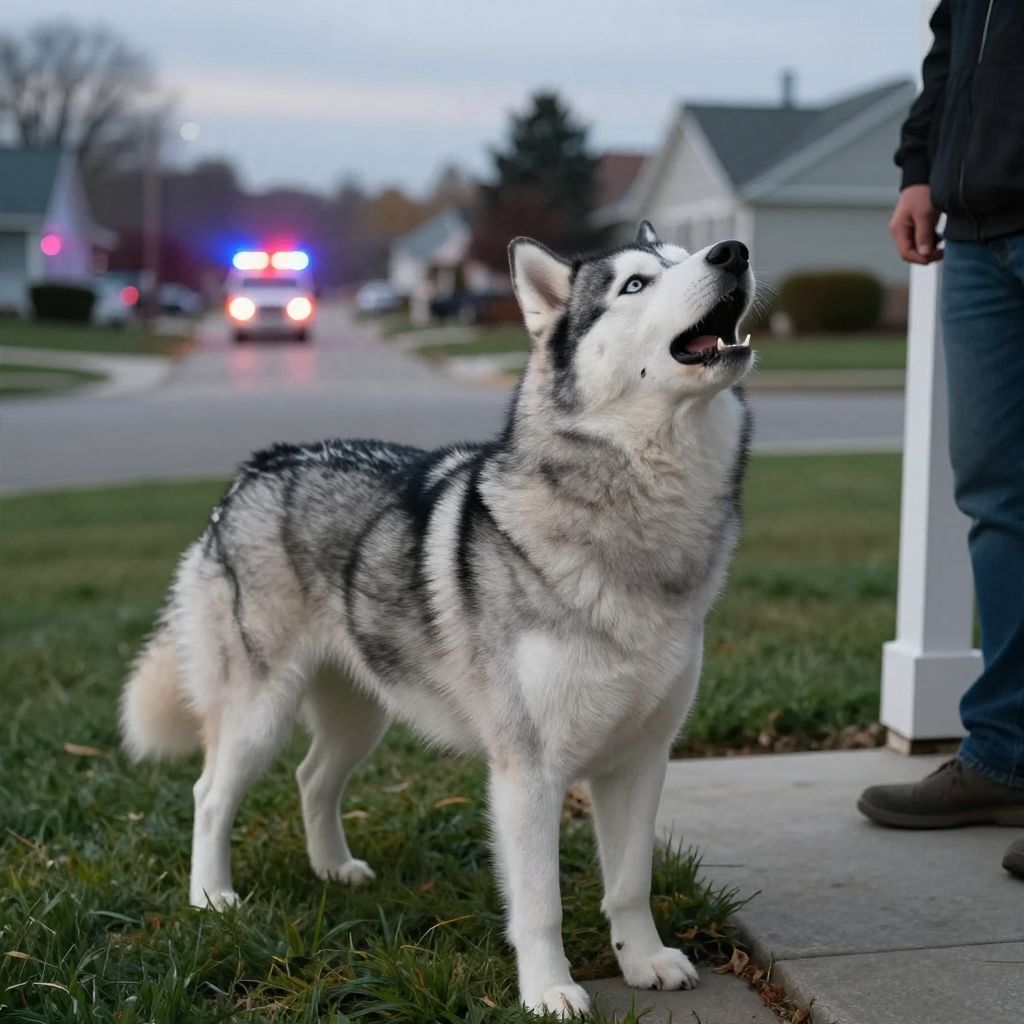
Why do dogs howl when they hear sirens? Most often, the sound triggers a natural vocal response. Sirens can resemble another dog’s howl, and some dogs join in because they are alert, excited, anxious, or simply reacting to a sudden noise.
In many cases, howling at sirens is normal and harmless. But if the behavior starts suddenly, seems frantic, or comes with other symptoms, it can point to stress, pain, hearing changes, or another health issue that deserves a veterinary check.
Why do dogs howl when they hear sirens?
Dogs howl at sirens because the high-pitched, sustained sound can mimic canine communication and trigger instinctive vocalizing. Some dogs howl to “answer” the sound, while others react from excitement, uncertainty, or stress. Breed, age, hearing, and temperament all affect how strongly a dog responds.
Common reasons sirens trigger howling
Not every dog howls for the same reason. The most common explanations are normal behavior patterns, but the context matters.
1. The siren sounds like another dog
Many sirens have a rising and falling tone that can resemble a howl. Dogs are social animals, and some interpret the sound as a distant dog calling out.
2. Your dog is responding to a sudden, intense noise
Sirens are loud and attention-grabbing. A dog may howl as part of an alert response, especially if the sound catches them off guard.
3. Excitement or arousal
Some dogs become highly stimulated by passing emergency vehicles. They may bark, pace, or howl because their energy level spikes.
4. Anxiety or uncertainty
For some dogs, sirens are unsettling. Howling can be a stress response, especially if your dog also hides, trembles, pants, or seeks constant reassurance.
5. Learned behavior
If howling gets attention, some dogs repeat it. Even calm praise or a quick response from you can reinforce the habit in dogs that are already inclined to vocalize.
Which dogs are more likely to howl at sirens?
Any dog can howl at sirens, but some are more vocal than others. Hound-type dogs and other breeds with strong vocal tendencies may be more likely to join in, while quieter dogs may barely react. Individual personality matters just as much as breed.
- Vocal dogs may howl more readily at environmental sounds.
- Puppies may experiment with vocalizing as they learn about noises.
- Senior dogs may react differently if hearing, vision, or cognition is changing.
- Anxious dogs may howl as part of a broader stress response.
Breed tendencies are only tendencies. Two dogs of the same breed can react very differently depending on socialization, training, and life experience.
When is howling at sirens normal?
Howling at sirens is usually normal if your dog otherwise seems healthy, settles quickly after the noise passes, and shows no signs of distress. Many dogs simply vocalize for a few seconds and then move on.
- The howling starts and stops with the siren.
- Your dog appears relaxed afterward.
- There are no other behavior changes.
- The reaction has been consistent over time.
When should you be concerned?
Contact your veterinarian if the howling is new, suddenly more intense, or paired with other changes. A behavior shift can sometimes reflect pain, hearing loss, cognitive changes, or anxiety that needs professional attention.
- Howling begins suddenly in an older dog.
- Your dog seems confused, restless, or disoriented.
- There is increased barking, pacing, panting, or whining.
- Your dog appears painful, lethargic, or unusually withdrawn.
- Your dog is reacting to many sounds, not just sirens.
Seek urgent veterinary care if your dog also has trouble breathing, collapses, has seizures, seems severely distressed, or shows signs of injury or poisoning. Those are not normal noise reactions.
What to do when your dog howls at sirens
Most dogs do best with calm management rather than correction. The goal is to reduce stress and avoid reinforcing the behavior if it has become a habit.
- Stay calm. Your dog may feed off your energy, so keep your response neutral.
- Do not punish the howling. Yelling or scolding can increase anxiety and make the reaction worse.
- Redirect gently. Offer a treat scatter, chew, toy, or simple cue your dog already knows.
- Create distance from the sound. Close windows, move indoors, or use white noise if sirens are frequent.
- Reward quiet behavior. When the siren passes and your dog settles, calmly reinforce the quiet.
How to reduce siren-triggered howling over time
If your dog howls often or seems stressed, you can work on changing the response. Progress is usually gradual, especially in sensitive dogs.
Use desensitization and counterconditioning
This means pairing low-level siren sounds with something your dog loves, such as treats or play, so the sound predicts good things instead of stress. Start with a volume so low that your dog notices but does not react strongly.
- Play recorded siren sounds quietly.
- Give a high-value treat while the sound is on.
- Stop the sound before your dog becomes upset.
- Repeat in short sessions over several days or weeks.
If your dog becomes worried, the sound is too loud or the session is too long. Go back to an easier level.
Build a calm routine
Dogs that get enough exercise, enrichment, and predictable downtime often cope better with sudden noises. A tired, mentally satisfied dog may recover more quickly after a siren passes.
- Provide regular walks and sniffing time.
- Use food puzzles or scent games.
- Offer a quiet resting area away from street noise.
- Keep daily routines as predictable as possible.
Teach an alternative behavior
Training a simple cue like “mat,” “place,” or “touch” can give your dog something else to do when sirens happen. Reward the behavior heavily when your dog chooses it on cue.
What not to do
Some common reactions can accidentally make the problem worse. Avoid approaches that increase fear or confusion.
- Do not punish or intimidate your dog for howling.
- Do not force exposure to loud sirens in an uncontrolled way.
- Do not assume the behavior is “just stubbornness” if it changes suddenly.
- Do not ignore distress signs such as trembling, hiding, or panic.
How age and health can affect siren howling
Age-related changes can alter how a dog responds to sound. Puppies may be curious or easily startled, while older dogs may howl more if hearing, vision, or cognition is changing.
If an older dog begins howling at sirens for the first time, ask your veterinarian whether a medical issue could be contributing. Hearing loss, pain, anxiety, and cognitive decline can all change noise reactions.
When to call a trainer or behavior professional
If siren howling is frequent, intense, or tied to broader fear of noises, a certified force-free trainer or veterinary behaviorist can help. This is especially useful if your dog also reacts to thunderstorms, fireworks, alarms, or household noises.
- The reaction is getting worse instead of better.
- Your dog cannot settle after the sound ends.
- Noise sensitivity is affecting daily life.
- Your dog shows generalized anxiety or panic.
Bottom line
Dogs howl when they hear sirens because the sound often resembles another dog and triggers a natural vocal response. If your dog is otherwise calm, it is usually normal. If the behavior is new, extreme, or paired with other symptoms, talk with your veterinarian.
If you want to learn more about canine vocalizing, you may also find why dogs howl and why some dogs are especially vocal helpful.