
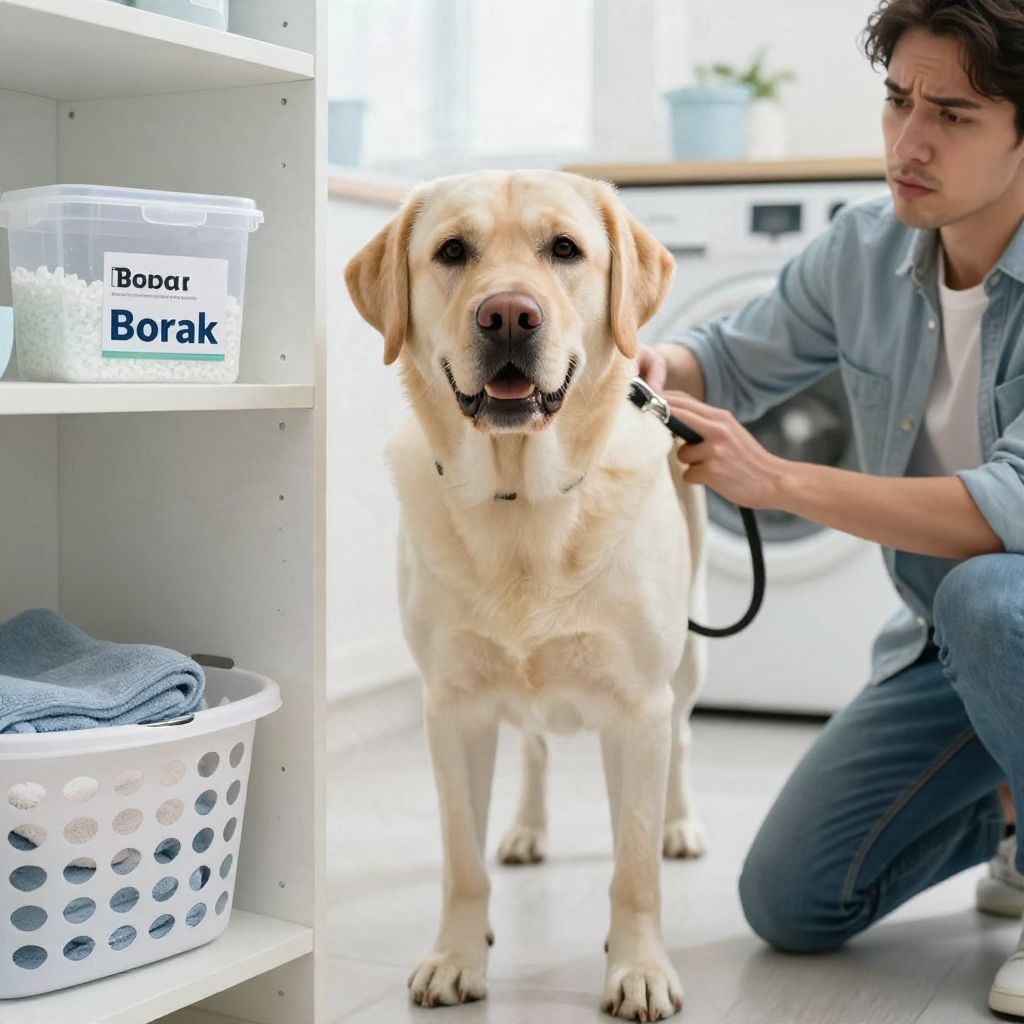
If you’re asking, “Is Borax toxic to dogs?” the short answer is yes, it can be. Borax and boric acid products can irritate a dog’s mouth, stomach, skin, and eyes, and larger exposures may cause more serious illness.
If your dog may have eaten, licked, or inhaled borax, act quickly and call your veterinarian or a pet poison hotline for guidance. Do not wait for symptoms to appear if the exposure was significant or your dog is already acting unwell.
Is Borax Toxic To Dogs?
Yes. Borax can be toxic to dogs if swallowed, inhaled, or if it gets on the skin or in the eyes in enough quantity. Mild exposure may cause irritation, but more serious exposure can lead to vomiting, diarrhea, drooling, weakness, tremors, or worse. Contact a veterinarian promptly for any suspected ingestion.
What Borax Is and Why It Matters
Borax is a cleaning and laundry product used in some households for stain removal, deodorizing, and pest control. Dogs may encounter it in powdered form, mixed solutions, or products that contain borax or related borates.
Because dogs explore with their noses and mouths, even a small spill can become a problem. Puppies and curious dogs are often at higher risk simply because they investigate more and are more likely to lick surfaces or eat unusual items.
How Borax Can Affect Dogs
The effects depend on the amount exposed, how your dog contacted it, and your dog’s size and health. A small dog may be affected more quickly than a larger dog, but any dog can become ill from a meaningful exposure.
Possible signs of irritation or poisoning
- Drooling or foaming at the mouth
- Vomiting
- Diarrhea
- Reduced appetite
- Red, watery, or painful eyes
- Skin redness, itching, or irritation
- Coughing or gagging if inhaled
- Weakness, wobbliness, or tremors in more serious cases
Some dogs show signs quickly, while others may seem normal at first. That is one reason it’s important not to assume a dog is fine just because symptoms have not started yet.
What To Do If Your Dog Was Exposed to Borax
If you suspect exposure, focus on safety first. Quick action can reduce the risk of further irritation or absorption.
- Remove your dog from the area immediately.
- Prevent further licking or eating. Move the product away and keep your dog from contaminated surfaces.
- Check the label. Bring the product name and ingredient list to the vet if possible.
- Call your veterinarian or a pet poison expert right away. They can tell you whether home monitoring is reasonable or if your dog needs urgent care.
- If the product is on the skin or coat, your vet may advise rinsing with lukewarm water to remove residue.
Do not induce vomiting unless a veterinarian or poison professional specifically tells you to do so. Some exposures can be made worse by vomiting, especially if the product was caustic or if your dog is already distressed.
When Borax Exposure Is an Emergency
Some signs mean you should seek urgent veterinary care right away, not wait for a callback. These symptoms can indicate a more serious reaction or a rapidly worsening problem.
- Repeated vomiting
- Severe diarrhea
- Marked lethargy or collapse
- Muscle tremors or seizures
- Difficulty breathing
- Swelling of the face, mouth, or eyes
- Inability to stand or walk normally
- Known large ingestion
If your dog is a puppy, very small, elderly, pregnant, or has kidney, liver, or other chronic disease, contact a veterinarian even sooner. These dogs may have less reserve if they become dehydrated or develop complications.
Can Borax on the Skin or Fur Harm Dogs?
Yes, it can. Borax left on the coat may irritate the skin and can become a problem if your dog licks it off during grooming. The eyes and nose are especially sensitive.
If the product got on your dog’s fur, a veterinarian may recommend a thorough rinse or bath with plain lukewarm water. Avoid using additional cleaners, scented products, or home remedies unless your vet tells you to.
Why Dogs May Be at Different Levels of Risk
Risk is not identical for every dog. The same exposure may affect one dog mildly and another dog more seriously.
- Body size: Smaller dogs may be affected by smaller amounts.
- Age: Puppies may be more curious and more likely to ingest products.
- Health status: Dogs with existing illness may tolerate toxins poorly.
- Exposure route: Swallowing is usually more concerning than brief contact.
- Amount and concentration: A light dusting is different from a large spill or concentrated solution.
Because these factors vary, it’s best to get case-specific advice rather than guessing based on another dog’s experience.
Common Mistakes to Avoid
When a dog may have been exposed to borax, some well-meaning actions can create more risk. Avoid these common mistakes:
- Waiting to see if symptoms develop after a significant exposure
- Trying to make your dog vomit without professional guidance
- Using other cleaning products to “neutralize” the residue
- Giving food, milk, oil, or medications unless your vet instructs you to
- Assuming a product is safe because it is common in the home
Fast, calm action is usually the safest approach. If you are unsure, it is better to call for advice than to guess.
How To Prevent Borax Exposure at Home
Prevention is the best way to protect your dog. Many exposures happen during routine cleaning or when products are left within reach.
- Store borax and similar cleaners in sealed containers, out of reach.
- Keep dogs out of rooms while cleaning or applying pest-control products.
- Clean up spills immediately and remove residue from floors or low surfaces.
- Do not leave open buckets, powders, or mixed solutions unattended.
- Read labels carefully, including products that may contain borates or related ingredients.
If you use borax for laundry or cleaning, be extra cautious around dogs that lick floors, chew baseboards, or investigate laundry rooms and bathrooms. A simple management routine can prevent accidental exposure.
What Your Veterinarian May Ask
When you call, be ready with details. Clear information helps the vet decide how urgent the situation is and what care your dog may need.
- The product name and ingredients
- How much may have been exposed
- When the exposure happened
- Whether your dog ate, inhaled, or touched it
- Your dog’s weight, age, and current symptoms
- Any other medications or health problems
If you can safely do so, keep the container or label nearby. A photo of the ingredient list can also help if you are away from home.
What Recovery and Monitoring May Look Like
Some dogs with mild exposure may only need observation and supportive care, while others may require treatment for vomiting, dehydration, eye irritation, or more serious signs. Your veterinarian will tailor advice to your dog’s situation.
After a mild exposure, watch for changes in appetite, energy, stool quality, and comfort for the next day or so, or for as long as your vet recommends. If symptoms worsen or new signs appear, call back promptly.
When to Call Even If Your Dog Seems Fine
You should still call for guidance if the exposure was large, the product was concentrated, or your dog is very young, very small, or medically fragile. Early advice can prevent a minor issue from becoming a bigger one.
It is also wise to call if your dog only had brief contact but has a history of sensitive stomach issues, eye irritation, or skin problems. Individual tolerance can vary, and your vet can help you decide what to watch for.
Bottom Line
Yes, borax can be toxic to dogs, and even smaller exposures can cause irritation or illness. If your dog may have been exposed, contact your veterinarian or a pet poison expert quickly, watch for red-flag symptoms, and keep borax products stored safely out of reach.
If you’re comparing household hazards, you may also find it helpful to read about whether white chocolate is bad for dogs and why a dog may be vomiting yellow.