
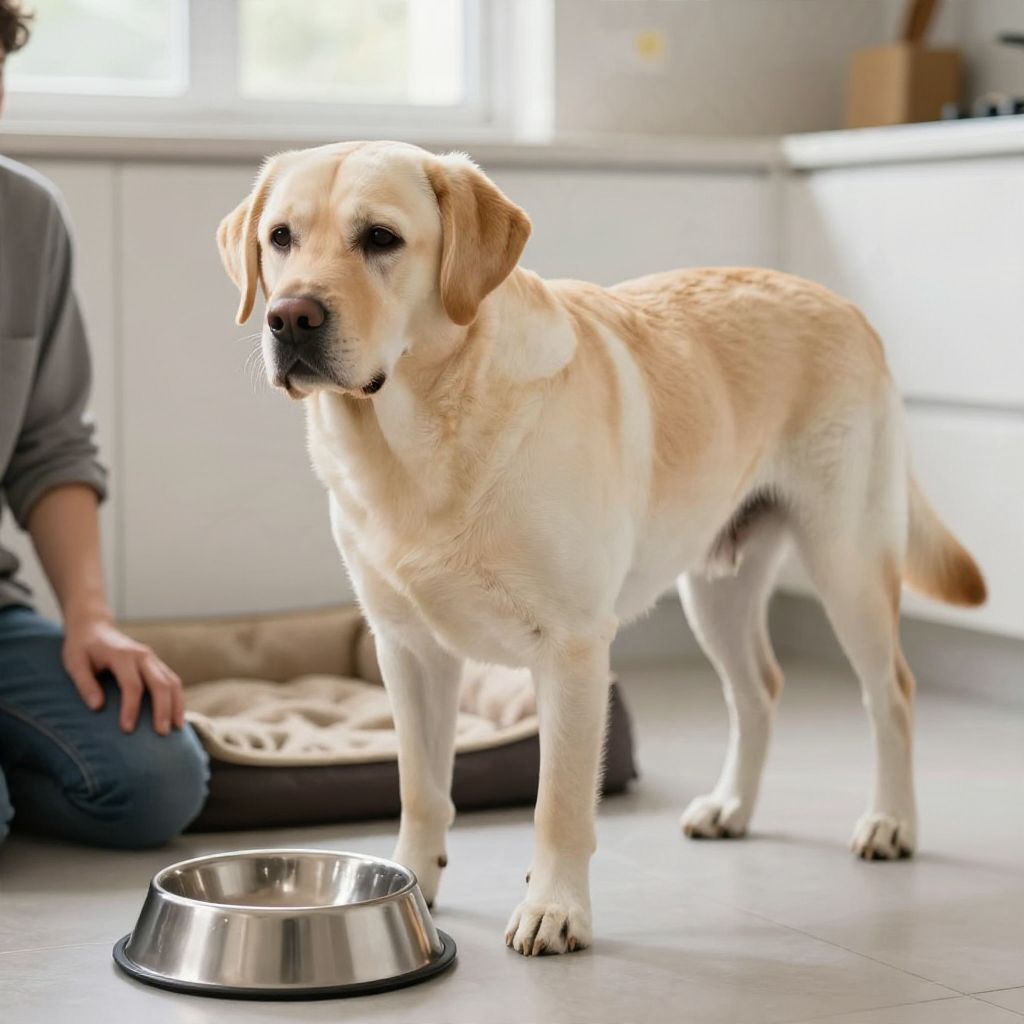
Why is my dog vomiting yellow? Yellow vomit is often bile, which can happen when your dog’s stomach is empty, after mild stomach upset, or with irritation in the digestive tract. It can also occur with more serious problems, so the pattern, your dog’s behavior, and any other symptoms matter.
If your dog vomits yellow once and otherwise seems normal, it may not be an emergency. But repeated vomiting, lethargy, pain, diarrhea, bloating, or trouble keeping water down needs prompt veterinary attention.
Why is my dog vomiting yellow?
Yellow vomit is usually bile, a digestive fluid that can come up when the stomach is empty or irritated. It may also happen with nausea, dietary indiscretion, infections, pancreatitis, intestinal blockage, or other illnesses. If vomiting keeps happening or your dog seems unwell, contact a veterinarian.
What yellow vomit in dogs usually means
Bile is naturally yellow-green and helps digest fat in the small intestine. When a dog vomits bile, it often means the stomach was empty for a while and the bile refluxed upward. This is sometimes seen early in the morning or after a long stretch without food.
That said, yellow vomit is a symptom, not a diagnosis. The cause can range from mild stomach irritation to a problem that needs urgent treatment.
Common, less serious reasons
- Empty stomach vomiting: Some dogs vomit yellow foam or fluid after going too long without eating.
- Dietary upset: Eating too fast, table scraps, rich foods, or a sudden diet change can irritate the stomach.
- Mild gastritis: Temporary stomach inflammation may cause nausea and bile vomiting.
- Motion sickness or stress: Travel, anxiety, or a new routine can trigger vomiting in some dogs.
More serious causes to consider
- Intestinal blockage: Swallowed toys, bones, fabric, or other objects can cause repeated vomiting.
- Pancreatitis: Inflammation of the pancreas can cause vomiting, abdominal pain, and lethargy.
- Infections or parasites: These can upset the GI tract and cause vomiting and diarrhea.
- Toxin exposure: Some foods, plants, chemicals, and medications can cause vomiting.
- Organ disease: Liver, kidney, or endocrine problems can also lead to nausea and vomiting.
When yellow vomiting is an emergency
Seek urgent veterinary care if your dog has yellow vomiting along with any of the following:
- Repeated vomiting over several hours
- Blood in vomit or vomit that looks like coffee grounds
- A swollen, hard, or painful belly
- Retching without producing vomit
- Weakness, collapse, or extreme lethargy
- Signs of dehydration, such as dry gums or sunken eyes
- Diarrhea that is severe, bloody, or ongoing
- Refusal to drink or inability to keep water down
- Known or suspected ingestion of a foreign object or toxin
Do not wait if your dog is a puppy, a senior, very small, or already has a medical condition and is vomiting repeatedly. These dogs can become dehydrated or worsen more quickly.
What to do right away if your dog vomits yellow
Your first step is to assess how your dog is acting, not just the color of the vomit. One isolated episode in an otherwise bright, comfortable dog is different from repeated vomiting with illness signs.
- Remove food for a short period only if your veterinarian has previously said this is safe for your dog.
- Offer small amounts of fresh water and watch whether your dog can keep it down.
- Check for other symptoms such as diarrhea, abdominal pain, drooling, or unusual behavior.
- Think about possible triggers: diet change, garbage, treats, toys, plants, or medications.
- Call your veterinarian if vomiting repeats, your dog seems unwell, or you suspect a foreign body or toxin.
Do not give human anti-nausea medicine, pain relievers, or home remedies unless your veterinarian specifically instructs you to do so. Some common human medications are dangerous for dogs.
Why it may happen in the morning
Some dogs vomit yellow bile early in the morning after a long overnight fast. This can happen when the stomach is empty for many hours and bile irritates the stomach lining. In some dogs, a small bedtime meal or adjusted feeding schedule may help, but you should still discuss recurring episodes with your vet.
If the vomiting is frequent, happens at other times too, or comes with appetite loss, weight loss, or diarrhea, it is less likely to be simple empty-stomach vomiting.
How your dog’s age, size, and health can affect the cause
The meaning of yellow vomiting can vary with your dog’s age, body size, and medical history. Puppies, for example, are at higher risk for dehydration and may also be more likely to swallow objects. Senior dogs may have underlying disease that makes vomiting more concerning.
Puppies
Puppies can deteriorate quickly because they have smaller fluid reserves. Yellow vomiting in a puppy deserves a lower threshold for veterinary advice, especially if there is diarrhea, weakness, or reduced appetite.
Adult dogs
In healthy adult dogs, a single episode may be less alarming, but repeated vomiting still needs attention. Dogs that counter-surf, chew toys, or raid trash may be at higher risk for dietary indiscretion or obstruction.
Senior dogs
Older dogs may have kidney disease, liver disease, pancreatitis, or other conditions that can cause nausea. Even if the vomiting seems mild, recurring episodes in a senior dog should be checked.
Common mistakes to avoid
- Ignoring repeated vomiting: “Just bile” can still signal a serious problem.
- Changing food too quickly: Sudden diet changes can worsen stomach upset.
- Giving random medications: Human drugs and leftover prescriptions can be unsafe.
- Assuming fasting is always the cause: Empty-stomach vomiting is possible, but not the only explanation.
- Waiting too long after possible toxin or object ingestion: Early treatment can matter a lot.
What your veterinarian may ask or check
If you call your vet, be ready to describe the vomit and your dog’s symptoms. Helpful details can speed up triage and treatment.
- How many times your dog vomited and over what time period
- Whether the vomit was yellow fluid, foam, food, blood, or something else
- Any diarrhea, coughing, drooling, or abdominal pain
- What your dog ate recently, including treats and trash
- Any access to toys, bones, socks, plants, medications, or chemicals
- Your dog’s age, breed, weight, and medical history
Your veterinarian may recommend an exam, hydration support, imaging, or lab tests depending on the situation. The right next step depends on the full picture, not the color alone.
How to help prevent yellow vomiting
You cannot prevent every stomach upset, but a few habits can reduce risk in many dogs.
- Feed a consistent, complete diet appropriate for your dog’s life stage
- Avoid sudden food changes; transition gradually when switching diets
- Keep trash, bones, toys, and household toxins out of reach
- Use puzzle feeders or slower feeding methods if your dog gulps food
- Stick to a regular feeding schedule if your dog gets empty-stomach nausea
- Watch closely after travel, stress, or a known dietary indiscretion
For dogs that vomit yellow mainly on an empty stomach, your veterinarian may suggest adjusting meal timing or feeding frequency. That approach should be tailored to your dog’s needs and any other health issues.
What not to assume
It is tempting to assume yellow vomit is always harmless bile, but that is not safe. Vomiting can be the first sign of a blockage, pancreatitis, toxin exposure, or another condition that needs treatment.
It is also not safe to assume your dog should “just eat grass” or that the problem will always pass on its own. If the vomiting is recurring or your dog seems off, get veterinary guidance.
Bottom line
Why is my dog vomiting yellow? Often it is bile from an empty or irritated stomach, but recurring yellow vomiting can also point to a more serious digestive or systemic problem. Watch for red flags, avoid unsafe home treatments, and contact your veterinarian if the vomiting repeats or your dog seems unwell.
If you want more help deciding how urgent it is, see dog vomiting warning signs and when to worry or read more about why dogs throw up yellow bile.