
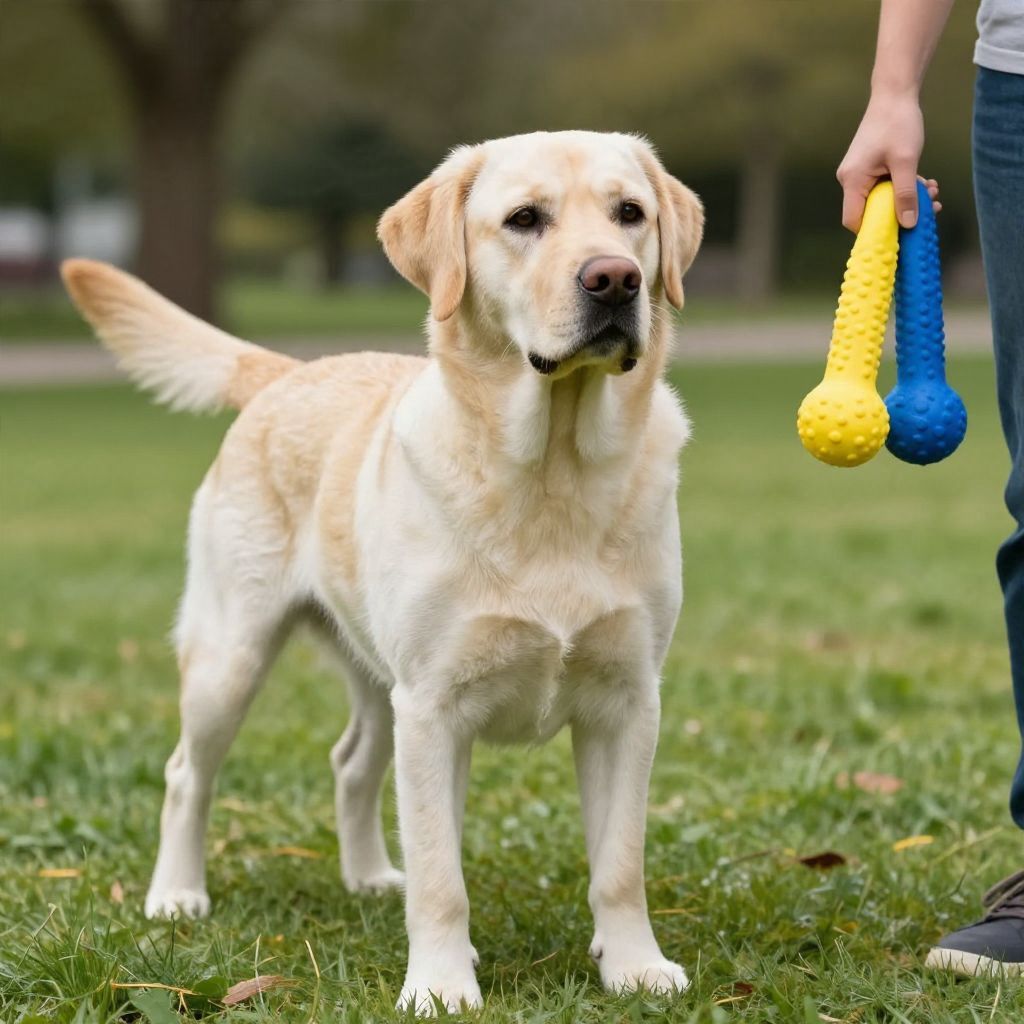
Can dogs see yellow? Yes. Dogs do see yellow, along with some other shades, but their color vision is limited compared with yours. They do not see the full rainbow the way humans do, so color choice matters most when you are picking toys, training gear, or visual cues.
Understanding what your dog can and cannot see can make play, training, and safety easier. It also helps you choose items your dog can notice more quickly, especially in low light or busy environments.
Can dogs see yellow?
Yes, dogs can see yellow. Their vision is dichromatic, which means they mainly perceive blue and yellow tones, while reds and greens look more muted or grayish. Yellow is usually one of the easiest colors for dogs to distinguish, especially against darker backgrounds.
How dog color vision works
Dogs have fewer color-detecting cells in their eyes than humans do. That means they rely less on color and more on motion, brightness, shape, and contrast.
In practical terms, your dog may notice a yellow toy more easily than a red one on green grass, but the exact result depends on lighting, the background, and your dog’s individual vision.
What colors are easiest for dogs?
- Blue and yellow are usually the most noticeable colors.
- White, black, and gray can still be easy to spot because of contrast.
- Red and green often blend together or appear duller.
Why contrast matters more than color
A yellow ball on green grass may still be hard to find if the lighting is poor or the ball is small. A bright yellow toy with a strong outline or texture is often easier for a dog to track than a plain toy in a similar shade.
Does yellow help with dog toys and training?
Often, yes. Yellow toys, cones, and training markers can be easier for many dogs to see outdoors or in cluttered spaces. That can improve fetch games, agility practice, and simple retrieval exercises, though the best choice still depends on your dog and the environment.
Practical ways to use color in training
- Choose toys in yellow or blue for outdoor play.
- Use high-contrast targets, such as yellow on dark grass or blue on pale flooring.
- Pick a toy with a distinct shape or texture, not just a bright color.
- Keep cues consistent so your dog learns the object, not only the color.
If your dog loses interest quickly, the issue may not be the color at all. Size, smell, noise, movement, and your dog’s motivation often matter just as much.
Can all dogs see yellow the same way?
No. While most dogs share the same basic color vision pattern, individual differences matter. Age, eye health, breed-related eye issues, and vision changes from illness or injury can all affect how well your dog sees any color, including yellow.
Factors that can change what your dog sees
- Age: Older dogs may develop cloudy lenses or reduced vision.
- Eye disease: Cataracts, glaucoma, retinal problems, and corneal disease can affect sight.
- Lighting: Bright daylight and dim indoor light can change how visible colors appear.
- Environment: Background clutter can make even a bright toy hard to spot.
How to tell if your dog may have vision problems
If your dog seems to struggle with objects they used to find easily, do not assume it is just about color. Vision changes can be subtle at first and may need veterinary attention.
Warning signs to watch for
- Running into furniture or doorframes
- Hesitating on stairs or in dim light
- Startling when approached unexpectedly
- Squinting, eye redness, cloudiness, or discharge
- Reduced interest in fetch or tracking toys
- Uneven pupils or visible eye discomfort
Seek veterinary care promptly if vision changes appear suddenly, if your dog seems painful, or if the eyes look red, cloudy, swollen, or injured. Sudden blindness or eye pain can be an emergency.
Best ways to choose toys and gear if you want your dog to see yellow
Yellow can be a smart choice, but visibility improves most when you combine color with contrast and design. A toy that is bright, large enough to notice, and easy to grasp is usually better than a tiny object in the same color.
- Pick a yellow toy with a strong contrast trim if possible.
- Choose a size that matches your dog’s mouth and play style.
- Test it in the actual environment where you will use it.
- Watch whether your dog tracks it easily during movement.
- Switch to a different color or shape if your dog seems confused.
Good uses for yellow items
- Fetch balls and frisbees
- Training cones or markers
- Outdoor target objects
- Visible harness accents or leash accessories
Common mistakes when choosing colors for dogs
One common mistake is assuming that a bright color will always be easy for a dog to see. Another is choosing a toy based only on human preference instead of how it looks from your dog’s eye level.
- Using red or green toys in grass and expecting easy visibility
- Choosing a small yellow item with little contrast
- Ignoring lighting, shadows, and background clutter
- Assuming every dog sees the same way
Another mistake is blaming “bad behavior” when the real issue is poor visibility. If your dog cannot find a toy, they may need a better visual target, not more correction.
What if your dog still cannot find yellow objects?
If your dog has trouble locating yellow items, try improving contrast before assuming there is a vision problem. Move to a simpler background, use a larger object, or add motion and scent to help your dog track it.
Helpful troubleshooting steps
- Use a yellow toy on dark flooring or a blue toy on light flooring.
- Try a toy that squeaks, crinkles, or has a distinct smell.
- Play in brighter light or a less cluttered area.
- Observe whether your dog can find the object when it is stationary versus moving.
If your dog still seems unable to see well, schedule a veterinary exam. Eye disease, neurological problems, and age-related changes can all affect vision, and early care can matter.
When to call the vet about your dog’s eyesight
Contact your veterinarian if you notice ongoing trouble seeing objects, repeated bumping into things, or changes in the eyes themselves. A veterinary exam can help determine whether the issue is normal aging, a temporary problem, or something more serious.
Get urgent help now if you notice
- Sudden vision loss
- Eye pain or obvious distress
- Cloudy, red, bulging, or injured eyes
- Unequal pupils after trauma
- Discharge with swelling or severe squinting
Bottom line
Yes, dogs can see yellow, and it is often one of the easier colors for them to notice. For the best results, use yellow along with strong contrast, good lighting, and a toy or training item that fits your dog’s needs. If vision changes seem new or sudden, get veterinary advice promptly.
If you want to learn more about how dogs perceive color, you may also find colors dogs can see and whether dogs can see colors helpful.