
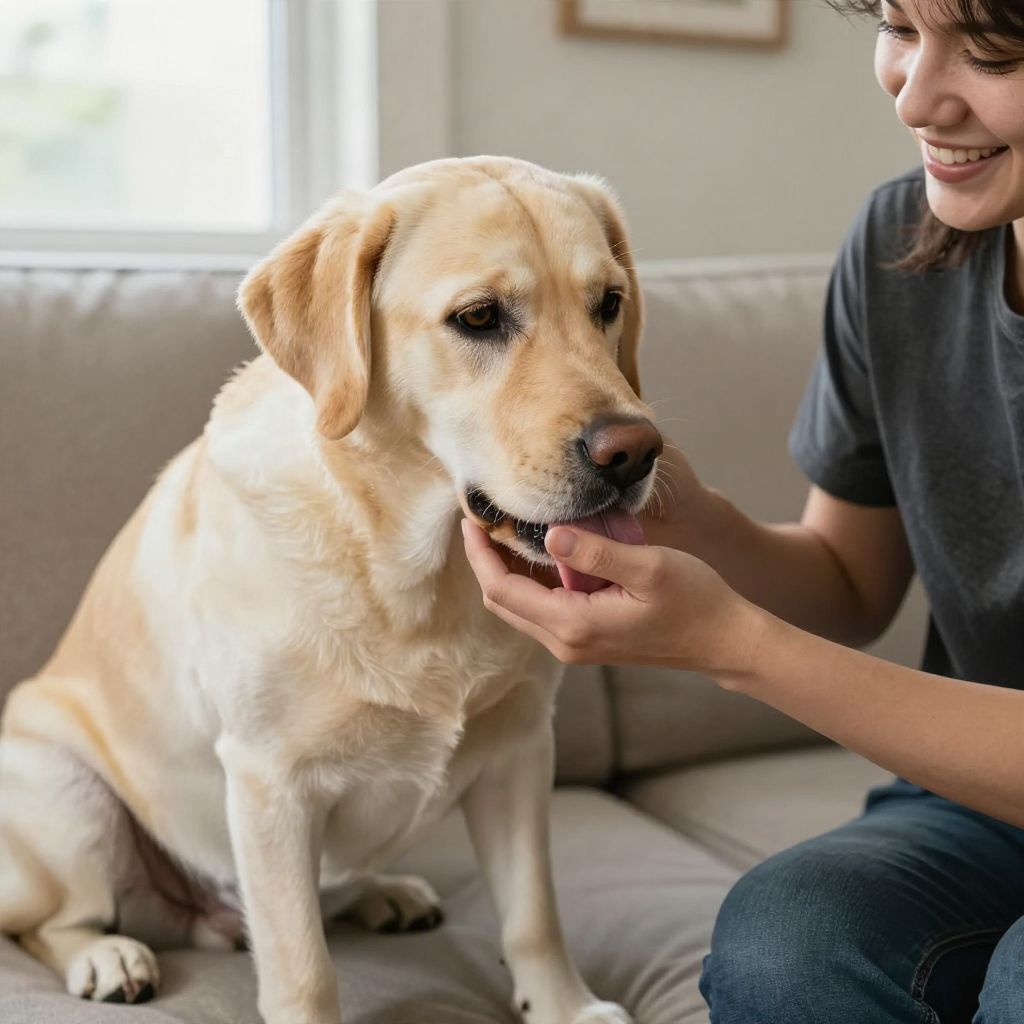
If you keep asking, “Why does my dog constantly lick me,” the short answer is that licking is usually normal canine communication. Dogs lick to show affection, seek attention, taste salt on your skin, calm themselves, or respond to anxiety or habit.
Most of the time, occasional licking is harmless. But if the behavior is sudden, intense, obsessive, or paired with other symptoms, it can point to stress, skin discomfort, nausea, pain, or another issue that deserves attention.
Why does my dog constantly lick me?
Dogs constantly lick people for several common reasons: affection, attention-seeking, exploration, self-soothing, or because they have learned that licking gets a reaction. If the licking is new, excessive, or hard to interrupt, consider stress, boredom, skin irritation, pain, nausea, or another health problem and talk with your veterinarian.
Common reasons dogs lick people
Affection and social bonding
Licking can be a social behavior. Many dogs lick their people as a friendly gesture, especially when they are relaxed, excited to see you, or seeking closeness.
That said, “affection” is only one possible reason. A dog may also be licking because it has learned that you pet, talk to, or laugh when it does.
Attention-seeking
If your dog licks your hands, face, or feet and you respond every time, the behavior may be reinforced. Even negative attention can be rewarding for some dogs if it reliably gets your focus.
This is common in dogs that are under-stimulated, highly social, or still learning household manners.
Salt, scent, and taste
Your skin can taste interesting to a dog. Sweat, lotion, food residue, or natural skin oils may make you more appealing after exercise, cooking, or a long day.
Some dogs are especially motivated by smell and will lick to investigate what you’ve touched or eaten.
Stress, anxiety, or self-soothing
Licking can be calming for some dogs. You may notice it more during changes in routine, loud noises, visitors, conflict in the home, or times when your dog seems unsure.
If licking happens alongside pacing, panting, hiding, whining, or clinginess, stress may be part of the picture.
Boredom or excess energy
Dogs that do not get enough exercise, mental enrichment, or structured interaction may develop repetitive behaviors, including licking people or objects.
This is especially likely in energetic dogs, young dogs, or dogs left alone for long periods without enough outlets.
Learned habit
Sometimes licking starts for one reason and becomes a habit. If it has been rewarded over time, it may continue even after the original trigger is gone.
Habitual licking can be hard to stop if everyone in the household responds differently.
Possible medical causes
Excessive licking is not always behavioral. Dogs may lick people, themselves, or surfaces more when they feel unwell.
- Nausea or digestive upset
- Pain or discomfort
- Skin irritation or allergies
- Cognitive changes in older dogs
- Neurologic issues in some cases
You should not assume it is “just a quirk” if the licking is sudden, intense, or paired with other symptoms.
When is licking normal, and when is it a problem?
Occasional licking is usually normal. It becomes more concerning when it is frequent, difficult to interrupt, disruptive, or clearly out of character for your dog.
Signs it is probably harmless
- Your dog licks briefly and then stops
- The behavior happens mainly during greetings or cuddling
- Your dog is otherwise eating, drinking, and acting normally
- You can redirect the behavior easily
Red flags that need veterinary attention
- Sudden increase in licking without an obvious reason
- Licking that seems obsessive or nonstop
- Vomiting, drooling, diarrhea, loss of appetite, or lethargy
- Signs of pain, limping, stiffness, or sensitivity to touch
- Skin redness, hair loss, sores, or frequent scratching
- Confusion, disorientation, or behavior changes in an older dog
Seek urgent veterinary care if your dog is also having trouble breathing, collapsing, has a swollen face, is unable to settle, or may have eaten something toxic or dangerous.
What your dog may be trying to communicate
“I like you”
Many dogs use licking as part of social contact. If your dog is relaxed, loose-bodied, and happy, the licking may simply be a friendly greeting or a request for closeness.
“Pay attention to me”
If licking starts when you are busy, on the phone, or ignoring your dog, it may be a learned attention-seeking behavior. Dogs quickly notice what gets a response.
“I’m overwhelmed”
Some dogs lick when they are uncertain, nervous, or overstimulated. This can happen during grooming, handling, vet visits, or busy household moments.
“Something feels off”
If the licking is new and persistent, your dog may be uncomfortable. Look for changes in appetite, energy, posture, bathroom habits, or sleep.
How to reduce constant licking safely
The best approach is to manage the behavior kindly, not punish it. Punishment can increase anxiety and make the problem worse.
- Stay calm and consistent. Avoid laughing, pushing your dog away dramatically, or giving big reactions that may reward the behavior.
- Redirect to an appropriate behavior. Ask for a sit, down, or settle, then reward calm behavior with praise or a treat.
- Reward quiet, relaxed moments. Catch your dog being calm and reinforce it before licking starts.
- Provide more enrichment. Add sniff walks, training games, puzzle feeders, and chew-safe enrichment if your dog is bored.
- Use management. If your dog licks your face, turn away, stand up, or briefly step out of reach so the behavior does not get reinforced.
- Check for triggers. Notice whether licking happens when your dog is tired, hungry, overstimulated, or worried.
What not to do
- Do not punish, yell at, or physically correct your dog for licking
- Do not use aversive tools or “dominance” tactics
- Do not ignore possible medical signs just because the licking seems cute
How age, breed, and temperament can matter
Individual dogs vary a lot. Age, personality, health, and training history often matter more than breed alone.
Puppies
Puppies often lick more because they are exploratory, social, and still learning boundaries. They may also lick during teething or when excited.
Good early training helps puppies learn that calm behavior earns attention, while constant licking does not.
Adult dogs
In adult dogs, repeated licking is more likely to be a habit, a communication pattern, or a response to boredom, stress, or learned reinforcement.
Senior dogs
Older dogs may lick more if they are anxious, uncomfortable, or experiencing age-related changes. If a senior dog suddenly becomes more clingy or repetitive, a veterinary check is especially important.
Breed tendencies
Some dogs may be more physically affectionate or people-focused, but breed does not guarantee licking behavior. What matters most is the individual dog’s temperament, environment, and training.
When to call your veterinarian or a behavior professional
Contact your veterinarian if the licking is new, escalating, or accompanied by any other symptom. A medical exam can help rule out pain, nausea, allergies, or other causes.
If your dog is healthy but the licking is persistent, disruptive, or linked to anxiety, a certified trainer or veterinary behaviorist can help you build a humane behavior plan.
Bring notes to the appointment
- When the licking happens
- Who or what your dog licks
- Any recent changes at home
- Other symptoms you have noticed
- What seems to stop or trigger it
Quick troubleshooting guide
- If licking happens mainly during greetings, teach an alternate greeting like sitting for attention.
- If it happens when your dog is bored, increase exercise and enrichment.
- If it happens when your dog seems worried, reduce stress and look for triggers.
- If it happens with vomiting, pain, or skin issues, schedule a vet visit.
- If it is constant and hard to interrupt, ask for professional help rather than waiting it out.
Bottom line
Why does my dog constantly lick me? Most often, it is a normal mix of affection, attention-seeking, taste, or self-soothing. Watch for changes in frequency, context, and body language, and get veterinary help if the licking is sudden, obsessive, or paired with other symptoms.
If you want to understand more about your dog’s licking habits, you may also find these guides helpful: what it means when dogs lick you and why dogs lick me so much.