
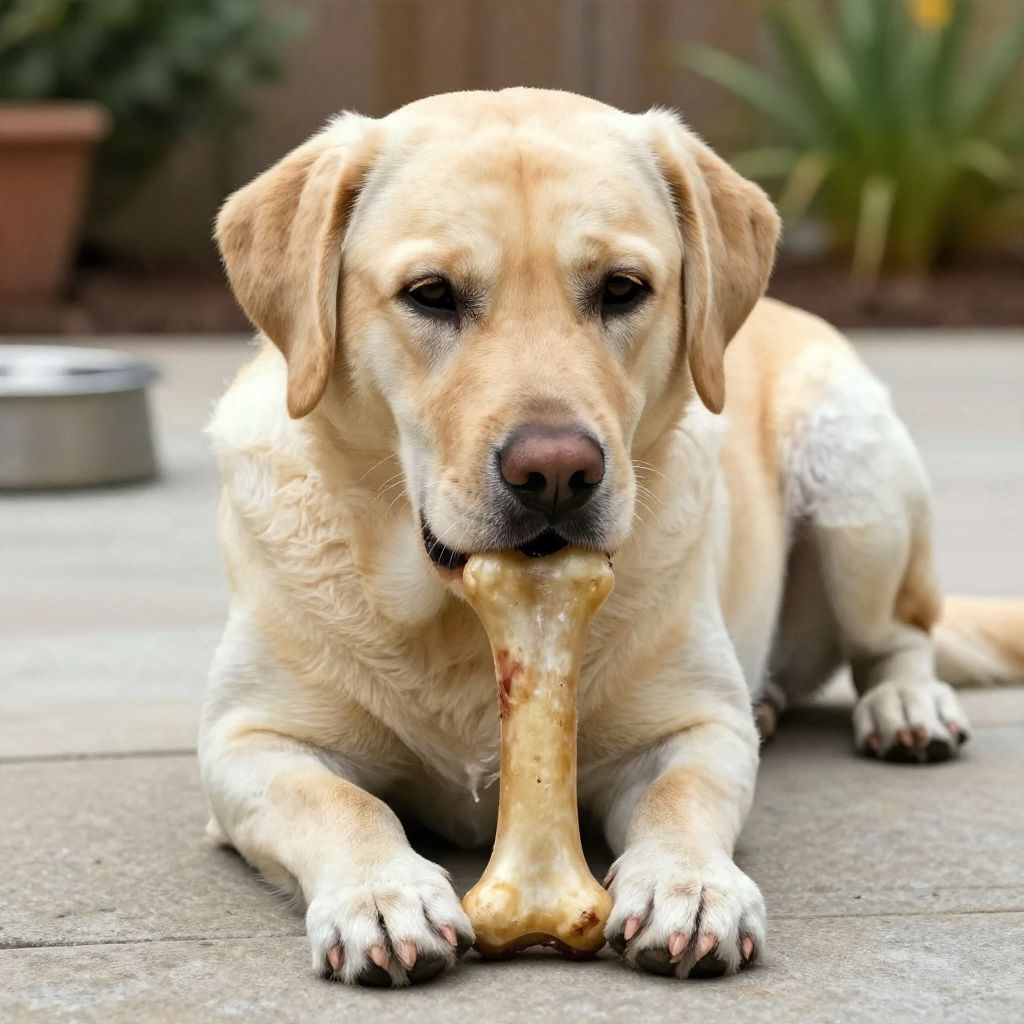
Why do dogs like bones? For many dogs, bones are irresistible because they satisfy chewing instincts, taste and smell appealing, and provide a long-lasting activity. Chewing can also help some dogs relax and relieve boredom, but not every bone is safe.
The right choice depends on your dog’s size, age, chewing style, and health. Some bones can splinter, break teeth, or cause choking or digestive blockage, so it’s important to know the difference between a safe chew and a risky one.
Why do dogs like bones?
Dogs like bones because chewing is a natural, rewarding behavior that gives them flavor, texture, and mental stimulation. The act of gnawing can help some dogs manage stress or boredom, but the appeal varies by individual dog, age, and chewing strength.
What makes bones so appealing to dogs?
Several things can make bones especially interesting to dogs:
- Smell and flavor: Bones often hold meat, marrow, or cartilage that dogs find highly appealing.
- Chewing satisfaction: Chewing is a normal canine behavior, and bones provide resistance that many dogs enjoy.
- Enrichment: A bone can keep a dog occupied and mentally engaged for a while.
- Stress relief: Some dogs chew more when they are anxious, under-stimulated, or trying to settle down.
- Natural scavenging instincts: Many dogs are motivated by food-related objects they can investigate and work on.
That said, liking bones does not mean a bone is appropriate for your dog. A dog may love the experience and still be at risk of injury.
Are bones safe for dogs?
Not all bones are safe. Cooked bones are especially risky because they can splinter, while very hard bones can crack teeth. Even raw bones can carry bacteria or cause choking, constipation, or intestinal injury, depending on the dog and the bone type.
Bones that are more concerning
- Cooked bones: These can splinter and cause mouth, throat, or intestinal injuries.
- Weight-bearing bones from large animals: These are often very hard and may damage teeth.
- Small bones: They can be swallowed whole or lodge in the throat or digestive tract.
- Sharp fragments: Any bone that breaks into pieces is unsafe.
Why “natural” does not always mean safe
Many people assume raw or natural bones are automatically better, but safety depends on the specific bone and your dog. A bone that is too hard, too small, or too rich can still cause problems.
What should you do if your dog loves bones?
If your dog enjoys bones, focus on safe chewing options and supervision. Choose chews that match your dog’s chewing style, watch for wear and breakage, and remove anything that becomes small enough to swallow or starts splintering.
- Supervise chewing: Stay nearby so you can intervene if the bone breaks or your dog tries to swallow large pieces.
- Choose the right size: The chew should be large enough that your dog cannot fit it fully in the mouth.
- Check hardness: Very hard chews can crack teeth, especially in strong chewers.
- Limit chewing time: Short sessions can reduce wear, fatigue, and overconsumption.
- Discard damaged bones: Remove chews that splinter, crack, or become small.
Better alternatives to real bones
If your dog loves chewing, you may want safer enrichment options than animal bones. Depending on your dog, these may include veterinary-approved dental chews, rubber chew toys, or food-stuffed puzzle toys designed for dogs.
- Durable rubber toys sized for your dog
- Vet-recommended dental chews
- Frozen stuffed toys for supervised enrichment
- Food puzzles that encourage slow problem-solving
These options can provide the same mental engagement without some of the bone-related hazards.
Do puppies like bones for the same reason?
Puppies often like bones because they are teething, curious, and eager to chew. However, puppies need extra caution because their teeth, jaws, and digestive systems are still developing, and they may swallow unsafe pieces more easily.
Puppy-specific concerns
- Puppies may chew more intensely during teething.
- They may not know how to gauge what is safe to swallow.
- Small mouths can make choking more likely with the wrong-sized bone.
For puppies, safer chew toys and close supervision are usually better than giving a real bone.
Do older dogs like bones differently?
Senior dogs may still enjoy bones, but age can change what is safe and comfortable. Older dogs may have worn teeth, gum disease, slower digestion, or other health issues that make hard bones more likely to cause pain or injury.
If your older dog has dental disease, missing teeth, jaw pain, or trouble chewing, ask your veterinarian before offering any hard chew. A softer, safer option may be a better fit.
When does bone chewing become a problem?
Bone chewing becomes a concern when it leads to injury, digestive upset, or obsessive behavior. A dog that guards bones, swallows pieces quickly, or chews so hard that teeth crack may need a different enrichment plan.
Warning signs to watch for
- Broken or cracked teeth
- Drooling more than usual
- Bleeding from the mouth
- Gagging, retching, or repeated swallowing
- Vomiting
- Constipation or straining to pass stool
- Loss of appetite
- Abdominal pain or a tense belly
Seek urgent veterinary care if your dog is choking, has trouble breathing, collapses, has a swollen abdomen, cannot keep food or water down, or seems painful after chewing a bone.
How can you tell if your dog is a risky chewer?
Some dogs are more likely to have problems with bones because of their chewing style, not because of breed alone. Strong chewers, fast eaters, and dogs that try to swallow pieces whole may need safer alternatives.
Behavior patterns that increase risk
- Crushing chews with very strong jaws
- Trying to gulp pieces instead of chewing slowly
- Resource guarding or becoming tense around food items
- Chewing so aggressively that toys and bones break quickly
If your dog has a history of swallowing foreign objects, talk with your veterinarian about the safest enrichment choices.
What if your dog already ate a bone?
If your dog swallowed a bone, the next step depends on the type of bone, the size of the piece, and whether your dog has symptoms. Do not try to induce vomiting unless a veterinarian specifically tells you to do so.
Contact your veterinarian promptly if the bone was cooked, sharp, or large, or if your dog is showing any signs of distress. Emergency signs include choking, breathing trouble, repeated vomiting, severe lethargy, abdominal pain, or inability to pass stool.
How to satisfy the urge to chew safely
You do not need to eliminate chewing; you just need to channel it safely. Many dogs do best when they have a mix of physical exercise, training, and appropriate chew outlets.
- Provide daily exercise: Walks, play, and sniffing help reduce boredom-driven chewing.
- Use reward-based training: Teach “leave it” and “drop it” so you can redirect unsafe chewing.
- Rotate enrichment items: Changing toys can keep your dog interested without relying on bones.
- Feed meals in puzzle toys: This can satisfy problem-solving and food-seeking behavior.
- Manage access: Keep bones, scraps, and trash out of reach.
Common mistakes dog owners make with bones
Many bone-related problems happen because the chew was offered without enough supervision or the wrong type was chosen. Avoid these common mistakes:
- Giving cooked bones from meals
- Assuming raw bones are always safe
- Choosing a bone that is too small for the dog
- Leaving a dog alone with a hard chew for long periods
- Ignoring cracked teeth, drooling, or vomiting after chewing
When in doubt, choose the safer option and ask your veterinarian what fits your dog’s age, mouth health, and chewing habits.
Conclusion
Dogs like bones because chewing is instinctive, rewarding, and mentally satisfying, but the safest choice depends on the individual dog and the type of bone. If you want to support your dog’s chewing needs, prioritize supervision, safer alternatives, and veterinary guidance when needed.
If you want to learn more about related chewing risks, you may also find these guides helpful: can dogs eat steak bones and why do dogs like sticks.