
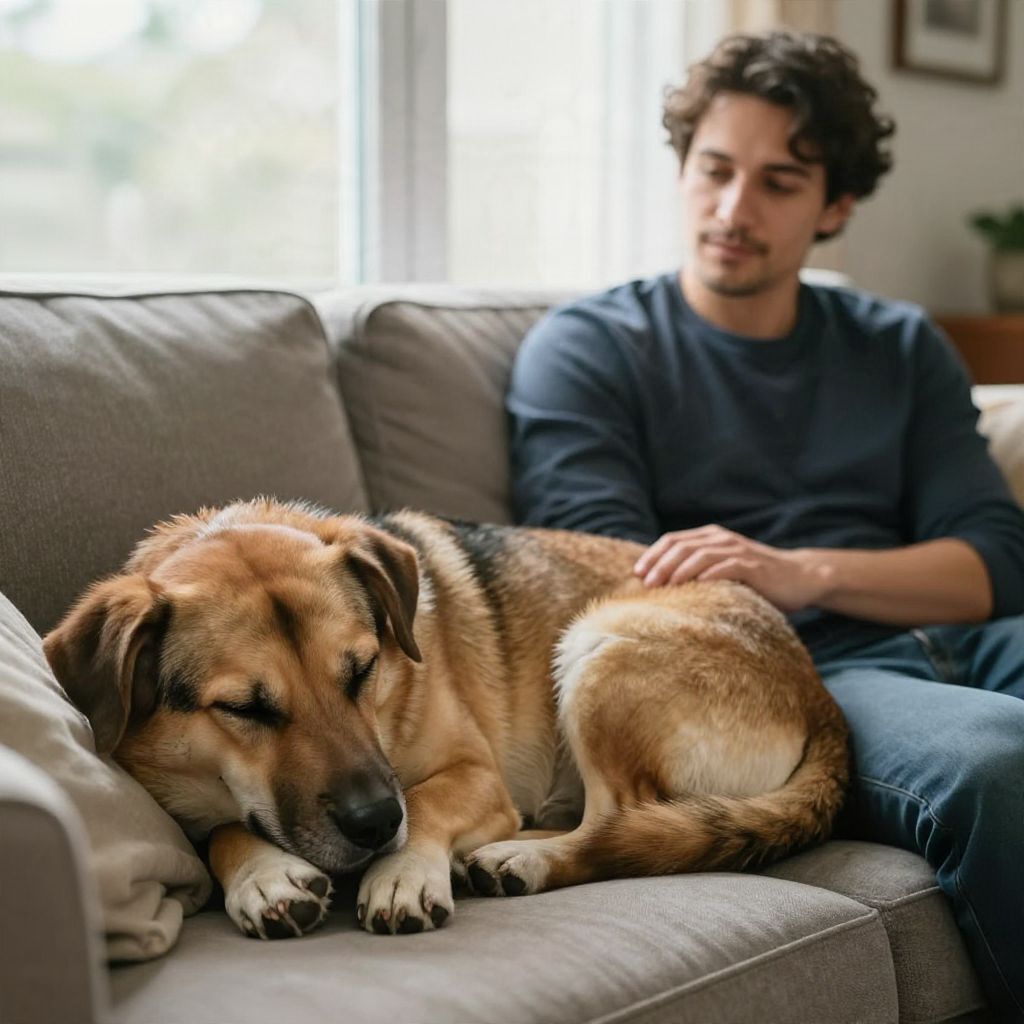
If your dog sleeps on you and not your husband, it usually means your dog feels safer, warmer, or more bonded to you. It can also reflect habit, attention patterns, or a preference for your scent, sleep position, or bedtime routine.
Most of the time, this is normal. But if the change is sudden, or your dog seems anxious, clingy, or uncomfortable, it’s worth looking at health, stress, and household routine factors.
Why does my dog sleep on me and not my husband?
Your dog is usually choosing the person who feels most comforting, familiar, or rewarding at bedtime. That can be influenced by scent, body heat, where you sleep, who feeds or comforts the dog most, and whether your dog has learned that sleeping on you gets attention or security.
Common reasons your dog prefers you at night
1. Your dog feels more bonded to you
Dogs often form stronger sleep-time preferences with the person they associate with safety, routine, and affection. If you do more of the feeding, walking, training, or settling at night, your dog may naturally choose you.
2. You may be warmer or more comfortable
Many dogs like warmth and soft, steady contact. If you sleep in a position that makes your body feel like a cozy resting spot, your dog may pick you over your husband without any deeper meaning.
3. Your scent is especially reassuring
Dogs rely heavily on smell. Your clothing, bedding, lotion, or even the way your pillow smells may be more familiar to your dog than your husband’s scent.
4. Your dog has learned a bedtime habit
If your dog has repeatedly slept on you and been allowed to stay there, the behavior can become a routine. Dogs like predictable patterns, especially at bedtime.
5. Your husband moves more or sleeps differently
Some dogs prefer the person who is calmer, stiller, or easier to settle beside. If your husband tosses and turns, snores, or gets up often, your dog may avoid sleeping on him.
6. Your dog is seeking reassurance
Dogs that are anxious, under-socialized, or going through a change may cling to one person more strongly. This can happen after a move, schedule change, new pet, family stress, or a period of illness.
7. Your dog may be responding to past experiences
Individual history matters. A rescue dog, older dog, or puppy may have learned to trust one person more quickly based on past handling, comfort, or consistency.
When it is normal versus when to pay attention
Preference for one person is usually normal if your dog is otherwise relaxed, eating well, sleeping normally, and behaving like themselves during the day. It’s more concerning if the preference appears suddenly or comes with signs of distress.
- Usually normal: your dog chooses you most nights, but is calm, healthy, and social with your husband during the day.
- Worth watching: your dog becomes unusually clingy, restless, or nervous at bedtime.
- Needs veterinary attention: your dog suddenly avoids one person, seems painful, or has other health changes.
Could health problems be part of the reason?
Yes. If your dog’s sleeping preference changed suddenly, discomfort or illness could be affecting where they want to rest. A dog in pain may seek the person or position that feels safest or easiest on their body.
Watch for signs such as limping, stiffness, trouble jumping, whining when touched, panting at rest, changes in appetite, vomiting, diarrhea, coughing, or unusual fatigue. If you notice these, contact your veterinarian.
Seek urgent veterinary care if your dog has trouble breathing, collapse, a bloated abdomen, repeated vomiting, seizures, severe pain, or sudden weakness. Those are not normal reasons for sleep preference changes.
How to tell if it is affection, habit, or anxiety
Affection and comfort
If your dog happily spends time with both of you, but chooses you at night, the reason is often simple preference. Many dogs have one “favorite” person for certain routines without rejecting anyone else.
Habit and reinforcement
If you usually let your dog sleep on you, pet them to settle, or make room for them every night, the behavior may be reinforced. Your husband may simply not be the established bedtime spot.
Anxiety or insecurity
If your dog follows you constantly, startles easily, or struggles to relax unless they are touching you, the behavior may be more about reassurance than preference. That’s especially likely if it started after a stressful event.
What you can do if you want your dog to sleep elsewhere
If your goal is to reduce the behavior, focus on consistency rather than punishment. Dogs learn best when the new routine is clear, rewarding, and predictable.
- Pick one sleeping setup and keep it consistent.
- Offer a comfortable dog bed near where you sleep so your dog is not forced to choose between you and exclusion.
- Reward settling on the bed with calm praise or a treat when your dog lies there on their own.
- Make bedtime routine predictable with the same walk, potty break, and lights-out pattern each night.
- Avoid accidentally rewarding jumping onto you if you do not want that behavior to continue.
If your dog is very attached, gradual change works better than abruptly blocking access. Sudden exclusion can increase anxiety in some dogs.
How your husband can build a stronger bedtime bond
If you want your dog to feel more comfortable with your husband, daytime positive experiences matter most. The goal is to build trust and pleasant associations, not force closeness at night.
- Have your husband do some feeding or treat delivery.
- Let him take part in calm walks or play sessions.
- Use short, positive training sessions with rewards.
- Encourage quiet couch time or floor time together.
- Let your dog approach on their own instead of being picked up or moved without choice.
For many dogs, a stronger bond develops naturally when the person is associated with good things and calm handling.
Breed, age, and personality can matter
Some dogs are naturally more velcro-like, while others are more independent. Breed tendencies can influence closeness, but they do not determine behavior on their own. Individual temperament, early socialization, training history, and daily routine are often more important than breed labels.
Puppies may sleep on the person who feels safest during a new stage of life. Senior dogs may seek the person who is easiest to reach, warmer, or more comforting if they have stiffness or vision changes. Small dogs may also be more likely to choose body contact simply because it feels secure and warm.
Common mistakes to avoid
- Do not scold your dog for choosing you.
- Do not use punishment to “teach” your dog to prefer someone else.
- Do not assume the behavior means your dog dislikes your husband.
- Do not ignore sudden changes in sleep habits if they come with other symptoms.
- Do not force a nervous dog into close contact with someone they are unsure about.
When to ask a vet or behavior professional
Talk to your veterinarian if the behavior is new, intense, or paired with physical symptoms. A vet can check for pain, illness, or age-related issues that might affect where your dog wants to sleep.
If the issue seems behavioral and your dog is anxious, fearful, or overly dependent on one person, a certified trainer or veterinary behaviorist can help you create a low-stress plan. Reward-based support is especially useful for dogs with separation-related concerns or generalized anxiety.
Bottom line
If your dog sleeps on you and not your husband, the most common reasons are comfort, habit, scent, warmth, and trust. In most cases, it is normal and not a sign of a problem. If the change is sudden or comes with pain, anxiety, or other symptoms, schedule a veterinary check.
If you want to explore more about close-contact dog behavior, you may also find why dogs sit on you and why dogs sleep on your back helpful.