
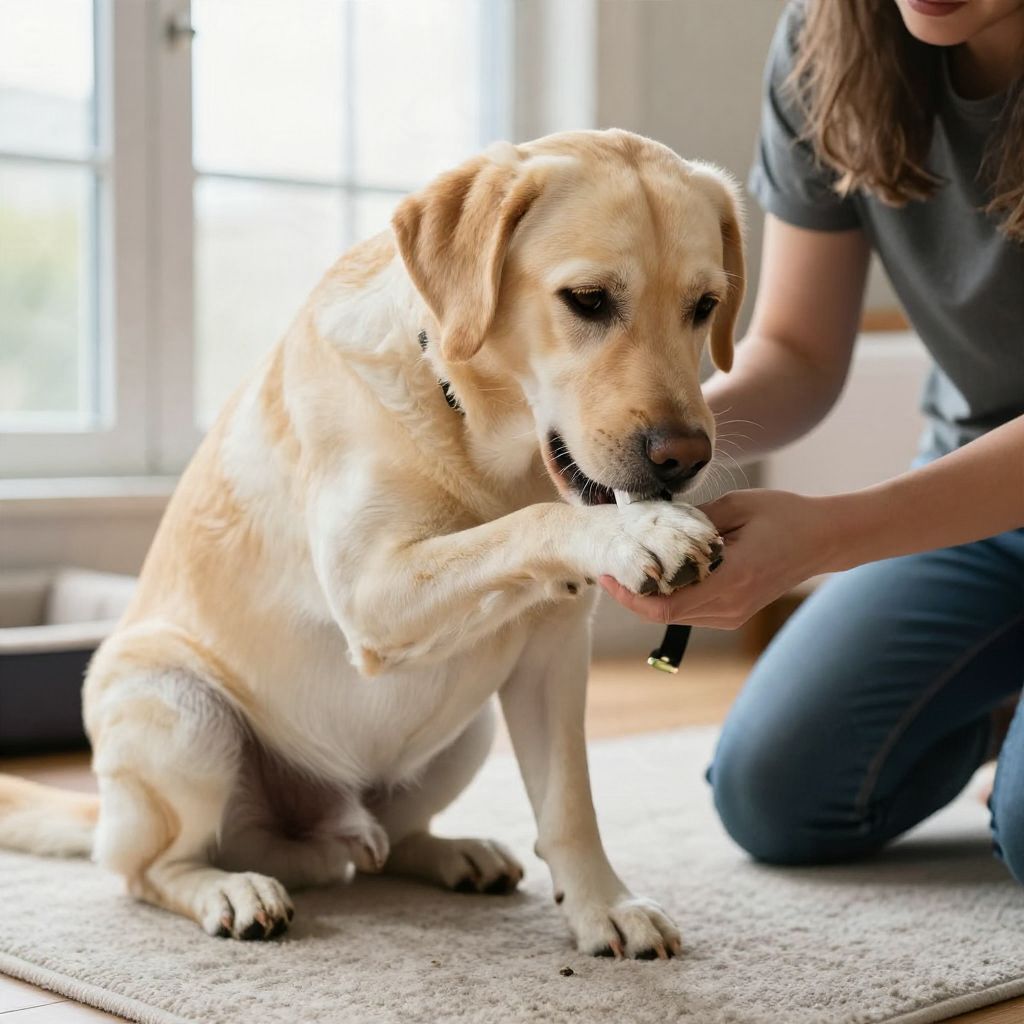
If you’re asking, “Why is my dog chewing his paws?” the most common reasons are itchiness, pain, irritation, or anxiety. Paw chewing can be mild and temporary, but it can also point to allergies, parasites, skin infection, injury, or a foreign object between the toes.
Because the causes range from simple to serious, the right next step depends on what else you notice. Look for redness, swelling, limping, odor, discharge, or repeated licking that won’t stop, and contact your veterinarian if the behavior is persistent or your dog seems uncomfortable.
Why is my dog chewing his paws?
Dogs chew their paws when something makes the feet uncomfortable or when the behavior becomes a self-soothing habit. Common causes include allergies, fleas, dry or irritated skin, infections, pain, wounds, foreign material stuck in the paw, and stress or boredom. The sooner you identify the trigger, the easier it is to stop the chewing.
Common causes of paw chewing
1. Allergies
Allergies are one of the most common reasons dogs chew their paws. Environmental triggers such as pollen, dust mites, mold, or grass can make the feet itchy, and some dogs also react to ingredients in food.
Signs that allergies may be involved include:
- Chewing or licking both front or back paws
- Red or inflamed skin between the toes
- Frequent ear scratching or head shaking
- Seasonal flare-ups
Allergies are not something you can confirm at home with certainty. Your veterinarian can help sort out whether the cause is environmental, food-related, or something else.
2. Fleas, mites, or other parasites
Even a small number of fleas can make some dogs intensely itchy, and mites can irritate the skin around the feet. Dogs with a parasite problem may chew their paws, scratch elsewhere, or develop scabs and hair loss.
Check your dog’s coat and skin carefully, especially if the paw chewing started suddenly. If your dog is not on a reliable parasite-prevention plan, ask your veterinarian what is appropriate for your pet and your area.
3. Skin infection
When a dog licks or chews the paws repeatedly, moisture and bacteria or yeast can build up and worsen the irritation. That can create a cycle: itch leads to chewing, and chewing leads to more inflammation.
Possible signs of infection include:
- Redness or swelling between the toes
- Odor from the feet
- Sticky, oily, or moist skin
- Brown staining from constant licking
- Crusting or discharge
Infections usually need veterinary treatment, and the underlying cause still has to be addressed or the problem may return.
4. Pain or injury
A dog may chew a paw that hurts. Common issues include a cut, torn nail, sprain, thorn, foxtail, insect sting, burn, or something trapped between the toes.
Look for limping, holding the paw up, flinching when touched, bleeding, a broken nail, or a visible object. If your dog is painful, avoid trying to dig deeply into the paw yourself, because you could make the injury worse.
5. Dry, irritated, or cracked skin
Weather, rough surfaces, salt, chemicals, and frequent washing can dry out the skin on the feet. Some dogs then chew at the paws because the skin feels uncomfortable or tight.
This is more likely if your dog walks on hot pavement, icy sidewalks, or treated grass, or if the paws are exposed to irritants. A vet can advise you on safe skin care and whether the problem is simple dryness or something more complex.
6. Anxiety, stress, or boredom
Some dogs chew their paws as a coping behavior. Changes in routine, lack of exercise, separation anxiety, noise sensitivity, or insufficient mental stimulation can all contribute.
Behavioral paw chewing often happens when the dog is otherwise healthy, but it can still become a habit that is hard to break. It is important not to assume it is “just behavioral” until pain and medical causes have been ruled out.
7. Habit after an initial problem
Sometimes the original irritation is gone, but the dog keeps chewing because the area has become a habit or the skin remains sensitive. The longer the cycle continues, the more likely the paw becomes inflamed and itchy again.
That is why early intervention matters. Even a mild issue can turn into a chronic one if the dog keeps reopening the skin.
What you should check at home first
A careful look can help you decide how urgent the problem is. Stay calm and inspect the paws in good light.
- Look between the toes. Check for redness, swelling, discharge, debris, or a stuck object.
- Examine the nails. Look for cracks, breaks, bleeding, or a nail that seems loose.
- Compare both paws. One painful paw may suggest injury; several itchy paws may suggest allergies or irritation.
- Notice the pattern. Does it happen after walks, after grooming, at night, or during stressful moments?
- Watch for other symptoms. Ear problems, skin rashes, limping, or appetite changes can help your vet narrow the cause.
If your dog is very upset, painful, or resistant to handling, do not force a thorough exam. A veterinarian can examine the paws safely and may use sedation if needed.
What to do right now
Your first goal is to prevent more irritation while you figure out why the chewing is happening. Simple management can help, but it should not replace veterinary care if the problem is ongoing.
- Stop the chewing cycle. Use an e-collar or another vet-approved barrier if your dog will not leave the paw alone.
- Rinse after outdoor exposure. If your dog walked through grass, mud, salt, or chemicals, gently rinse and dry the paws.
- Keep the feet clean and dry. Moisture trapped between the toes can worsen irritation.
- Limit rough surfaces. Reduce exposure to hot pavement, ice, or abrasive terrain until the paw is healed.
- Schedule a veterinary visit. Persistent paw chewing needs a diagnosis, not guesswork.
Avoid applying human creams, essential oils, or random home treatments unless your veterinarian says they are safe. Some products can be harmful if licked.
When paw chewing is an emergency
Seek urgent veterinary care if your dog has any of the following:
- Severe limping or refusal to bear weight
- Bleeding that will not stop
- A deep wound, puncture, or obvious foreign object
- A swollen paw that is rapidly getting worse
- Pus, strong odor, or severe discharge
- Sudden facial swelling, hives, vomiting, or trouble breathing
- Extreme pain, crying, or agitation
These signs can indicate infection, a significant injury, or a serious allergic reaction. Do not wait to see if it improves on its own.
How veterinarians usually approach the problem
Your veterinarian will try to find the root cause instead of just treating the chewing. That may involve a physical exam, skin and ear checks, parasite evaluation, and sometimes testing for infection, allergies, or pain.
Depending on the findings, your vet may recommend:
- Cleaning and protecting the skin
- Treating infection or parasites
- Managing allergies
- Addressing pain or orthopedic issues
- Behavior support if stress or compulsive licking is part of the picture
Because the right treatment depends on the cause, it is important not to assume one dog’s paw chewing is the same as another’s.
How to reduce the chances it comes back
Once the cause is identified, prevention becomes much easier. The best plan depends on your dog’s age, lifestyle, and health history.
For dogs with allergies or sensitive skin
- Keep up with veterinarian-recommended parasite prevention
- Rinse paws after outdoor exposure if your vet agrees it helps
- Follow your vet’s plan for allergy management
- Monitor for seasonal flare-ups or food-related patterns
For dogs with stress-related chewing
- Increase daily exercise in a way that suits your dog’s age and body condition
- Add enrichment such as sniffing games, puzzle feeders, and training sessions
- Keep routines predictable when possible
- Work with a certified trainer or veterinary behaviorist if anxiety is significant
For dogs prone to foot injuries
- Check paws after hikes, walks, or rough play
- Trim hair around the feet if it traps debris, if appropriate for your dog’s coat
- Keep nails at a healthy length
- Avoid known irritants such as salt, chemicals, or hot surfaces
Common mistakes to avoid
When you are trying to help a dog who keeps chewing his paws, it is easy to focus on the symptom and miss the cause. Avoid these common mistakes:
- Assuming it is “just a bad habit” without checking for pain or skin disease
- Using harsh cleaners, alcohol, or irritating products on the paws
- Waiting too long when the chewing is frequent or worsening
- Ignoring ear itching, body itching, or limping that may point to a bigger issue
- Using punishment for a behavior that is often driven by discomfort
Reward-based management is safer and more effective than trying to scare a dog out of licking or chewing.
Bottom line
If your dog is chewing his paws, think first about itch, pain, irritation, or stress. A quick home check can help, but persistent chewing, redness, odor, swelling, limping, or discharge should be evaluated by a veterinarian. The sooner you find the cause, the faster your dog can get relief.
If you want to learn more about related paw-licking causes, see why dogs lick their paws and why dogs chew on their feet.