
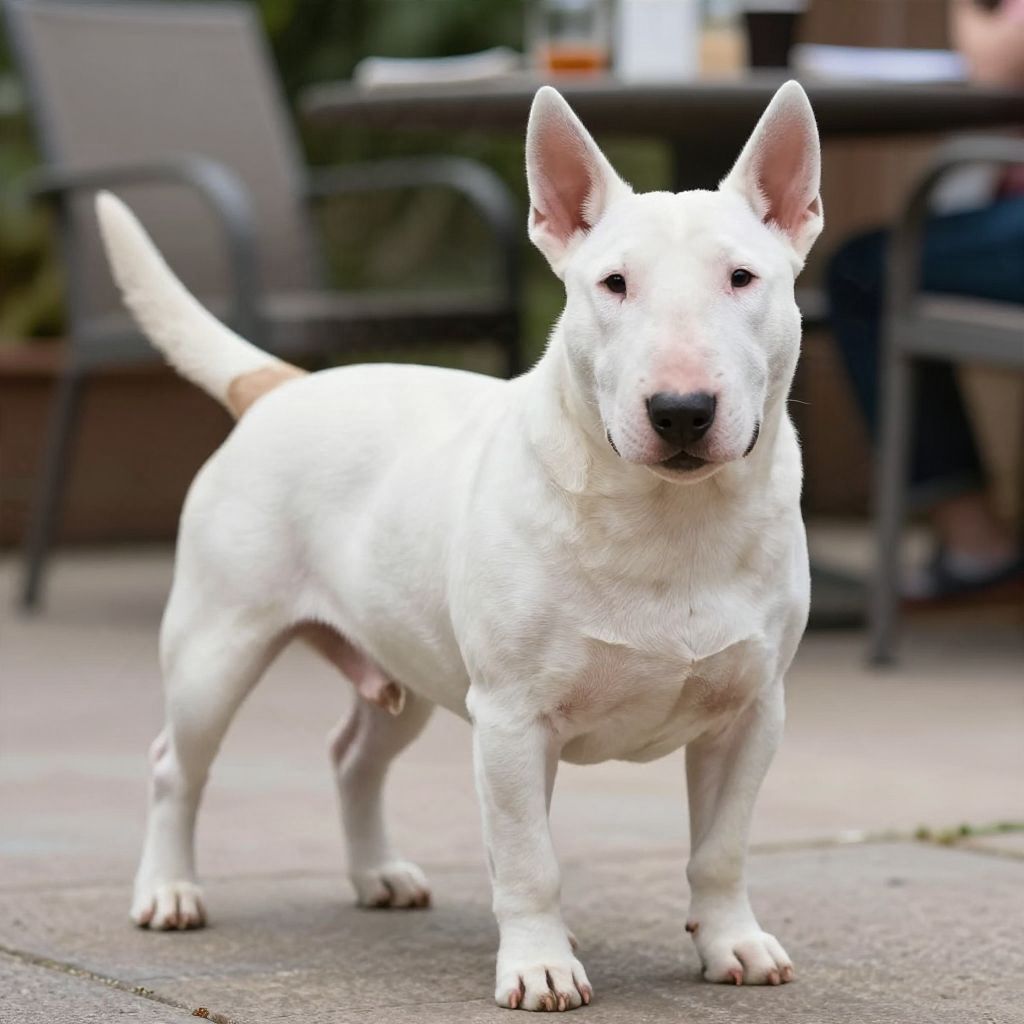
If you’ve wondered what kind of dog Spuds Mackenzie was, the answer is simple: he was an English Bull Terrier. The Bud Light mascot became famous in the late 1980s and helped make the breed widely recognizable.
That said, a dog’s breed is only part of the story. Individual temperament, training, socialization, health, and daily care matter just as much as breed labels when you’re living with a dog like an English Bull Terrier.
What Kind Of Dog Was Spuds Mackenzie?
Spuds Mackenzie was portrayed by an English Bull Terrier, a breed known for its egg-shaped head, sturdy build, and playful personality. English Bull Terriers can be affectionate, energetic, and entertaining, but each dog is an individual. Breed traits suggest tendencies, not guarantees.
Why Spuds Mackenzie Became So Memorable
Spuds Mackenzie was more than a mascot; he was a pop-culture character that made the English Bull Terrier instantly recognizable to many people. His look and playful image helped people associate the breed with humor, confidence, and charm.
If you are considering a similar breed, remember that advertising characters are carefully chosen and styled. Real dogs need consistent care, training, and management, not just a fun image.
What English Bull Terriers Are Typically Like
English Bull Terriers are often described as lively, people-oriented, and stubborn in an endearing way. Many enjoy play, attention, and structured routines, but their energy and independence can make training more demanding for first-time owners.
Common tendencies you might see
- Strong attachment to their family
- Energetic, playful behavior
- Curiosity and a love of activity
- Occasional persistence or selective listening during training
These are general tendencies, not rules. Some dogs are calmer, more reserved, or easier to train than others.
Care Tips If You Live With an English Bull Terrier
If your dog is an English Bull Terrier, focus on routine, positive training, and safe outlets for energy. Consistent care helps prevent boredom, frustration, and unwanted behavior.
Training that works well
- Use reward-based methods with treats, praise, and play.
- Keep sessions short and frequent.
- Practice basic cues like sit, stay, come, and leave it.
- Reinforce calm behavior in the home.
- Start training early, but continue throughout life.
Avoid harsh corrections or intimidation. Bull terrier-type dogs often respond better to clear structure and motivation than to punishment.
Exercise and enrichment
Many English Bull Terriers need daily physical activity and mental stimulation. The exact amount depends on age, health, and individual energy level.
- Walks at a steady pace
- Fetch or tug with rules and breaks
- Food puzzles and scent games
- Short training drills
- Safe play with compatible dogs, if your dog enjoys it
Too little activity can lead to chewing, barking, digging, or restlessness. Too much high-impact exercise in a young or injured dog can also be a problem, so adjust activity to your dog’s condition.
Grooming And Routine Health Care
English Bull Terriers have short coats that are usually easy to maintain, but grooming is still important. Regular care also gives you a chance to notice skin issues, lumps, ear problems, or sore spots early.
Basic grooming checklist
- Brush weekly or as needed to remove loose hair
- Check ears for odor, redness, or debris
- Trim nails regularly
- Brush teeth or use vet-approved dental care
- Watch for skin irritation, especially if your dog scratches often
Some dogs in this breed group can be prone to skin sensitivity or allergies, but that does not happen in every dog. If your dog has persistent itching, redness, or recurrent ear infections, ask your veterinarian.
Feeding And Weight Management
A healthy diet matters for every dog, including English Bull Terriers. The best food is one that is complete and balanced for your dog’s life stage and appropriate for their size, activity level, and health needs.
- Feed measured meals rather than free-feeding if weight gain is a concern.
- Use treats sparingly during training.
- Adjust portions if activity changes.
- Ask your vet before changing diets for allergies or digestive issues.
Because some dogs are food-motivated, it can be easy to overfeed. Extra weight can strain joints, reduce stamina, and make exercise less comfortable.
Socialization And Behavior Around People Or Other Dogs
Early socialization helps any dog learn to feel comfortable in the world. For an energetic, strong dog like an English Bull Terrier, positive early experiences are especially useful.
Good socialization means exposing your dog gradually and safely to different people, places, sounds, surfaces, and calm dogs. It should never mean forcing interaction or overwhelming your dog.
Signs your dog may need more support
- Excessive barking or lunging on leash
- Fearful hiding or freezing
- Overexcitement that is hard to settle
- Guarding food, toys, or resting spots
If behavior problems are intense or persistent, a certified trainer or veterinary behaviorist can help you build a plan that is safe and humane.
Health Concerns To Watch For
No breed is guaranteed to develop specific problems, but some dogs may be more likely to face certain issues than others. English Bull Terriers can have individual health concerns that deserve attention from a veterinarian.
Call your vet if you notice ongoing limping, repeated vomiting, chronic itching, ear infections, sudden behavior changes, breathing trouble, or appetite loss. These signs do not always mean something serious, but they should not be ignored.
Get urgent veterinary help now if your dog has
- Difficulty breathing
- A swollen abdomen or repeated unproductive retching
- Collapse, seizure, or sudden weakness
- Severe bleeding or a deep wound
- Possible poisoning or toxin exposure
- Sudden inability to stand or walk
When in doubt, treat these as emergencies and contact a veterinarian right away.
Is An English Bull Terrier Right For You?
If you like the idea of a dog with personality, energy, and a lot of character, an English Bull Terrier may appeal to you. They often do best with owners who enjoy training, can provide structure, and are committed to daily engagement.
They may be less suitable for someone who wants a low-maintenance dog with minimal exercise needs. As with any breed, the individual dog’s temperament and your lifestyle should guide the match.
Common Mistakes New Owners Make
People sometimes assume a famous breed image means the dog will be easygoing or naturally well-behaved. In reality, even a friendly dog needs training, boundaries, and consistent care.
- Skipping early training and socialization
- Not providing enough exercise or enrichment
- Using punishment instead of rewards
- Ignoring early signs of skin, ear, or weight problems
- Expecting the dog to behave like the mascot version of the breed
Final Takeaway
Spuds Mackenzie was an English Bull Terrier, and that breed is known for being bold, affectionate, and full of personality. If you live with one, focus on positive training, regular exercise, good grooming, and routine veterinary care to help your dog thrive.
If you want to keep learning about famous dog mascots and breed identities, you may also enjoy what kind of dog Benji was or what kind of dog Cujo was.