
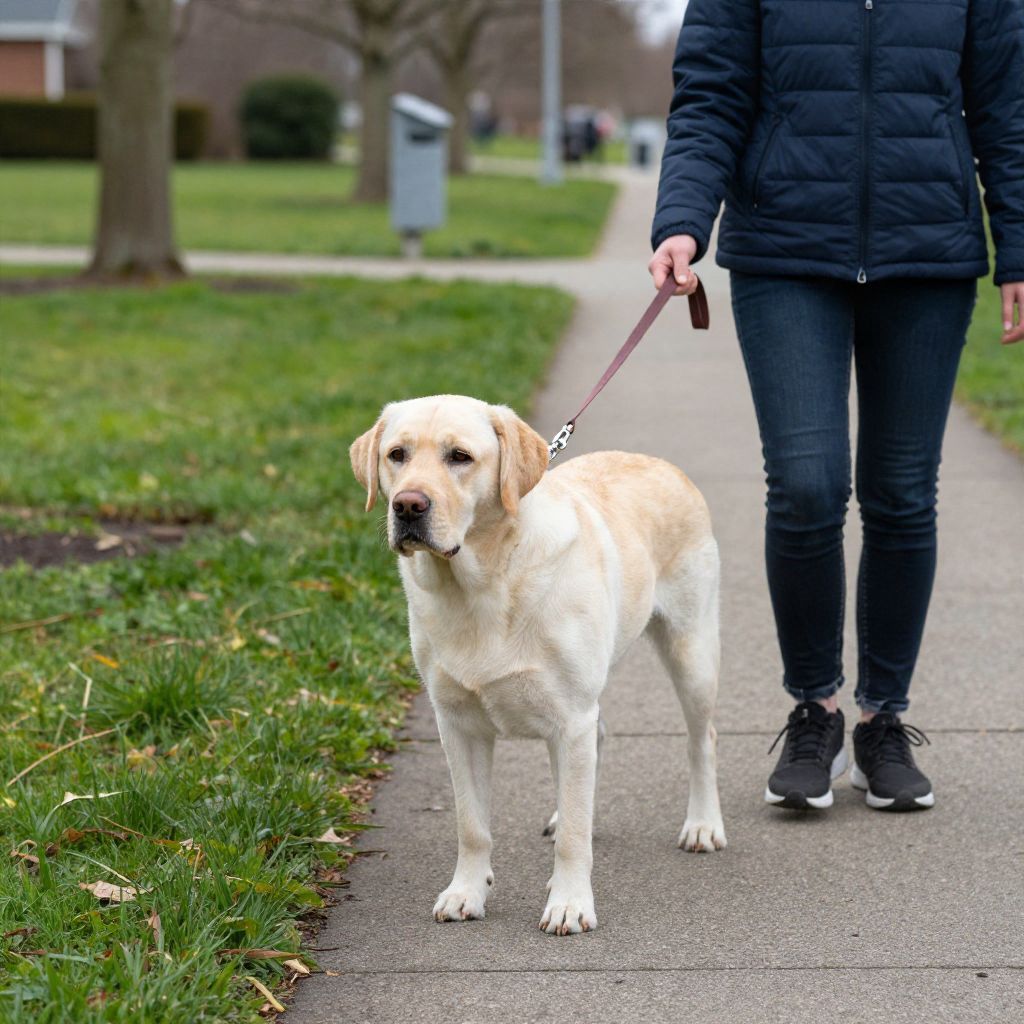
If you need to make a dog poop quickly, the safest approach is usually a short walk, calm movement, and a chance to sniff in a familiar area. Many dogs will go after exercise, a meal, or a predictable potty routine.
If your dog seems constipated, straining, or unable to poop, don’t force it with home remedies that could make things worse. Watch for warning signs, and contact a veterinarian if your dog seems painful, bloated, weak, or has not passed stool for more than a day or two.
How To Make A Dog Poop Instantly Naturally?
The quickest natural way to help a dog poop is to take them outside for a calm walk, let them sniff, and give them privacy in a familiar potty spot. Gentle movement can stimulate the bowels. If your dog is straining, uncomfortable, or not improving, stop trying home fixes and call your vet.
Step-by-step: the safest natural way to encourage a bowel movement
Dogs often poop more easily when their body is relaxed and their routine is predictable. Try these steps in order, and avoid rushing or scolding your dog.
- Take your dog outside right away. Use a leash and go to the usual potty area if possible.
- Walk at a steady, relaxed pace. Light movement can help trigger the urge to defecate.
- Give your dog time to sniff. Sniffing is part of how many dogs settle and prepare to eliminate.
- Stay calm and quiet. Some dogs won’t poop if they feel pressured or distracted.
- Use a consistent cue. If your dog already knows a cue like “go potty,” say it once or twice, then wait.
- Reward success. Praise and offer a small treat after your dog poops, so the behavior becomes easier to repeat.
What helps a dog poop naturally?
Several everyday factors can make it easier for a dog to poop, but what works best depends on age, diet, activity level, and health. A healthy adult dog may respond quickly to a walk, while a puppy or senior dog may need more routine and patience.
1. A short walk
Movement helps the digestive tract work. Even a few minutes of walking can be enough for some dogs, especially if they were resting for a while.
2. A predictable schedule
Many dogs poop after meals, after waking up, or after play. Taking your dog out at the same times each day can make elimination more reliable.
3. A quiet potty spot
Some dogs need privacy. Loud noises, unfamiliar surfaces, other dogs, or busy streets can interrupt the urge to poop.
4. Proper hydration
Water supports normal stool consistency. If your dog is mildly dehydrated, stool can become harder and more difficult to pass.
5. Regular exercise
Daily activity supports digestion overall. This matters especially for dogs that spend much of the day indoors or are recovering from a period of inactivity.
When constipation may be the real problem
If your dog is trying to poop but nothing comes out, the issue may be constipation rather than just needing a walk. Constipation can happen for many reasons, including dehydration, low activity, diet changes, swallowed objects, pain, or certain medical conditions.
Common signs include:
- Straining with little or no stool produced
- Hard, dry, small stools
- Repeated attempts to poop
- Discomfort, whining, or a tense posture
- Loss of appetite or reduced energy
Do not keep trying to “make” a constipated dog poop if they seem distressed. The safest next step is veterinary guidance.
What not to do
Some popular home ideas are not safe, especially if the dog may be constipated, blocked, or in pain. Avoid these mistakes:
- Do not give human laxatives unless your veterinarian specifically instructs you to do so.
- Do not force exercise if your dog seems weak, painful, or bloated.
- Do not use punishment for not pooping on command or in the right place.
- Do not keep feeding extra food or random home remedies hoping it will “push things through.”
- Do not delay care if your dog may have swallowed a toy, bone, fabric, or other foreign object.
Age and individual differences matter
There is no single method that works instantly for every dog. Puppies, seniors, small dogs, large dogs, and dogs with medical issues may all need different handling.
Puppies
Puppies usually need frequent potty breaks and may poop soon after eating, sleeping, or playing. They also have less control, so quick access outside matters more than trying to “teach” them to hold it.
Adult dogs
Healthy adult dogs often respond best to routine, exercise, and a calm environment. If an adult dog suddenly changes bathroom habits, that can signal a health issue.
Senior dogs
Older dogs may have slower digestion, arthritis, or pain that makes squatting difficult. If your senior dog is straining, moving stiffly, or avoiding pooping, ask your vet for advice.
Dogs with sensitive stomachs
Some dogs have digestive sensitivity, and stool changes may follow diet changes, stress, or new treats. If your dog has recurring constipation or diarrhea, your vet may recommend a more structured feeding plan.
Warning signs that need a vet quickly
Some situations are more urgent than simple constipation. Get veterinary help promptly if your dog has any of the following:
- Repeated straining with no stool
- Vomiting, especially with a swollen or painful belly
- Blood in the stool or around the anus
- Lethargy, collapse, or obvious weakness
- Refusal to eat or drink
- Signs of pain when trying to poop
- Suspected ingestion of a foreign object, bone, or toxin
- No bowel movement for more than 24 to 48 hours, especially with discomfort
Emergency note: If your dog has a distended abdomen, repeated retching, severe pain, or sudden collapse, seek urgent veterinary care right away.
How to help prevent future constipation
Once your dog is comfortable again, prevention is usually about routine and basic health support. Small daily habits often matter more than one-off fixes.
- Feed a consistent, balanced diet appropriate for your dog’s life stage
- Keep fresh water available at all times
- Provide regular exercise and potty breaks
- Limit sudden food changes
- Monitor treats, chews, and table scraps
- Keep up with routine veterinary care
If your dog tends to have firm stools, you may also want to learn more about stool consistency and digestive support. For related reading, see what you can give a dog for constipation and how to firm up dog poop.
Common questions about getting a dog to poop fast
People often hope for an instant fix, but the best answer is usually a calm routine rather than a trick. Dogs are individuals, so timing can vary based on diet, stress, age, and how recently they ate or exercised.
Does walking always make a dog poop?
No. Walking helps many dogs, but not all. Some need more time, privacy, or a consistent routine before they feel ready.
Can I use food to make my dog poop?
Food is not a safe instant solution. Feeding extra food can upset digestion, and sudden diet changes may cause more problems than they solve.
What if my dog only poops on walks?
That is common. Some dogs feel more comfortable eliminating away from home, while others prefer their own yard. Consistency and positive reinforcement can help.
Why does my dog strain but nothing comes out?
That can happen with constipation, but it can also signal pain, obstruction, or urinary trouble. If the behavior repeats, contact your vet instead of waiting.
Conclusion
If you want to make a dog poop naturally, start with a calm walk, a familiar potty spot, and enough time to sniff and relax. If your dog is straining, painful, bloated, or not pooping normally, treat it as a health concern and call your veterinarian promptly.