
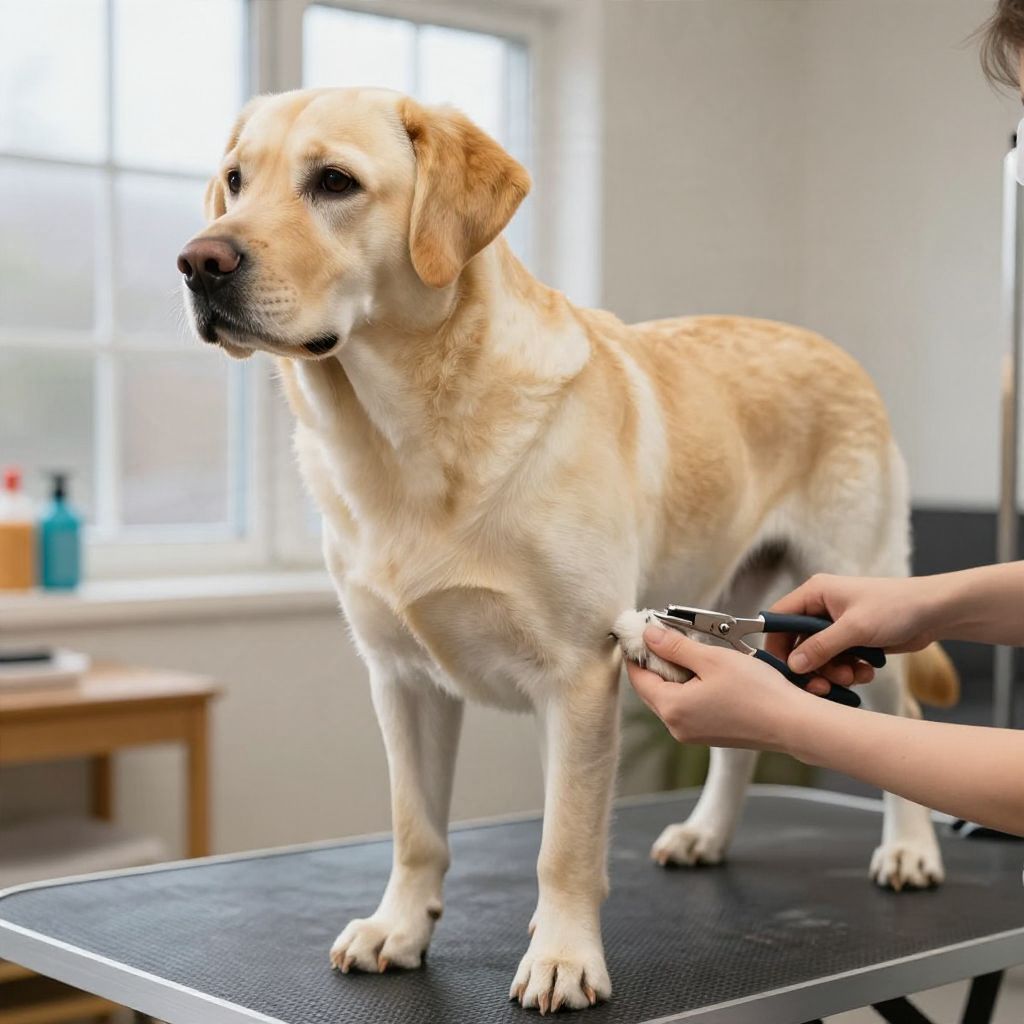
If you’re wondering how often to trim dog nails, the answer depends on how fast your dog’s nails grow and how much wear they get from walking on hard surfaces. Many dogs need a trim every 3 to 4 weeks, but some need it sooner and others less often.
The goal is to keep nails short enough that they don’t click on the floor or change your dog’s posture. Regular checks matter more than a fixed schedule, especially for puppies, seniors, and dogs with different activity levels.
How Often To Trim Dog Nails?
Most dogs need nail trims every 3 to 4 weeks, but the right timing depends on nail growth, activity, age, and breed type. If you hear clicking on hard floors or see nails touching the ground when your dog stands, it’s time to trim. Some dogs need weekly maintenance, while others can go longer.
What Affects How Often You Should Trim?
There is no single schedule that fits every dog. Nail growth and wear vary a lot from one dog to another.
Activity level and surface type
Dogs that walk or run regularly on pavement may naturally wear down their nails more than dogs that spend most of their time on grass, carpet, or soft indoor flooring. Even active dogs often still need periodic trims because dewclaws and some nails do not wear evenly.
Breed, size, and body structure
Some dogs naturally wear nails down better than others, but breed alone does not determine the schedule. Smaller dogs, lightly exercised dogs, and dogs with certain foot shapes may need more frequent trims, while very active dogs may need less frequent trimming.
Age and health
Puppies may need early handling and gentle trims to build comfort, while senior dogs may need more frequent nail care if they move less and wear their nails down less. Dogs with arthritis, mobility issues, or foot pain may resist nail care, so a calmer, more gradual approach is often needed.
Individual nail growth
Some dogs simply grow nails faster than others. If you notice the nails getting long again within a couple of weeks, shorten the interval instead of waiting for a calendar reminder.
Signs Your Dog’s Nails Are Too Long
You do not have to guess. A few clear signs can tell you it’s time for a trim.
- You hear clicking on hard floors.
- The nails touch the ground when your dog is standing.
- The toes spread or splay more than usual.
- The nails curve or start to look hooked.
- Your dog shifts weight oddly or seems less comfortable walking.
- Long nails snag on rugs, bedding, or outdoor surfaces.
Long nails can affect balance and paw position. Over time, they may make walking less comfortable and can increase the chance of splitting or breaking.
How Short Should Dog Nails Be?
Dog nails should be short enough that they do not click on the floor and do not force the toes upward when your dog stands. You should avoid cutting close to the quick, the sensitive blood vessel inside the nail. If you’re unsure how much to remove, trim small amounts more often.
How To Set a Safe Trimming Routine
A simple routine works better than waiting until the nails are very long. Many owners do a quick check weekly and trim as needed every few weeks.
- Look at the nails once a week in good light.
- Listen for clicking when your dog walks on a hard floor.
- Trim a small amount before the nails get too long.
- Reward calm behavior so your dog learns nail care is safe.
- Adjust the schedule based on how quickly the nails grow back.
For many dogs, frequent small trims are easier than infrequent major trims. This can also help keep the quick from extending too far into the nail.
How Puppies, Adults, and Senior Dogs Differ
Puppies
Puppies benefit from early, gentle handling of their paws and nails. Short, positive sessions help them accept nail trimming later in life. Even if you only trim a tiny amount, the practice is valuable.
Adult dogs
Healthy adult dogs usually do well with a routine based on nail length rather than age alone. If your dog is active outdoors, you may still need regular trims because the back feet, dewclaws, or individual nails may grow faster than they wear down.
Senior dogs
Older dogs often need closer attention because they may move less and wear down their nails less naturally. Long nails can make standing and walking more awkward, especially if your dog already has stiffness or arthritis.
How to Make Nail Trimming Easier
Many dogs dislike nail trims because they are unfamiliar with the process, not because the nails themselves are painful. Calm training and gradual exposure help a lot.
- Start by touching the paws briefly and rewarding calm behavior.
- Let your dog sniff the clipper or grinder before using it.
- Trim one or two nails at a time if your dog gets stressed.
- Use treats, praise, or a favorite toy as positive reinforcement.
- Keep sessions short and stop before your dog becomes overwhelmed.
If your dog is fearful, wiggly, or hard to handle, a groomer or veterinary team can help. For severe anxiety or a history of biting, ask your veterinarian about a behavior plan rather than forcing the process.
Common Mistakes To Avoid
Good nail care is mostly about consistency and caution. A few common mistakes can make the process harder or riskier.
- Waiting until nails are very long before trimming.
- Cutting too much at once and hitting the quick.
- Skipping dewclaws, which may not wear down naturally.
- Assuming outdoor dogs never need trims.
- Using force or punishment when a dog resists.
- Ignoring cracked, split, or painful nails.
When Long Nails Need Veterinary Attention
Most nail-length issues are routine grooming concerns, but some problems need professional care. Contact your veterinarian promptly if you notice bleeding that won’t stop, a nail torn off, swelling, limping, or signs of infection such as redness, heat, discharge, or a bad smell.
Seek urgent veterinary care if your dog is in significant pain, won’t bear weight, has a deeply torn nail, or the paw is visibly injured. Do not try to manage severe nail trauma at home.
What If Your Dog Hates Nail Trims?
If your dog resists nail trimming, the answer is usually not to wait longer. Instead, make the process easier and more gradual.
- Practice handling paws when your dog is relaxed.
- Use very short training sessions.
- Trim only one nail, then stop and reward.
- Try a quieter tool if the sound bothers your dog.
- Ask a professional for help if progress is slow.
For dogs with strong fear, pain sensitivity, or a past bad experience, a veterinarian or certified trainer can help you build a safer plan. A cooperative care approach is often the best long-term solution.
Quick Answer: How Often Should You Check?
Check your dog’s nails every week and expect many dogs to need trimming about every 3 to 4 weeks. If you hear clicking, see the nails touching the floor, or notice changes in how your dog stands or walks, trim sooner.
For more practical grooming help, you may also find these guides useful: how to trim dog nails at home and how short to cut dog nails.
In short, the best answer to how often to trim dog nails is to follow your dog’s nail length, not just the calendar. Check weekly, trim before the nails get long, and ask your vet or groomer for help if your dog is painful, fearful, or has a nail injury.