
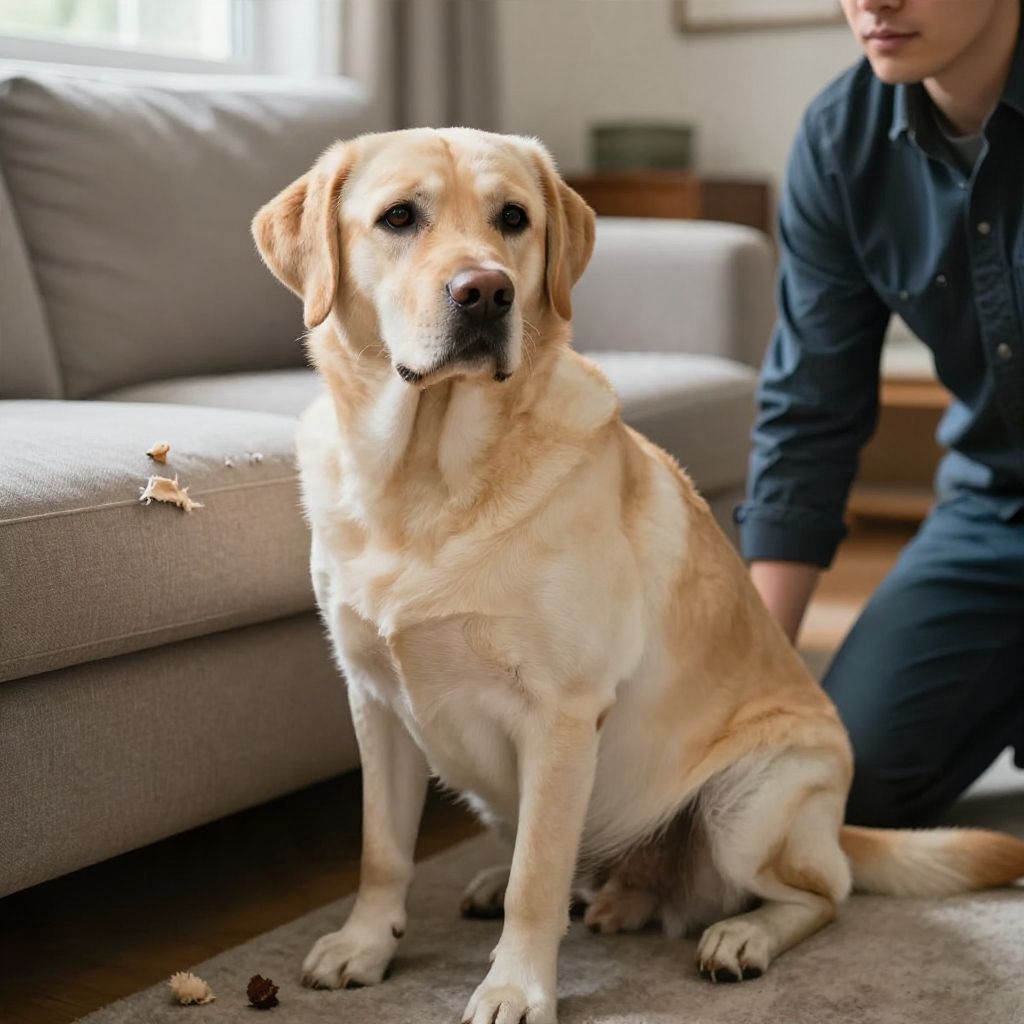
Do dogs feel guilt when they look ashamed after chewing your shoe or making a mess? Many owners read that expression as remorse, but the answer is more complicated than it seems.
Dogs do show emotions, but the “guilty look” is usually a response to your tone, body language, and past experience. What you’re seeing is often appeasement or anxiety, not a human-style moral judgment.
Do dogs feel guilt?
Dogs do not appear to feel guilt in the same way people do. They can learn that certain actions lead to your disapproval, and they may look “guilty” when you return, but that expression usually reflects fear, stress, or anticipation of correction rather than true guilt.
What the guilty look usually means
When a dog lowers its head, avoids eye contact, tucks its tail, or rolls over, it is often trying to reduce tension. The dog may be reacting to your voice, posture, or the context of the situation, especially if you have scolded them before.
Common signs people mistake for guilt
- Lowered ears or head
- Aversion of eye contact
- Tail tucked or held low
- Lip licking or yawning
- Crouching, freezing, or moving away
These signals can happen for many reasons, including uncertainty, fear, or a desire to avoid conflict. They are not proof that your dog understands they did something “wrong” the way a person would.
Why dogs may react after the fact
Dogs live in the moment and learn through associations. If your dog sees your upset face near a torn cushion, they may connect your reaction with the situation, even if the chewing happened earlier and they do not understand the full chain of events.
What dogs can learn
- Which behaviors lead to rewards
- Which situations predict your attention or frustration
- Which items or places are off-limits
- How to avoid repeating an action that caused a negative response
This is why training works best when you reward the behavior you want and manage the environment so the unwanted behavior is less likely to happen.
Can dogs understand when they’ve done something wrong?
Yes, dogs can learn rules and routines. They can understand that certain behaviors are not allowed in your home, especially when you teach them consistently. But understanding a rule is not the same as feeling moral guilt.
If a dog repeatedly steals food, jumps on guests, or chews furniture, the issue is usually training, management, boredom, anxiety, or unmet needs. In many cases, the dog is not being “bad”; they are doing what works for them in that moment.
How to respond when your dog does something wrong
The most effective response is calm, immediate, and practical. Focus on preventing repetition and teaching an alternative behavior instead of trying to make your dog “feel bad.”
- Stay calm and avoid yelling or physical punishment.
- Interrupt the behavior only if you can do so safely.
- Redirect your dog to an appropriate option, such as a chew toy or mat.
- Reward the behavior you want right away.
- Change the environment so the mistake is harder to repeat.
For example, if your dog chews shoes, put shoes out of reach and offer legal chew items. If your dog counter-surfs, block access and reward staying on the floor or bed.
What not to do
When people ask, “Do dogs feel guilt?” they sometimes also wonder whether punishment will teach a lesson. Harsh correction can create fear, damage trust, and make behavior problems worse.
- Do not rub your dog’s nose in accidents.
- Do not use shouting, intimidation, or physical force.
- Do not punish long after the behavior happened.
- Do not assume a submissive posture means your dog “knows better.”
Delayed punishment is especially unhelpful because dogs usually connect your reaction with what is happening right now, not with an event from minutes or hours ago.
When the behavior may point to a bigger issue
Some repeated “misbehavior” is really a sign that your dog needs more support. The right fix depends on age, health, breed tendencies, temperament, and training history.
Possible contributing factors
- Insufficient exercise or mental enrichment
- Puppy teething or normal juvenile behavior
- Separation-related stress
- Pain or medical discomfort
- Fear, noise sensitivity, or anxiety
- Inconsistent rules or unclear training
A sudden change in behavior, especially in an adult or senior dog, deserves veterinary attention. New house-soiling, clinginess, irritability, hiding, restlessness, or reduced appetite can sometimes signal pain or illness.
Age matters: puppies, adults, and senior dogs
Whether a dog seems “guilty” can vary with age and life stage. Puppies often look especially expressive because they are still learning household rules and may be more easily startled by your reaction.
Puppies
Puppies need frequent supervision, gentle guidance, and lots of opportunities to succeed. Accidents, chewing, and impulse mistakes are normal during development.
Adult dogs
Adult dogs may have stronger habits and clearer associations. If an adult dog suddenly starts acting worried after certain events, check whether the pattern is linked to previous scolding or stress.
Senior dogs
Older dogs can become confused, anxious, or physically uncomfortable. If a senior dog seems “guilty” more often, consider hearing loss, vision changes, cognitive decline, arthritis, or other health issues that can affect behavior.
How to prevent the behaviors that trigger the “guilty” look
Prevention is usually easier than correction. A dog that has fewer chances to make mistakes will also have fewer moments of stress for both of you.
- Keep tempting items out of reach.
- Use crates, gates, or closed doors when needed.
- Provide appropriate chew toys and enrichment.
- Stick to a predictable routine for meals, potty breaks, and exercise.
- Reward calm behavior and good choices often.
Breed tendencies can influence energy level, curiosity, prey drive, or independence, but they do not determine behavior on their own. Your individual dog’s training, environment, and health matter just as much.
When to call a veterinarian or behavior professional
Seek professional help if the “guilty” expression is paired with behavior changes that seem out of character, severe anxiety, or possible medical problems. A veterinarian can rule out pain or illness, and a qualified trainer or veterinary behaviorist can help with safe, reward-based behavior plans.
Get help promptly if you notice
- Sudden aggression or fear
- Repeated house-soiling after being reliably trained
- Compulsive chewing, pacing, or destructive behavior
- Loss of appetite, vomiting, diarrhea, or lethargy
- Signs of pain such as limping, stiffness, or reluctance to move
Emergency note: If your dog may have eaten something toxic, swallowed a dangerous object, or is having trouble breathing, collapse, seizures, or severe bleeding, seek urgent veterinary care right away.
Bottom line
Dogs can learn rules and react to your mood, but they do not seem to feel guilt the way humans do. If your dog looks “guilty,” treat it as a signal to stay calm, assess the situation, and use humane training and prevention instead of punishment.
If you want to learn more about canine thinking and communication, you may also find do dogs think and do dogs know what kisses are helpful next reads.