
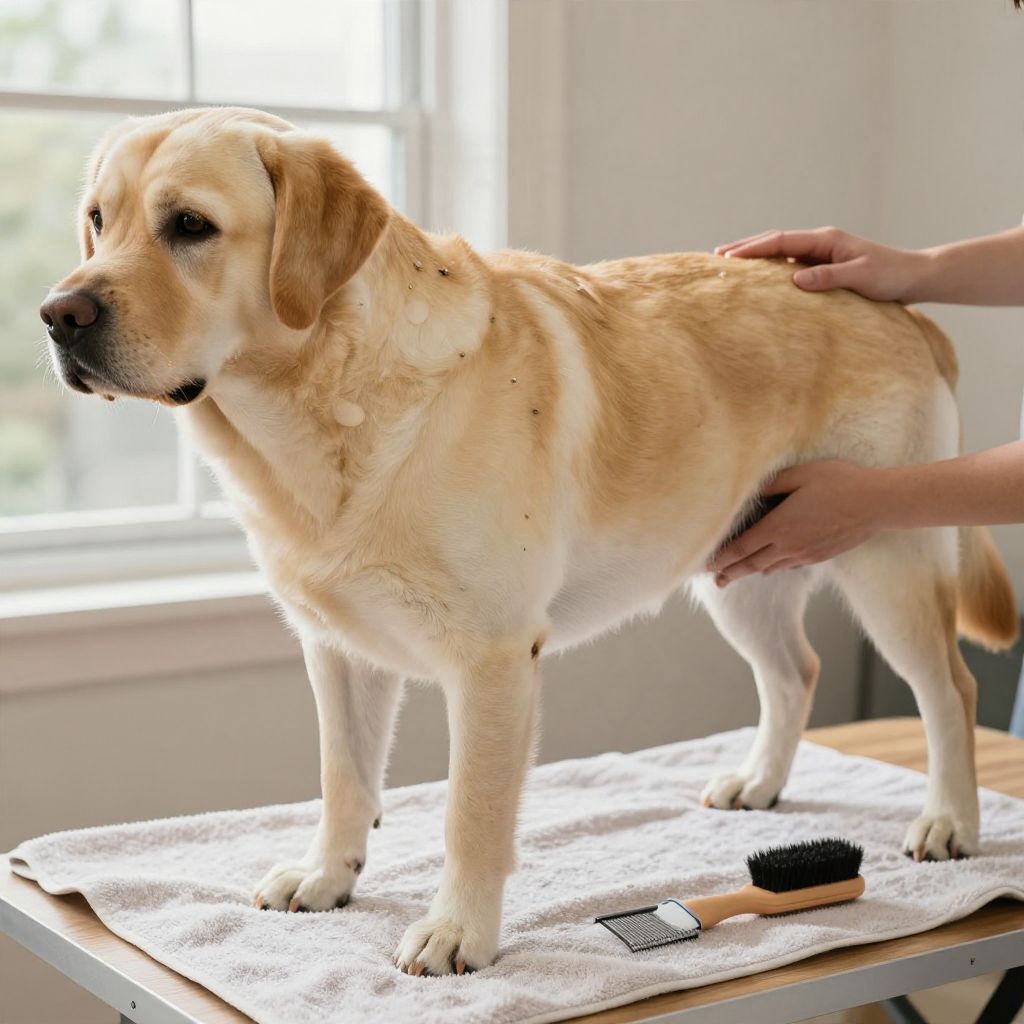
If you’re asking what flea eggs look like on a dog, the short answer is that they are tiny, pale, and easy to miss. They often look like small white or off-white grains, but they usually fall off the coat quickly rather than staying attached to the hair.
Because flea eggs are so small, many owners mistake them for dandruff, dirt, or sand. Knowing what to look for can help you spot a flea problem early and protect your dog from itching, skin irritation, and a larger infestation.
What do flea eggs look like on a dog?
Flea eggs are tiny, smooth, oval, and usually white or off-white. They are not sticky, so they often slide off the coat into bedding, carpets, and furniture. On a dog, they can be hard to see unless you part the fur and look closely near the skin.
How to tell flea eggs apart from dandruff, dirt, or other debris
Flea eggs are easy to confuse with other small white particles. The difference is that flea eggs are uniform in shape and size, while dandruff tends to look flaky or irregular. “Flea dirt” is different again: it is dark and crumbly, not pale.
Common look-alikes
- Dandruff: flaky, irregular skin scales that may move through the coat.
- Dry skin flakes: often larger or more uneven than flea eggs.
- Dust or lint: may sit on the coat but usually lacks the smooth oval shape.
- Flea dirt: small black or reddish-brown specks that can smear red when dampened.
Simple home check
- Part your dog’s coat near the base of the tail, belly, groin, or neck.
- Look for tiny white oval specks moving through the hair or falling onto a dark surface.
- Use a flea comb if you have one, especially on short-coated dogs where debris is easier to spot.
- If you find black specks, place them on a damp white paper towel; flea dirt may turn rusty red.
Where flea eggs are usually found on dogs
Flea eggs are often found where fleas feed and move most, but they may not stay there long. You’re more likely to notice them around the lower back, tail base, belly, neck, and in areas your dog scratches or grooms often.
Why they may not stay on the dog
Adult fleas live on the dog, but flea eggs are commonly laid in the coat and then fall into the environment. That means a dog can have a flea problem even if you do not see many eggs on the body itself.
Signs your dog may have fleas, even if you can’t see eggs
Seeing flea eggs is only one clue. Many dogs show signs of fleas before you ever spot eggs or adult fleas, especially if the coat is thick, dark, or long.
- Frequent scratching, biting, or licking
- Restlessness or trouble settling
- Hair loss or thinning in irritated areas
- Red, inflamed skin
- Scabs, especially near the tail base
- Visible black specks in the coat
Some dogs are more sensitive to flea bites than others. A small number of fleas can cause intense itchiness in one dog, while another may seem only mildly bothered.
What flea eggs mean for your home and dog
If you find flea eggs, it usually means fleas have been present long enough to reproduce. That matters because most of the flea life cycle happens off the dog, in bedding, carpets, cracks, and upholstered furniture.
Even if your dog seems comfortable, flea eggs can signal an infestation that will keep cycling unless you treat both the pet and the environment. Skipping either part often leads to repeated flare-ups.
What to do if you find flea eggs on your dog
Start by confirming that fleas are likely involved, then act quickly. Early treatment is easier than dealing with a larger infestation later.
- Check your dog carefully. Use a fine-toothed flea comb and inspect the coat in good light.
- Look for adult fleas or flea dirt. Eggs alone may not tell the whole story.
- Wash bedding and soft items. Use hot water when appropriate for the fabric.
- Vacuum thoroughly. Focus on floors, baseboards, rugs, furniture, and pet resting areas.
- Contact your veterinarian. Ask which flea control options are appropriate for your dog’s age, health, and lifestyle.
Why veterinary guidance matters
Not every flea product is safe for every dog. Puppies, pregnant or nursing dogs, dogs with skin disease, and dogs with certain health conditions may need different options. Your veterinarian can help you choose a product that fits your dog safely.
When flea eggs are a bigger concern
Flea eggs are especially important to address quickly if your dog is very young, elderly, medically fragile, or already dealing with skin irritation. In these dogs, flea problems can escalate faster and cause more discomfort.
Watch for these warning signs
- Severe scratching or nonstop biting at the skin
- Open sores, bleeding, or hot spots
- Marked hair loss
- Pale gums, weakness, or low energy in a small puppy
- Swelling, crusting, or signs of infection
Seek prompt veterinary care if your dog seems very uncomfortable, has broken skin, or appears weak, lethargic, or unwell. These signs may mean the problem is more than simple itching.
How to reduce the chance of flea eggs coming back
Flea control works best when you treat the dog and the environment together. Because eggs fall off the coat, cleaning the home is just as important as treating your pet.
Helpful prevention habits
- Use a veterinarian-recommended flea prevention plan consistently.
- Regularly wash pet bedding and blankets.
- Vacuum carpets, rugs, and upholstered furniture often.
- Check your dog after outdoor activity, especially in warm seasons or high-risk areas.
- Treat all pets in the household if your veterinarian recommends it.
Homes with multiple pets can be harder to clear if one animal is untreated. If you have dogs and cats together, ask your veterinarian which products are safe for each species before using anything.
Common mistakes to avoid
When owners first notice flea eggs, it is easy to make choices that slow progress or create safety risks. Avoid these common errors.
- Assuming no fleas are present because you do not see adults.
- Using random over-the-counter products without checking safety for your dog’s age and size.
- Ignoring the home environment and only treating the dog.
- Delaying action because the itching seems mild.
- Using harsh home remedies that may irritate skin or be unsafe if licked.
What flea eggs do not mean
Finding tiny white specks does not automatically prove fleas, and not every itchy dog has fleas. Allergies, dry skin, mites, bacterial skin infections, and other problems can look similar, so it’s important not to guess if the signs are unclear.
If your dog is scratching but you cannot confirm fleas, your veterinarian can help narrow down the cause. That is especially useful if the itching keeps returning or your dog has recurring skin issues.
When to call the vet
You should contact your veterinarian if you suspect fleas and your dog is uncomfortable, if you cannot tell whether the specks are flea eggs, or if over-the-counter prevention is not working. A vet visit is also wise for puppies, senior dogs, and dogs with ongoing skin problems.
Get urgent veterinary help if your dog has trouble breathing, collapses, has severe swelling, or seems very weak. Those signs are not typical flea symptoms and need immediate attention.
Bottom line
What do flea eggs look like on a dog? They usually appear as tiny white or off-white oval specks, but they are easy to miss because they fall off the coat quickly. If you suspect fleas, check for flea dirt, treat the environment, and speak with your veterinarian about safe prevention.
If you want to learn more about related signs, you may also find what flea bites look like on dogs and what dog ear mites look like helpful for comparing symptoms.