
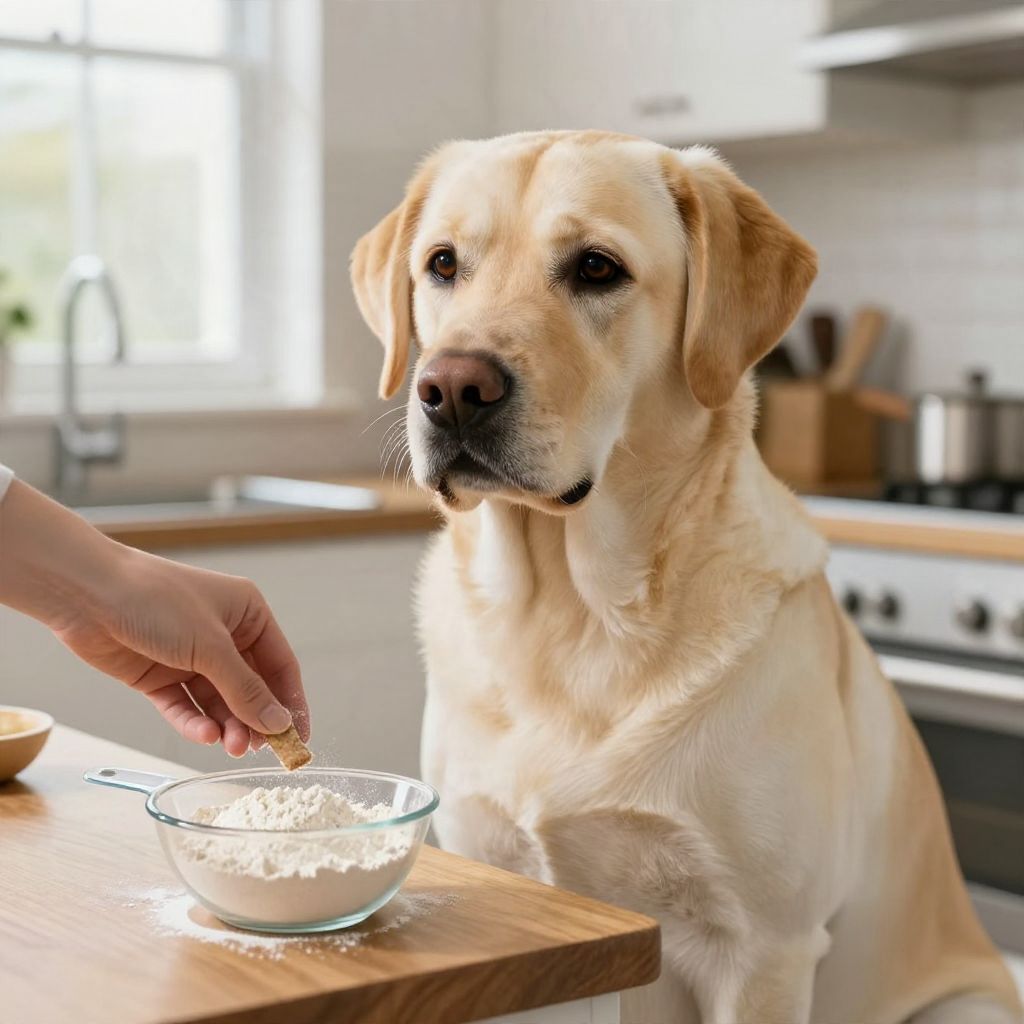
Can dogs eat flour? In small amounts, plain flour is not usually toxic to dogs, but it is not a nutritious food for them either. The bigger concern is what the flour is mixed with, how much your dog ate, and whether your dog has a sensitive stomach or a medical condition.
If your dog ate a little flour by accident, they may be fine. If they ate raw dough, a large amount, or flour-containing food with harmful ingredients, contact your veterinarian right away.
Can Dogs Eat Flour?
Plain flour is generally not poisonous to dogs, but it should not be a regular treat or diet staple. Small accidental tastes are usually low risk, while large amounts can upset digestion, and raw dough can become dangerous because it expands and ferments in the stomach.
Why Flour Can Be a Problem for Dogs
Flour itself is mostly refined starch, so it offers little nutritional value for dogs. The main concerns are digestive upset, excess calories, and the ingredients added to flour-based foods.
Digestive upset
Some dogs handle a tiny amount without trouble, while others develop vomiting, soft stool, gas, or belly discomfort. Puppies, seniors, and dogs with sensitive stomachs may react more easily.
Raw dough is the bigger danger
Raw bread dough can rise after being eaten, causing stomach distension, pain, and potentially serious complications. Fermentation can also produce alcohol, which may lead to poisoning.
Added ingredients matter more than the flour
Many flour-based foods contain sugar, salt, butter, chocolate, raisins, xylitol, onion, garlic, or other ingredients that are unsafe for dogs. A “plain” flour snack is one thing; a cookie, cake, or batter is another.
What Kind of Flour Is Safe for Dogs?
Different flours are not equally useful, but none should be treated as a healthy dog food. If a recipe uses flour, the rest of the ingredients and the portion size matter far more than the flour type.
- White flour: Usually not toxic in small amounts, but highly processed and not very nutritious.
- Whole wheat flour: Still not a dog food, though it contains more fiber than white flour.
- Gluten-free flours: Not automatically safer; some dogs still get stomach upset.
- Specialty flours: Some may be fine in tiny amounts, but mixed recipes can still be risky.
If your dog has a known food allergy, gastrointestinal disease, diabetes, pancreatitis, or a weight problem, even small flour-based extras may be a poor choice. Your veterinarian can help you decide what is appropriate for your individual dog.
What Happens If a Dog Eats Flour?
Most dogs that eat a small amount of plain flour do not need emergency treatment, but you should watch for symptoms. The risk rises if your dog ate a lot, ate raw dough, or ate flour mixed with other ingredients.
Possible mild signs
- Soft stool or diarrhea
- Vomiting
- Gas or bloating
- Temporary loss of appetite
- Mild stomach discomfort
Red-flag symptoms that need urgent veterinary care
- Repeated vomiting
- Swollen or painful abdomen
- Weakness, collapse, or trouble standing
- Disorientation or unusual behavior
- Difficulty breathing
- Signs of choking or distress after eating dough
- Any concern that the flour product contained xylitol, chocolate, raisins, onion, garlic, or alcohol
If your dog is a puppy, toy breed, senior, or has a medical condition, call your veterinarian sooner rather than later. Smaller dogs can be affected more quickly by stomach expansion or by eating unsafe ingredients in a small volume of food.
Can Dogs Eat Raw Dough?
No, raw dough is not safe for dogs. This is one of the most important flour-related risks because the dough can continue to rise in the stomach and may also produce alcohol during fermentation.
If your dog swallowed raw dough, do not wait for symptoms to appear. Contact a veterinarian or an emergency clinic immediately, especially if the amount was more than a tiny taste.
What About Flour in Baked Foods?
Baked foods are not automatically safe just because the dough was cooked. The recipe matters, and many baked goods contain ingredients that are unhealthy or dangerous for dogs.
- Plain baked bread: Small amounts may be tolerated, but it is still not a good treat choice.
- Cake, cookies, muffins, and pastries: Often too sugary or fatty for dogs and may include toxic ingredients.
- Pizza crust or savory baked goods: May contain garlic, onion, cheese, or high salt.
Even if a baked item seems plain, it can still be too calorie-dense for dogs that need weight control. Frequent “people food” treats can also encourage begging and make it harder to maintain a balanced diet.
How Much Flour Is Too Much?
There is no universal safe amount that fits every dog. Tolerance depends on your dog’s size, age, health, what else was in the food, and whether the flour was raw or baked.
A few crumbs are usually less concerning than a mouthful or more, but you should still monitor your dog. If your dog ate a large amount, seems unwell, or you are unsure what was in the food, call your veterinarian for advice.
What You Should Do If Your Dog Ate Flour
- Check what was eaten. Plain flour is different from dough, batter, or a baked item with added ingredients.
- Estimate the amount. A lick, a few crumbs, or a spoonful is different from a bowlful or a swallowed lump of dough.
- Watch for symptoms. Vomiting, bloating, pain, lethargy, or unusual behavior need attention.
- Call your veterinarian if needed. This is especially important for puppies, small dogs, and dogs with health conditions.
- Seek urgent care for emergencies. Trouble breathing, collapse, repeated vomiting, or a swollen abdomen should not wait.
Do not try home remedies or induce vomiting unless a veterinarian specifically tells you to do so. The right response depends on what was eaten and how long ago it happened.
Can Flour Be Used in Homemade Dog Treats?
Some homemade dog treat recipes use flour, but that does not make flour necessary or ideal. If you want to bake for your dog, the recipe should be simple, dog-safe, and portion-controlled.
Before making homemade treats, ask yourself:
- Does the recipe avoid toxic ingredients?
- Is the portion size appropriate for your dog?
- Will the treat fit your dog’s calorie needs?
- Does your dog have allergies or a sensitive stomach?
For many dogs, there are better options than flour-heavy treats, such as small pieces of dog-safe fruits or vegetables approved by your veterinarian. Keep treats to a modest part of the daily diet.
Dogs With Special Health Needs
Some dogs need extra caution with flour-based foods. Individual tolerance varies, so general advice may not fit every dog.
Overweight dogs
Flour-based snacks can add calories quickly. If your dog is on a weight-loss plan, even small extras can interfere with progress.
Dogs with diabetes
Starchy foods can affect blood sugar control. Ask your veterinarian before offering flour-containing treats.
Dogs with pancreatitis or sensitive digestion
Many flour-based baked goods are also high in fat, which can be especially problematic. A bland stomach upset can sometimes look minor at first, so monitor closely.
Puppies and senior dogs
Young and older dogs may be less resilient if they develop vomiting, diarrhea, or dehydration. They may also be more vulnerable to complications from large ingestions.
How to Prevent Flour-Related Problems
- Store flour and baking ingredients out of reach.
- Keep dough, batter, and baked goods away from counters and tables.
- Use covered trash bins for discarded baking scraps.
- Teach a reliable “leave it” cue with positive reinforcement.
- Supervise curious dogs in the kitchen.
Prevention matters because many flour-related incidents happen when dogs counter-surf or grab unattended food. Management is often easier and safer than trying to fix the problem after it happens.
When to Call the Vet
Call your veterinarian if your dog ate a large amount of flour, any raw dough, or any flour-based food with questionable ingredients. Also call if your dog has ongoing vomiting, diarrhea, pain, or seems “off” after eating it.
Get emergency help right away if your dog has a swollen abdomen, repeated vomiting, collapse, breathing trouble, or you suspect xylitol, chocolate, raisins, alcohol, onion, or garlic were involved.
The Bottom Line on Can Dogs Eat Flour
Plain flour is not usually toxic to dogs, but it is not a good food for them, and raw dough can be dangerous. If your dog only ate a small amount of plain flour, they may just need observation. If they ate dough or a flour-based food with unsafe ingredients, call your vet promptly.
If you want more guidance on baked treats, you may also find these related articles helpful: can dogs eat banana bread and can dogs eat cake.