
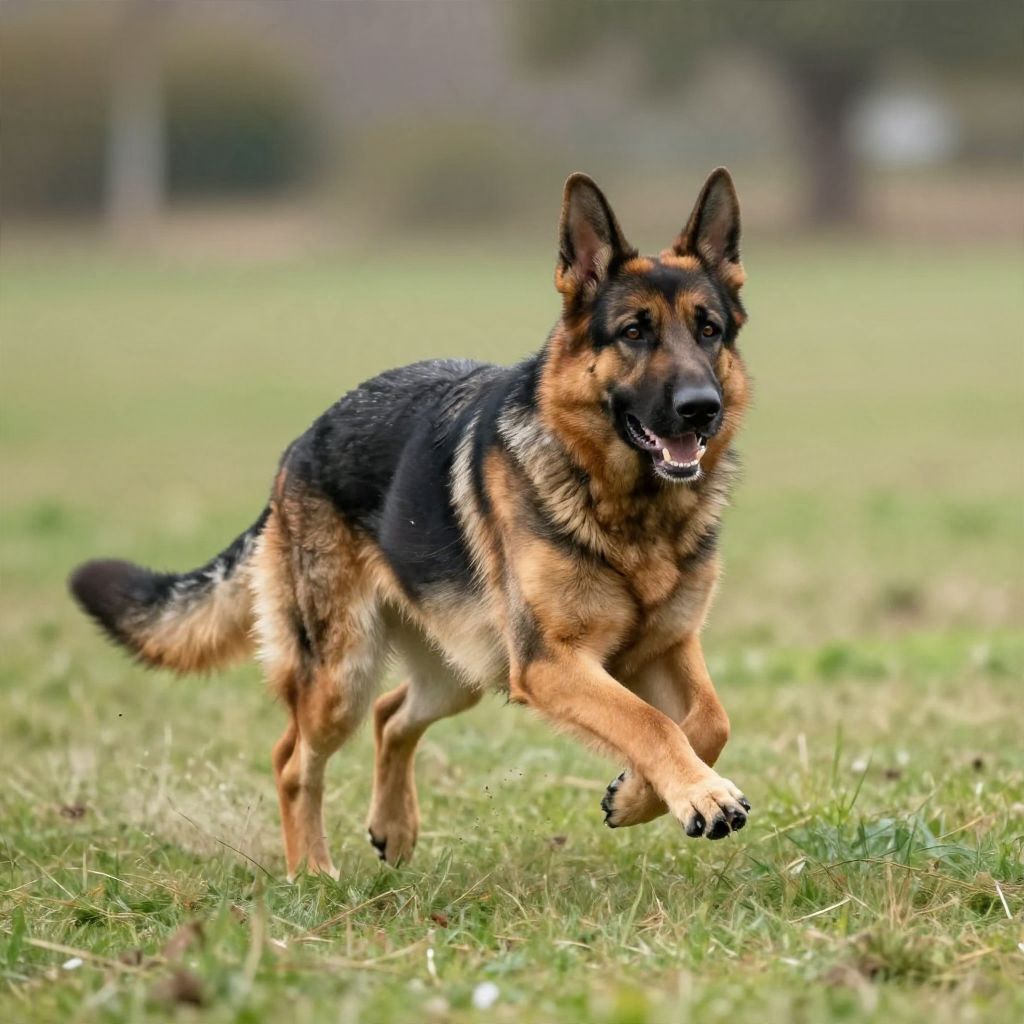
If you’re wondering how fast a German Shepherd can run, the short answer is that many healthy adults can sprint around 20 to 30 mph in short bursts. Actual speed depends on age, fitness, build, motivation, terrain, and health.
German Shepherds are athletic working dogs, but they are not built to sustain top speed for long. Understanding their natural stamina, temperament, and care needs helps you exercise them safely and spot when something is limiting their performance.
How fast can a German Shepherd run?
A healthy adult German Shepherd can usually run about 20 to 30 mph in a short sprint, though some dogs may be slower or faster. Their speed depends on conditioning, body weight, age, and joint or muscle health. Most are better at bursts of speed and endurance than long-distance racing.
What affects a German Shepherd’s running speed?
Not every German Shepherd has the same athletic ability. Breed type gives you a general idea, but individual differences matter a lot.
- Age: Puppies and seniors should not be pushed into hard running.
- Fitness: A dog that exercises regularly usually performs better than a sedentary dog.
- Body condition: Extra weight can reduce speed and increase strain on joints.
- Health: Pain, arthritis, heart disease, and some neurologic issues can slow a dog down.
- Temperament: Some dogs are highly driven and eager to chase, while others are more cautious.
- Surface and weather: Heat, slippery ground, sand, or rough terrain can all affect performance.
German Shepherds are often energetic and responsive, but that does not mean they should be expected to run at full speed every day. Safe exercise should match the individual dog, not just the breed label.
Are German Shepherds built for speed or endurance?
They are generally better known for endurance, agility, and versatility than for pure sprinting. Many do well in activities that combine movement, focus, and problem-solving, such as hiking, obedience, tracking, or structured fetch. Their athleticism is real, but it should be supported with gradual conditioning.
Why their build matters
A German Shepherd’s body is designed for practical work, not for the extreme sprinting style of a greyhound. That means they can move quickly, turn sharply, and keep going, but their speed is usually best used in short, controlled bursts.
How age changes a German Shepherd’s running ability
Age has a major effect on how fast a German Shepherd can run and how much exercise is appropriate.
Puppies
Puppies have growing bones and joints, so frequent hard running, repetitive jumping, and long forced exercise can be risky. Short play sessions and free movement are better than structured runs.
Adults
Adult dogs usually have the best combination of strength, coordination, and stamina. This is the stage when many German Shepherds can safely enjoy faster exercise, as long as they are conditioned and healthy.
Seniors
Older dogs may still enjoy movement, but arthritis, muscle loss, and reduced endurance can slow them down. If your senior dog seems stiff, reluctant to move, or slower than usual, a veterinary exam is a good idea.
How to exercise a German Shepherd safely
Because many German Shepherds are energetic, owners sometimes try to “wear them out” with too much running. A better approach is balanced exercise that builds fitness without overloading the body.
- Start with regular walks and moderate play before asking for fast running.
- Use warm-up time so muscles and joints are not stressed suddenly.
- Increase distance and intensity gradually over days or weeks.
- Choose safe footing, such as grass or packed dirt, when possible.
- Offer water and rest breaks, especially in warm weather.
- Stop if your dog slows down, limps, pants heavily, or seems uncomfortable.
Structured exercise is often safer than random all-out sprints. Consistency helps your dog build stamina while lowering the chance of strains or overuse injuries.
Temperament and motivation: why some German Shepherds run harder than others
German Shepherds are often alert, trainable, and eager to work, but individual personalities vary. Some are highly toy- or prey-motivated and love chasing games, while others are more reserved. Training history also matters: a dog that has practiced recall, impulse control, and leash manners is easier to exercise safely at speed.
Helpful training for running and fetch
- Recall: A reliable “come” cue helps you stop a fast-moving dog safely.
- Release cues: These help control when your dog starts or stops chasing.
- Loose-leash walking: This reduces strain before and after exercise.
- Impulse control: Simple games can make fast movement more manageable.
Reward-based training is the best fit for this breed. It supports cooperation without fear or force.
Signs your German Shepherd may be overdoing it
Even athletic dogs can get hurt or overheated. Watch for changes that suggest your dog should stop exercising and rest.
- Lagging behind or refusing to keep running
- Limping or favoring one leg
- Excessive panting that does not settle with rest
- Stiffness after exercise
- Reluctance to jump, climb stairs, or get into a car
- Loss of coordination or wobbliness
- Vomiting, collapse, or disorientation
Emergency warning: If your dog collapses, has trouble breathing, seems confused, has pale gums, or cannot cool down, seek urgent veterinary care right away.
Common health issues that can affect running speed
Some German Shepherds slow down because of pain or illness, not because they are “lazy.” If speed changes suddenly or progressively, a veterinarian should evaluate the dog.
Joint and mobility problems
Hip dysplasia, elbow problems, arthritis, and soft tissue injuries can all make running uncomfortable. A dog may still want to move but show stiffness, bunny-hopping, or a shorter stride.
Weight gain
Even modest extra weight can make running harder and increase stress on the joints. If your dog tires quickly, body condition is worth checking with your vet.
Heat sensitivity
German Shepherds can overheat during intense exercise, especially in warm or humid conditions. Heat stress is more likely when the dog is out of shape, overweight, or exercising on hot pavement.
Heart, neurologic, or pain-related issues
Less commonly, reduced speed may reflect heart disease, back pain, or neurologic problems. These need professional assessment rather than guesswork.
How to help your German Shepherd stay fit for running
Good care supports safe athletic activity. You do not need extreme workouts; you need steady, sensible habits.
- Feed a complete, balanced diet appropriate for your dog’s life stage.
- Keep your dog at a healthy weight.
- Use regular exercise instead of occasional intense bursts only.
- Schedule routine veterinary checkups.
- Keep nails trimmed so footing stays stable.
- Watch for soreness after hard play or long outings.
Nutrition alone will not make a dog faster, but poor nutrition, excess weight, or dehydration can hurt performance and recovery.
Best ways to run with a German Shepherd
If you want to run with your dog, make the activity safe and predictable first.
- Ask your veterinarian if your dog is healthy enough for running.
- Begin with brisk walks and short jog intervals.
- Use a secure harness or leash setup that gives you control.
- Avoid running in extreme heat or on hot pavement.
- Let your dog set a comfortable pace at first.
- End the session before your dog is exhausted.
For many German Shepherds, the goal is not maximum speed. It is controlled exercise that leaves the dog fit, calm, and injury-free.
When you should call a veterinarian
Contact your veterinarian if your German Shepherd suddenly becomes slower, seems painful, or cannot keep up with normal exercise. Also seek advice if you notice limping, stiffness, repeated stumbling, coughing during exercise, or unusual fatigue.
If your dog shows emergency signs such as collapse, severe overheating, trouble breathing, or disorientation, do not wait for a routine appointment. Get urgent veterinary help immediately.
The bottom line
So, how fast can a German Shepherd run? Many healthy adults can sprint around 20 to 30 mph in short bursts, but the real answer depends on the individual dog. Focus on safe conditioning, age-appropriate exercise, and veterinary care so your German Shepherd can stay active without unnecessary risk.
If you want to compare breed speed or learn more about canine athletic ability, you may also find how fast dogs can run in general and which breeds are considered the fastest helpful.