
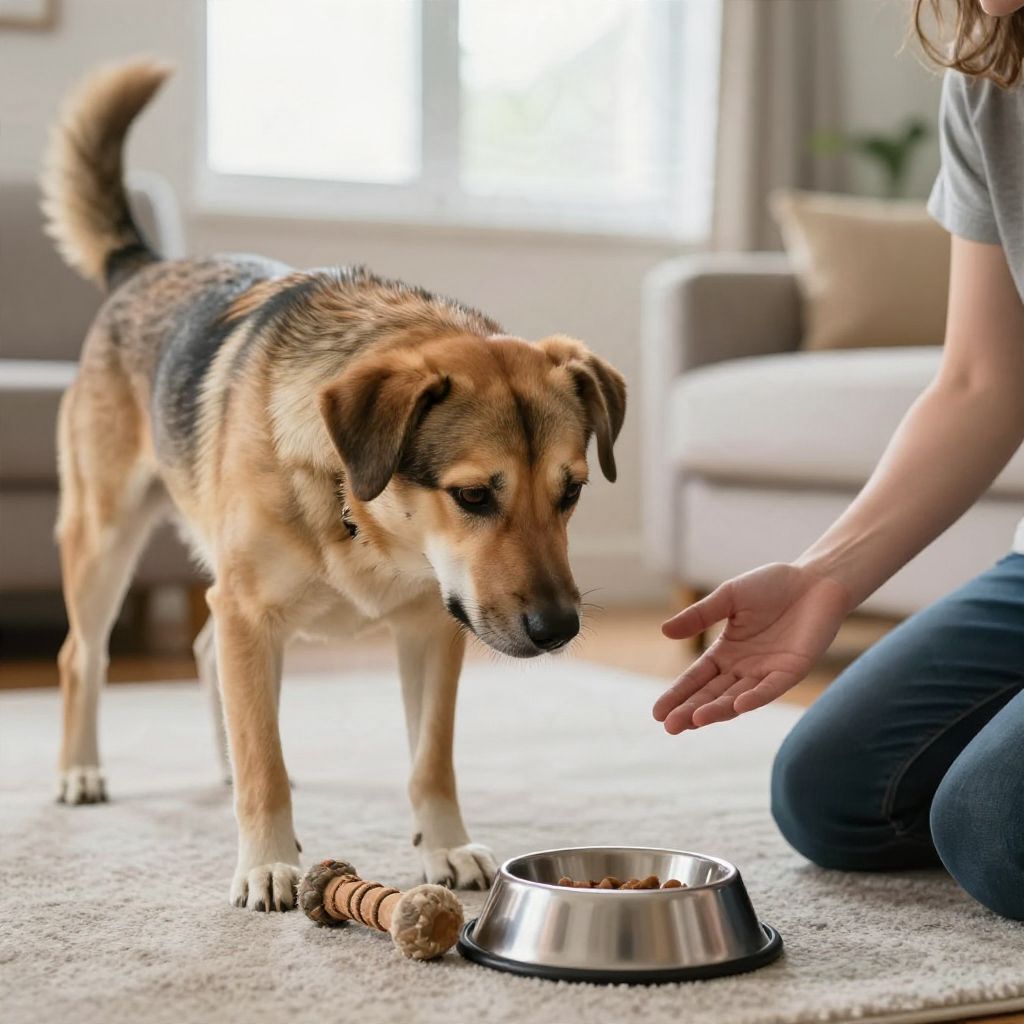
What is resource guarding in dogs? It’s when a dog tries to protect something valuable to them, such as food, toys, chews, resting spots, or even a person. The behavior can range from subtle tension to growling, snapping, or biting.
It is a communication problem, not “badness.” The safest approach is to manage access, avoid punishment, and use reward-based training to help your dog feel less threatened around valued resources.
What Is Resource Guarding In Dogs?
Resource guarding in dogs is a protective behavior where a dog warns others to stay away from something they value. It may involve freezing, hard staring, hovering over an item, lip lifting, growling, snapping, or biting. The goal is to prevent loss, not to “dominate.”
What dogs commonly guard
Any dog can guard, and the trigger can change with age, stress, health, or past experiences. Some dogs guard only one item, while others guard multiple things.
- Food bowls or treats
- Chews, bones, or long-lasting snacks
- Toys and stolen items
- Sleeping areas, crates, couches, or beds
- People or attention
- Space, such as doorways or hallways
Signs of resource guarding
Early signs are often subtle. Catching them early gives you a better chance to prevent escalation.
- Eating faster when someone approaches
- Stopping chewing and staring at you
- Lowering the head over food or an object
- Turning the body away or placing a paw over the item
- Growling, snarling, or showing teeth
- Snapping, lunging, or biting if approached too closely
Important: growling is useful information. Do not punish it away, because that can remove the warning before a bite.
Why resource guarding happens
Resource guarding usually develops because a dog has learned that keeping distance helps them keep what they value. It can be influenced by genetics, early life experiences, competition with other pets, inconsistent handling, pain, hunger, or past punishment around food and objects.
It is not caused by one single factor in every dog. A puppy, a newly adopted dog, and a senior dog may guard for different reasons and need different handling.
Common risk factors
- History of losing food or toys to other animals
- Food insecurity or unpredictable access to meals
- Rough handling around bowls, chews, or beds
- Pain or discomfort, especially in older dogs
- High arousal, stress, or anxiety
- Living with other dogs that compete for resources
Is resource guarding normal?
Some level of guarding is a normal canine behavior, but that does not mean it should be ignored. Mild guarding can become dangerous if it is repeatedly triggered, especially around children, crowded households, or high-value items.
The key is to treat it as a behavior problem that can be managed and improved, not as a personality flaw.
What to do right away if your dog guards resources
Start with safety and prevention. Your first goal is to stop rehearsing the behavior while you build better habits.
- Give your dog space when they are eating, chewing, or resting.
- Do not reach in to take the item by force.
- Avoid cornering your dog or crowding them with people or pets.
- Separate dogs during meals and high-value chews if needed.
- Trade, don’t snatch if you must remove something unsafe.
- Supervise children closely and keep them away from guarded items.
Safe management tools
- Feed in a quiet area
- Use baby gates or crates only if your dog is comfortable with them
- Pick up tempting items before guests arrive
- Offer separate resting spots for each pet
- Use leashes or barriers when introducing a new dog to the home
How to help resource guarding with training
Training should change how your dog feels about a person approaching, not force them to tolerate it. Reward-based methods work best because they pair a person’s presence with something good.
Desensitization and counterconditioning
This is the core approach for many dogs. You begin at a distance or level where your dog is relaxed, then pair the trigger with something better, like a treat or a second, more valuable item.
- Approach only as close as your dog can stay calm.
- Drop or toss a high-value treat, then step away.
- Repeat until your dog expects good things when you come near.
- Gradually reduce distance over many short sessions.
If your dog stiffens, freezes, or guards more intensely, you are too close or moving too fast.
Teach useful cues
Simple cues can reduce stress and make daily life easier.
- “Leave it” for dropping interest in low-value items
- “Trade” for exchanging an item willingly
- “Go to mat” for moving away from a guarded area
- Hand target to guide your dog without grabbing
What not to do
Some common reactions make guarding worse. They can increase fear, damage trust, and raise bite risk.
- Do not punish growling or snarling
- Do not use alpha rolls, intimidation, or forced “submission”
- Do not grab the bowl or pry open the mouth unless there is an emergency and you can do so safely
- Do not repeatedly test your dog to “see if they still guard”
- Do not let children practice taking items from a guarding dog
Resource guarding in puppies
Puppies can show early guarding, especially if they have had to compete for food or attention. The good news is that early, gentle training often helps a great deal.
With puppies, focus on prevention, positive associations, and calm handling. Practice trading, hand-feeding some meals, and adding treats to the bowl so a person approaching predicts something pleasant.
Puppy-friendly habits
- Feed separately from other pets if needed
- Offer several small, calm training sessions
- Handle paws, collar, and ears gently and only with consent and rewards
- Never tease a puppy by taking food away and giving it back repeatedly
Resource guarding in adult and senior dogs
Adult dogs may guard because the behavior has been practiced for years. Senior dogs may begin guarding more if pain, vision loss, hearing loss, or cognitive changes make them feel less secure.
If a previously easygoing older dog suddenly starts guarding, schedule a veterinary visit. Pain or illness can change behavior, and it is important to rule out medical causes.
When resource guarding may be linked to health problems
Behavior changes are sometimes a sign that a dog feels unwell. Dental pain, arthritis, ear pain, stomach upset, and other conditions can make a dog more protective or irritable around food and touch.
See your veterinarian if guarding starts suddenly, gets worse quickly, or comes with other changes such as appetite loss, weight loss, limping, stiffness, vomiting, diarrhea, or unusual lethargy.
When to get professional help
Some cases are manageable with careful home strategies, but others need expert support. A qualified certified trainer or veterinary behaviorist can help you build a plan that fits your dog and household.
- Your dog has bitten or tried to bite
- Guarding involves children or frequent visitors
- You live with multiple pets and conflicts are escalating
- Your dog guards people, furniture, or doorways
- You feel unsafe or unsure how to proceed
Urgent help is needed if a bite breaks skin, if a dog is escalating rapidly, or if you cannot safely separate pets during conflict.
How to reduce guarding in daily life
Small routine changes can make a big difference. The goal is to lower stress and prevent competition.
- Feed pets in separate areas
- Provide enough toys, beds, and chews for everyone
- Use predictable meal times
- Keep high-value items out of reach when guests or children are present
- Reward calm behavior around food and objects
If your dog guards only certain items, you may be able to manage those situations while continuing normal life in other areas.
Common mistakes owners make
Many well-meaning owners accidentally intensify guarding. Avoiding these mistakes can improve safety and training progress.
- Taking items by force
- Chasing a dog to retrieve a stolen object
- Using punishment after a growl
- Letting children approach while the dog is eating
- Moving too quickly in training
Bottom line
What is resource guarding in dogs? It is a protective behavior around valued items, spaces, or people. With good management, reward-based training, and professional help when needed, many dogs can improve and stay safe.
If you want to learn more about related behavior concerns, you may also find what a reactive dog is and how to train a rescue dog helpful for understanding stress, triggers, and humane training.