
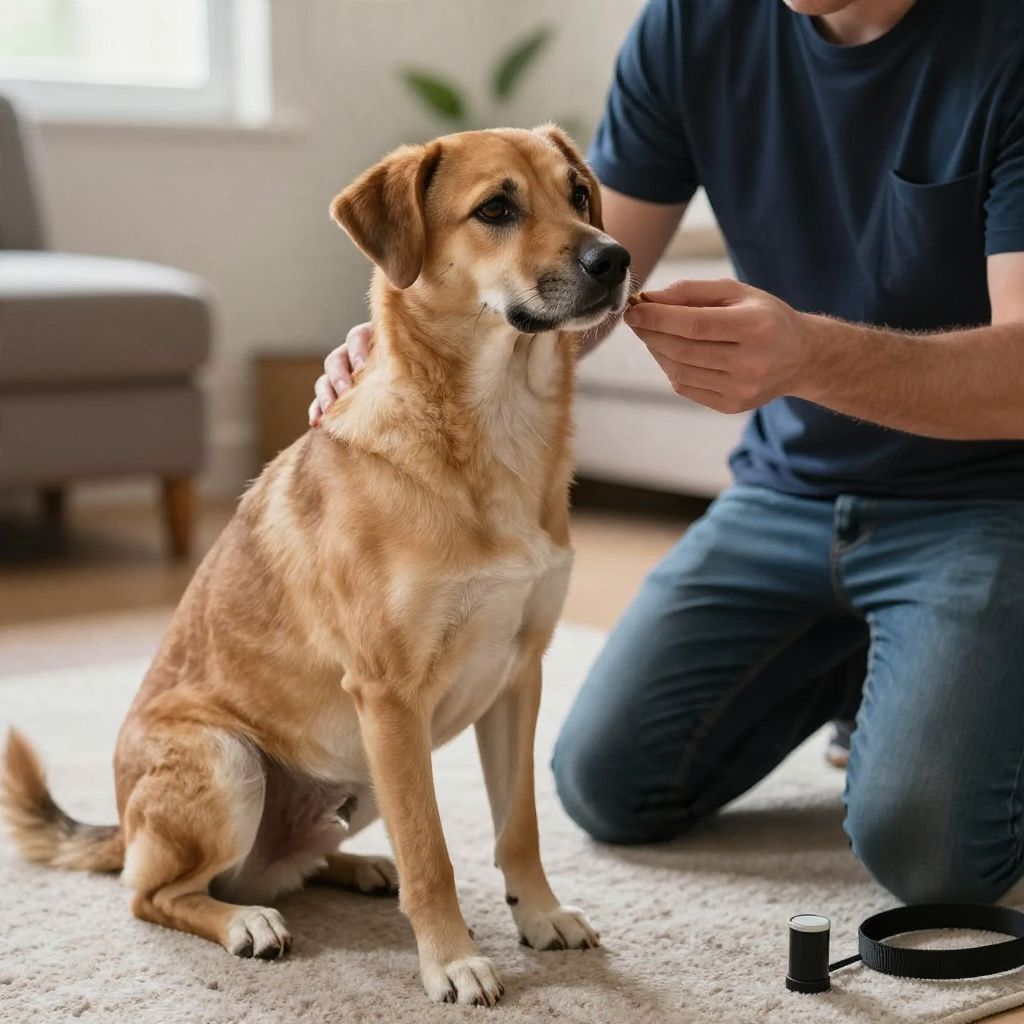
Training a rescue dog starts with helping them feel safe, predictable, and understood. Many rescue dogs are learning a new home, new routines, and possibly new rules at the same time, so progress is usually best when you go slowly and reward what you want.
Use calm management, short positive sessions, and consistent routines. Focus first on trust, house rules, and basic cues, then build socialization and problem-solving at your dog’s pace.
How To Train A Rescue Dog?
Start by creating safety, structure, and trust. Use a consistent routine, reward-based training, and very short sessions. Teach basic cues, manage the environment to prevent mistakes, and progress slowly if your dog is fearful, shut down, or overexcited. If behavior is intense or unsafe, involve a certified trainer or veterinary behaviorist.
Step 1: Give Your Rescue Dog Time To Decompress
Many rescue dogs need a decompression period before they can learn well. They may be stressed by new sights, sounds, people, and schedules, so expecting immediate obedience can backfire.
- Keep the first days simple and predictable.
- Limit visitors, busy outings, and overwhelming interactions.
- Use a quiet resting area where your dog can retreat.
- Stick to regular feeding, potty, walk, and sleep times.
If your dog is hiding, pacing, trembling, or refusing food, that does not mean training is failing. It usually means your dog needs more time, less pressure, and a calmer environment.
Step 2: Set Up The Home For Success
Good training begins with management. Preventing rehearsed mistakes is easier than correcting them later, especially for a dog with an unknown history.
Use simple management tools
- Crate or pen if your dog is comfortable with confinement.
- Baby gates to limit access to the house.
- Leash indoors for supervision and gentle redirection.
- Chews, toys, and mats for calm enrichment.
Choose tools based on your dog’s comfort and size. A crate helps some dogs relax, but it should never be forced or used as punishment.
Step 3: Build Trust Before Pushing Training
Trust is the foundation of how to train a rescue dog. A dog that feels safe is more likely to eat, explore, and respond to you.
- Approach slowly and avoid looming over the dog.
- Let the dog choose whether to come closer.
- Use a soft voice and predictable movements.
- Reward calm curiosity with treats or praise.
For shy dogs, sit nearby and toss treats without demanding contact. For confident but excitable dogs, reward calm behavior before adding more stimulation.
Step 4: Start With Foundation Cues
Begin with a few practical cues that make daily life easier. Keep sessions short, upbeat, and easy to win.
Useful first cues
- Name response: reward your dog for looking at you.
- Come: practice indoors with low distractions.
- Sit: useful for greetings and impulse control.
- Down: helpful for settling, if your dog is comfortable.
- Leave it: prevents grabbing unsafe items.
- Touch: teaches your dog to target your hand.
Use treats, gentle praise, or play as rewards. If your dog seems confused, make the task easier rather than repeating the cue louder or faster.
Step 5: Use Positive Reinforcement Correctly
Reward the behavior you want the moment it happens. That helps your dog connect the action with the outcome.
- Mark the behavior with a consistent word like “yes” if you use one.
- Deliver the reward right away.
- Keep repetitions short so your dog stays engaged.
- End while your dog is still successful.
Avoid punishment, intimidation, leash jerks, or “alpha” methods. These can increase fear, damage trust, and make behavior problems worse, especially in rescue dogs with uncertain backgrounds.
Step 6: Potty Train With A Predictable Routine
House training often improves quickly when your dog has frequent outdoor breaks and you reward the right choice. Rescue dogs may need a refresher even if they were previously housetrained.
- Take your dog out after waking, eating, drinking, playing, and napping.
- Use the same potty area when possible.
- Reward immediately after elimination outdoors.
- Supervise closely indoors until accidents stop.
If accidents continue, consider medical causes such as urinary issues, diarrhea, pain, or age-related incontinence. A veterinarian should assess any sudden change in bathroom habits.
Step 7: Teach Calm Alone Time
Some rescue dogs struggle with separation-related distress. Training should be gradual so your dog learns that being alone is safe.
Start with tiny absences
- Step away for a few seconds, then return calmly.
- Pair departures with a chew, lick mat, or stuffed toy if your dog enjoys them.
- Increase time slowly only if your dog stays relaxed.
- Keep arrivals low-key to avoid overexcitement.
If your dog panics, vocalizes intensely, destroys doors or crates, or cannot settle when left alone, seek professional help. Separation anxiety often needs a structured behavior plan.
Step 8: Socialize Carefully, Not Quickly
Socialization for a rescue dog is not about forcing interaction with everyone. It means helping your dog feel safe around the people, dogs, sounds, and places they will encounter in daily life.
- Expose your dog to new things at a distance where they can stay calm.
- Pair novel experiences with treats or play.
- Let your dog observe before interacting.
- Stop before your dog becomes overwhelmed.
Some dogs need more time around strangers, children, bicycles, or other dogs. Breed tendencies may influence energy or sociability, but every dog is an individual.
Step 9: Address Common Rescue Dog Behavior Challenges
Many behavior issues improve when you identify the trigger and manage it early. The goal is not to “correct” the dog into compliance, but to help them practice better choices.
Jumping
Turn away, avoid rewarding with attention, and reinforce four paws on the floor. Ask guests to do the same.
Barking
Check whether the barking is caused by fear, boredom, alerting, or frustration. Teach an alternative behavior such as going to a mat, and reward quiet moments. If you want more detail, see how to train a dog to stop barking.
Mouthing or nipping
Redirect to appropriate chews and pause interaction if arousal rises. Puppies and adolescent dogs often need extra guidance, but adult rescue dogs may also mouth when stressed.
Resource guarding
Do not punish growling. Create distance, avoid taking items by force, and consult a qualified trainer or behaviorist for a safety plan.
Step 10: Match Training To Age, Health, And History
Not every rescue dog learns at the same pace. Age, pain, prior training, and temperament all affect progress.
Adult dogs
Adult rescues may already know some cues, but they may also have habits that need reshaping. Be patient and consistent while you learn what motivates them.
Senior dogs
Older dogs may need shorter sessions, more rest, and a veterinary check if behavior changes suddenly. Hearing loss, vision changes, arthritis, and cognitive decline can affect training.
Dogs with trauma or fear
These dogs often do best with choice-based training, low pressure, and predictable routines. Progress may be slow, but small wins matter.
Step 11: Know When To Get Professional Help
Some problems are bigger than basic training. A qualified professional can help you stay safe and avoid making fear or aggression worse.
- Seek a veterinarian if you suspect pain, illness, or sudden behavior change.
- Work with a certified trainer who uses reward-based methods.
- See a veterinary behaviorist for severe fear, aggression, panic, or compulsive behavior.
Get urgent veterinary care if your dog has trouble breathing, collapses, has seizures, is severely injured, cannot urinate, has repeated vomiting, or shows sudden extreme aggression or disorientation. Those signs are not normal training issues.
Common Mistakes To Avoid
Rescue dogs often do better when you avoid the most common training errors.
- Moving too fast before the dog feels safe.
- Using too many cues or long sessions.
- Expecting instant trust or perfect manners.
- Using punishment for fear-based behavior.
- Ignoring medical causes of behavior changes.
- Letting the dog practice unwanted habits repeatedly.
Consistency matters more than intensity. A few calm, well-timed repetitions each day are usually more effective than one long, frustrating training session.
What Progress Should Look Like
Training progress in a rescue dog is often gradual and uneven. Success may look like your dog taking treats more easily, recovering faster from surprises, or choosing to check in with you.
- Less hiding, freezing, or pacing.
- Better response to name and simple cues.
- Fewer accidents or destructive episodes.
- More relaxed body language around normal household activity.
If your dog has setbacks, return to easier steps. That does not mean training failed; it means your dog needs a simpler version of the lesson.
Final Tips For Long-Term Success
How to train a rescue dog comes down to safety, patience, and repetition. Keep the environment manageable, reward the behavior you want, and move at the pace your dog can handle.
When in doubt, slow down and get help early. A good plan now can prevent bigger problems later and help your rescue dog settle into a confident, healthy life.
If you want to keep building good habits, you may also find it helpful to read about how to discipline a puppy in a humane, practical way.