
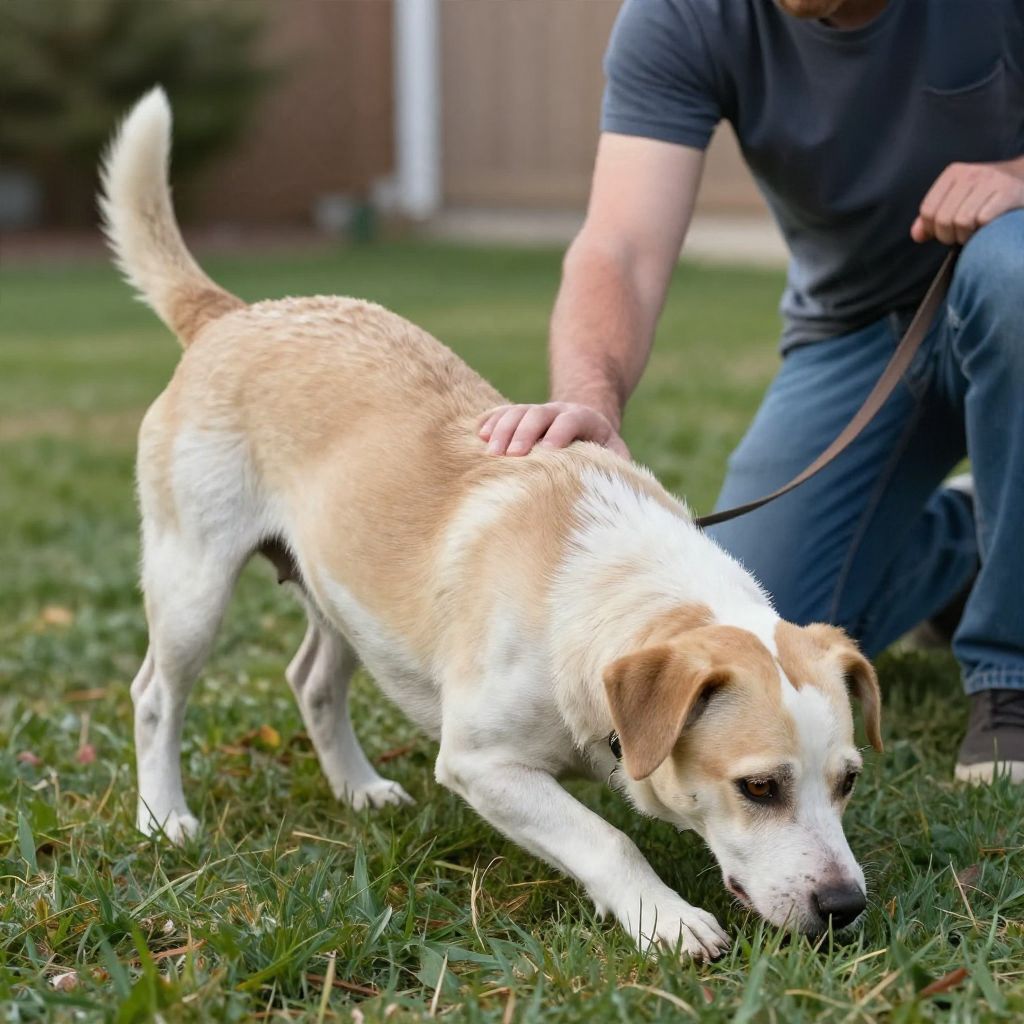
If your dog is dragging his butt, it usually means something is irritating the rear end. The most common causes are full or infected anal glands, diarrhea or soft stool, parasites, skin irritation, or debris stuck around the anus.
While scooting can be minor, it can also signal pain, infection, or a problem that needs veterinary care. Watch for swelling, bleeding, a foul smell, straining, or repeated scooting, and contact your vet if the behavior keeps happening.
Why is my dog dragging his butt?
Dogs drag their butt, or “scoot,” when something is uncomfortable, itchy, or painful around the anus. Common causes include anal gland problems, parasites, loose stool, allergies, skin infection, or a foreign object. If scooting happens more than once or comes with other symptoms, your veterinarian should check your dog.
Common causes of butt dragging
Anal gland problems
Anal glands are small scent glands near the anus. They can become full, impacted, inflamed, or infected, which often causes scooting, licking, and a strong fishy odor.
Some dogs are more prone to anal gland trouble than others, but any dog can develop it. Small dogs, overweight dogs, and dogs with chronic soft stool may be at higher risk, though that is not a guarantee.
Diarrhea or soft stool
When stool is too soft, it may not press on the anal glands enough to empty them naturally. That can leave the glands full and uncomfortable, leading to scooting.
Loose stool can also leave residue around the anus, causing irritation and a need to rub or drag the rear on the floor.
Intestinal parasites
Tapeworms and other intestinal parasites can cause itching around the rear end. You may also notice small rice-like segments near the anus or in the bedding, though parasites are not always visible.
Puppies, dogs that spend time outdoors, and dogs with inconsistent parasite prevention may be more likely to be affected, but any dog can get parasites.
Skin irritation or allergies
Allergies, irritated skin, or inflammation around the tail base and hind end can make a dog scoot. This may happen along with licking, chewing, redness, or recurrent ear and skin problems.
Environmental allergies, food sensitivities, and flea irritation can all contribute. The exact trigger varies from dog to dog.
Debris, mats, or injury
Foxtails, dried stool, matted fur, or a small wound can make the area feel uncomfortable. Long-haired dogs may be especially prone to trapped debris, but any coat type can be affected.
Less commonly, butt dragging can happen after trauma, constipation, or a rectal problem that needs veterinary attention.
What you should check at home
Before you assume it is “just scooting,” do a quick visual check if your dog will allow it safely. Keep the exam gentle and stop if your dog seems painful, anxious, or reactive.
- Look for redness, swelling, discharge, or bleeding around the anus.
- Check for a strong fishy odor, which can suggest anal gland issues.
- Inspect the fur for stuck stool, mats, burrs, or foreign material.
- Notice whether your dog is also licking, straining, or having diarrhea.
- Watch for worms or rice-like segments in the stool or around the rear.
If you see a visible object, a wound, or a lot of swelling, do not try to dig around the area. That can worsen pain or injury.
When butt dragging is urgent
Some causes of scooting need prompt veterinary care. Seek urgent help if your dog has any of the following:
- Swelling near the anus or a painful lump
- Bleeding, pus, or a bad-smelling discharge
- Repeated straining to poop or inability to poop
- Severe diarrhea, vomiting, or signs of dehydration
- Sudden pain, crying, or reluctance to sit or walk
- A rectal prolapse or tissue protruding from the anus
- Weakness, fever, or your dog seems very unwell
If your dog is scooting and also acting sick, do not wait for it to “go away on its own.” Anal gland abscesses, significant infections, and some rectal problems can worsen quickly.
What to do if your dog is dragging his butt
The right next step depends on how often it happens and whether there are other symptoms. A one-time scoot after a messy bowel movement may not be serious, but repeated scooting deserves a closer look.
- Check the rear end for obvious irritation, stool, or debris.
- Note any changes in stool quality, appetite, energy, or bathroom habits.
- Keep your dog from licking or chewing the area if possible.
- Arrange a vet visit if the scooting repeats, lasts more than a day, or comes with other signs.
- Bring a fresh stool sample if your veterinarian asks for one.
Your vet may examine the anal glands, check for parasites, and look for skin or rectal irritation. Treatment depends on the cause and may include gland expression by a professional, parasite treatment, or care for infection or inflammation.
What not to do
It is easy to try quick fixes, but some can make the problem worse.
- Do not squeeze anal glands yourself unless a veterinarian has shown you how and says it is appropriate for your dog.
- Do not use human creams, ointments, or medications without veterinary guidance.
- Do not ignore repeated scooting because it “seems minor.”
- Do not punish your dog for scooting; it is usually a discomfort signal, not a behavior problem.
How veterinarians find the cause
If your dog keeps dragging his butt, your veterinarian will usually start with a physical exam and a history of stool quality, diet, parasite prevention, and any licking or straining. They may also check the anal glands and examine the skin around the rear end.
Depending on the findings, your vet may recommend:
- A fecal test for parasites
- Anal gland evaluation or treatment
- Skin checks for infection or allergy-related irritation
- Additional testing if there is pain, swelling, or recurring problems
How to help prevent scooting
Prevention depends on the cause, but a few practical habits can reduce the chance of repeat episodes.
Keep stools healthy
Consistent, well-formed stool helps the anal glands empty naturally. If your dog often has soft stool, talk with your veterinarian about diet, treats, and possible digestive causes rather than making sudden food changes on your own.
Use parasite prevention
Stay current on parasite control recommended by your veterinarian, especially if your dog goes to parks, daycare, boarding, or wooded areas. Regular fecal checks may also be advised.
Maintain grooming and hygiene
For long-haired dogs, keeping the fur around the rear clean and trimmed can reduce trapped debris. After diarrhea or muddy outings, gently clean the area if needed and safe to do so.
Address weight and activity
Some dogs with excess body weight may be more prone to anal gland trouble. A veterinarian can help you choose an appropriate diet and exercise plan if weight is a factor.
Special considerations for puppies and senior dogs
Puppies may scoot because of parasites, stool changes, or irritation from exploring the world and getting dirty. Because puppies are also more vulnerable to dehydration and parasite-related illness, repeated scooting should be checked sooner rather than later.
Senior dogs may scoot because of chronic skin problems, digestive changes, or anal gland issues that have built up over time. If your older dog is also slowing down, straining, or seeming painful, a veterinary exam is important.
Bottom line
If your dog is dragging his butt, the most likely cause is irritation around the anus, often from anal glands, soft stool, parasites, or skin problems. Clean the area if needed, watch for warning signs, and contact your veterinarian if it happens more than once or if your dog seems uncomfortable.
If you want more practical guidance, you may also find this deeper look at why dogs drag their butt and this guide to anal gland expression helpful.