
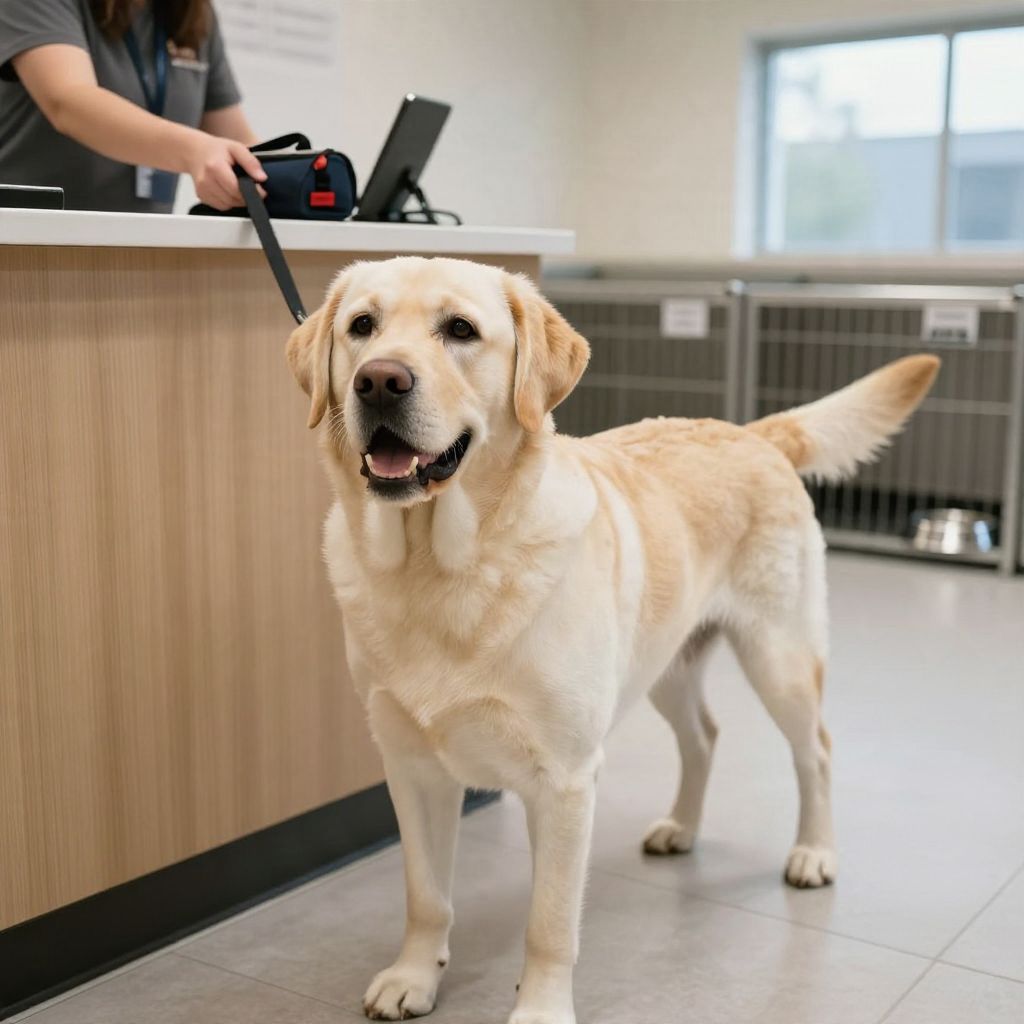
What is dog boarding? It is a temporary care service where your dog stays at a licensed kennel, pet hotel, veterinary facility, or in a caregiver’s home while you are away. The goal is to keep your dog safe, fed, exercised, and supervised until you return.
Boarding can be a good option for travel, emergencies, or times when in-home care is not practical. The best choice depends on your dog’s age, health, temperament, training, and how well they handle new environments.
What Is Dog Boarding?
Dog boarding is short-term care for a dog when you cannot look after them yourself. Your dog may stay in a kennel, a commercial boarding facility, a veterinary clinic, or a home-based pet sitter’s house, with feeding, potty breaks, supervision, and basic care provided.
How Dog Boarding Works
Most boarding facilities follow a daily routine that includes meals, water, bathroom breaks, exercise, cleaning, and rest. Some offer group play, private walks, grooming, medication administration, or camera access, while others provide simpler overnight care.
Common types of boarding
- Traditional kennel boarding: Dogs stay in individual runs or suites with staff supervision.
- Pet hotel boarding: Often includes more amenities, such as larger rooms, playtime, or enrichment.
- Veterinary boarding: Best for dogs with medical needs, chronic illness, or special monitoring.
- Home boarding: A dog stays in a caregiver’s home, which may suit some dogs better than a busy kennel.
The right setting depends on your dog’s comfort level. A social, confident dog may enjoy a lively facility, while a shy or older dog may do better in a quieter environment.
When Dog Boarding Makes Sense
Boarding is often useful when you travel, have a family emergency, are hospitalized, or need care for a dog that cannot safely be left alone for long periods. It can also help if your dog needs regular supervision and your usual pet-sitting option is unavailable.
Boarding is not the only choice. Depending on your dog, a trusted pet sitter, dog walker, or friend may be less stressful, especially for puppies, seniors, or dogs with separation anxiety.
What to Look for in a Good Boarding Facility
A quality boarding provider should prioritize safety, cleanliness, supervision, and clear communication. You should be able to ask questions and see how dogs are housed, fed, exercised, and monitored.
- Clean, secure spaces with safe fencing and doors
- Staff who understand dog behavior and body language
- Written policies for feeding, medications, emergencies, and vaccinations
- Separate areas for dogs with different sizes, energy levels, or temperaments when needed
- Reasonable noise levels and opportunities for rest
- Transparent rules about playgroups, handling, and pickup procedures
Ask whether staff are trained to recognize stress, illness, overheating, diarrhea, coughing, limping, or conflict between dogs. Good supervision matters more than flashy extras.
Questions to Ask Before You Book
Before choosing a boarding option, ask practical questions so you know what your dog will experience. This helps you avoid surprises and choose a place that fits your dog’s needs.
- What vaccinations or parasite prevention do you require?
- How often will my dog be fed, walked, and let out?
- How do you handle dogs that become anxious, ill, or aggressive?
- Can you give medications, and what information do you need from my veterinarian?
- Will my dog have direct contact with other dogs, and how is that supervised?
- What happens if there is an emergency after hours?
- Can I bring my dog’s own food, bedding, or toys?
How to Prepare Your Dog for Boarding
Preparation can reduce stress and make the stay smoother. Start planning early, especially if your dog is new to boarding or has special needs.
Practical preparation steps
- Confirm required vaccines, flea and tick prevention, and any health records.
- Pack your dog’s regular food to avoid sudden diet changes.
- Bring clear feeding instructions and any approved medications.
- Label items such as leash, collar, crate, and bedding.
- Share emergency contact details and your veterinarian’s information.
- Schedule a trial stay if your dog has never boarded before.
If your dog is a puppy, boarding can be especially stressful unless the facility is experienced with young dogs. Puppies may need more frequent potty breaks, gentler handling, and careful disease prevention because their immune systems are still developing.
What Dogs May Struggle with Boarding?
Any dog can find boarding stressful, but some dogs are more likely to need extra support. This varies by personality, training history, age, and health rather than breed alone.
Dogs that may need special consideration
- Shy or fearful dogs: They may be overwhelmed by noise, unfamiliar people, and other dogs.
- Dogs with separation anxiety: They may panic when away from their usual routine.
- Senior dogs: They may need quieter care, softer bedding, or help with mobility.
- Puppies: They need close supervision, socialization done safely, and frequent potty breaks.
- Dogs with medical issues: They may need medication, special diets, or monitoring.
Some dogs do well in a home-style setting but not in a kennel, and others are the opposite. The best match is the one that keeps your dog calm, healthy, and safe.
Common Risks and How to Reduce Them
Dog boarding is generally safe when done well, but there are real risks. Knowing them helps you make better decisions and spot problems early.
Possible boarding risks
- Stress, anxiety, or appetite changes
- Exposure to contagious illnesses
- Injury during play or handling
- Digestive upset from diet changes or stress
- Escapes or lost identification if the facility is poorly managed
You can reduce these risks by choosing a reputable provider, keeping vaccines current, sending your dog’s usual food, and giving honest information about behavior issues. If your dog has a history of aggression, fear, or escape attempts, the boarding staff needs to know in advance.
What to Expect During the Stay
During boarding, your dog should have access to water, regular feeding, bathroom breaks, and rest. Some dogs also get structured exercise or enrichment, but the amount should match their age, health, and energy level.
It is normal for some dogs to be excited, tired, or slightly less hungry when they come home. Mild adjustment changes can happen, but they should improve quickly once your dog is back in a familiar routine.
Signs your dog may be stressed at boarding
- Refusing food for more than a short period
- Excessive panting or pacing
- Persistent hiding or shutdown behavior
- Diarrhea or vomiting
- Whining, barking, or restlessness that does not settle
If the facility reports severe stress, repeated escape attempts, or ongoing illness, ask for a veterinary check and reconsider whether boarding is the right option next time.
When Boarding Is Not the Best Choice
Boarding may not be ideal for every dog. A quieter in-home sitter, a familiar friend, or veterinary boarding may be better if your dog is medically fragile, highly anxious, very young, or recovering from illness or surgery.
Do not board a dog that is actively sick, contagious, or recovering unless a veterinarian says it is appropriate and the facility can provide the needed care. If your dog has unexplained vomiting, diarrhea, coughing, trouble breathing, collapse, or severe lethargy, seek veterinary care promptly rather than arranging boarding.
Red Flags That Need Urgent Veterinary Attention
Some problems should never be treated as routine boarding issues. If your dog develops any of the following, contact a veterinarian right away or seek emergency care:
- Difficulty breathing
- Repeated vomiting or vomiting with weakness
- Bloody diarrhea or black stool
- Collapse, seizures, or severe disorientation
- Swollen abdomen, unproductive retching, or signs of bloat
- Severe limping, bleeding, or suspected fracture
- Not drinking and becoming weak or dehydrated
Boarding staff should know how to reach you and your veterinarian immediately if any of these happen.
How to Choose the Right Boarding Option for Your Dog
Think about your dog’s comfort, not just convenience. A good match depends on temperament, age, health, and how your dog handles change.
- Choose kennel or pet hotel boarding if your dog is social, healthy, and comfortable with new environments.
- Choose home boarding if your dog does better in a quieter, more personal setting.
- Choose veterinary boarding if your dog needs medical monitoring or medication support.
- Choose in-home care if your dog is elderly, anxious, or strongly attached to home routines.
If you are unsure, a short trial stay can reveal how your dog copes before you commit to a longer trip.
Final Thoughts on Dog Boarding
So, what is dog boarding? It is temporary care that keeps your dog safe, fed, and supervised when you cannot be there. The best boarding choice is the one that fits your dog’s health, personality, and routine while giving you peace of mind.
If you are preparing for a trip or bringing home a new dog, it can also help to read about how to prepare for a new puppy or how to train a rescue dog so your dog’s care stays consistent before and after boarding.