
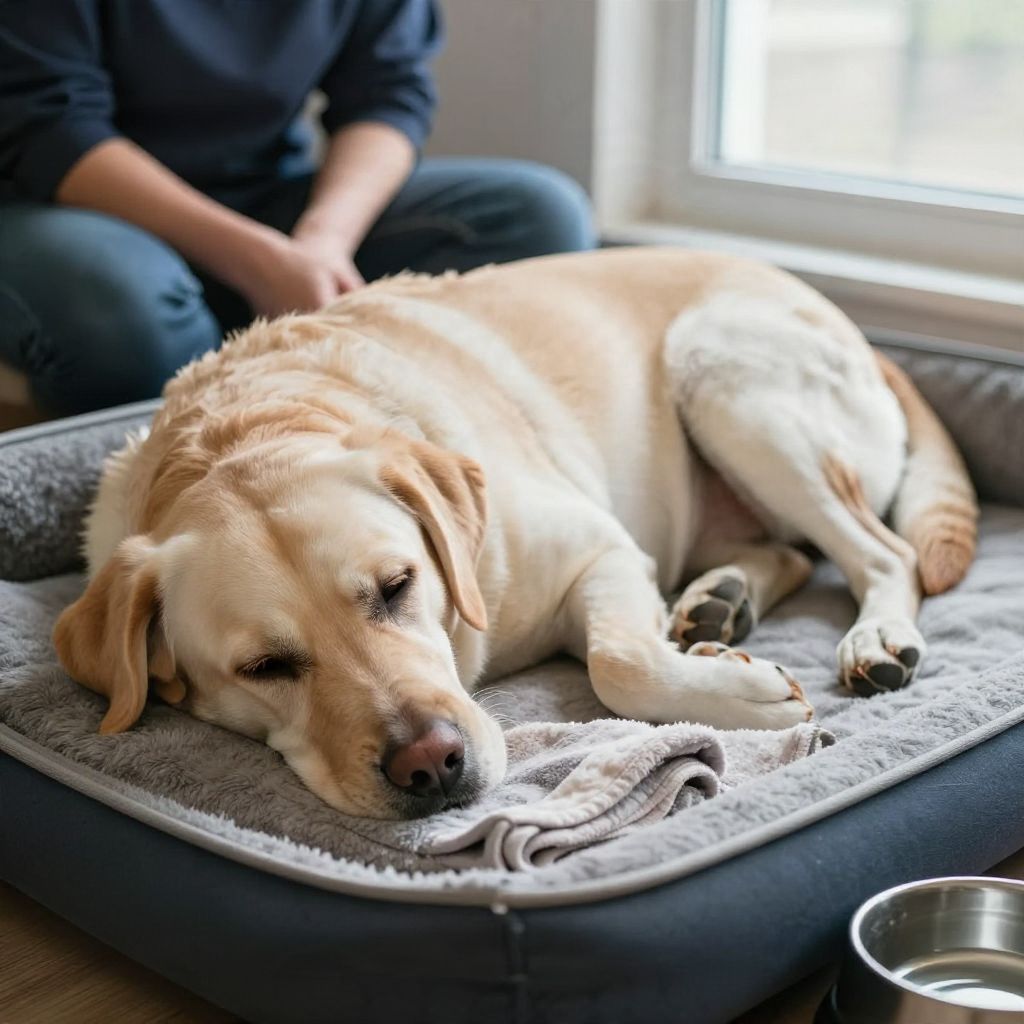
Dog sleeping positions when sick can give you clues about comfort, pain, breathing, or nausea, but they do not tell you exactly what is wrong. A dog may curl up, stretch out, hide, or change positions often when feeling unwell.
Watch the whole picture: appetite, energy, breathing, vomiting, diarrhea, coughing, and whether your dog can settle comfortably. If the posture change comes with distress or other warning signs, contact a veterinarian promptly.
Dog sleeping positions when sick: what do they mean?
When a dog is sick, sleeping position often reflects comfort level rather than a specific diagnosis. Curling up may help a dog feel secure or warm, while stretching out can happen when a dog is trying to cool off or ease pressure. Sudden changes, restlessness, or an inability to get comfortable can signal pain or illness.
Common sick-dog sleeping positions and what they can suggest
Curling into a tight ball
A curled-up posture is common in healthy dogs, especially smaller dogs or those trying to stay warm. When a sick dog suddenly curls tightly and seems reluctant to move, it may be trying to protect an uncomfortable abdomen or joints.
Sleeping stretched out on the side
Side-sleeping can be normal and relaxed. If your dog is usually curled up but now lies flat and still, that may mean it is seeking relief from heat, fever, or discomfort. If breathing looks strained or the dog seems weak, treat it as a concern.
Sleeping on the belly with legs tucked under
This position can be a sign of alertness rather than deep rest. A dog that keeps returning to a “sphinx” or tucked posture may be uncomfortable, nauseated, or unable to fully relax.
Changing positions often
Frequent repositioning, pacing, or repeatedly getting up and lying down can point to pain, abdominal discomfort, coughing, breathing trouble, or anxiety. If your dog cannot settle for more than a few minutes, that is worth a veterinary call.
Sleeping in unusual places
Dogs sometimes move to cool floors, isolated corners, or hidden spots when they feel unwell. This can happen with fever, nausea, stress, or a desire to avoid interaction. A sudden need to hide is especially important to notice in normally social dogs.
What matters more than the sleeping position
One posture alone is not enough to judge whether your dog is sick. Look for patterns and changes from your dog’s normal behavior.
- Appetite changes: refusing food or water, or drinking much more or much less than usual
- Energy changes: unusual tiredness, weakness, or reluctance to walk
- Breathing changes: fast, shallow, noisy, or labored breathing
- Digestive signs: vomiting, diarrhea, bloated abdomen, drooling, lip licking
- Pain signs: whining, trembling, guarding the belly, stiffness, limping
- Behavior changes: hiding, clinginess, irritability, confusion, restlessness
When a sleeping position may point to pain or discomfort
Dogs often try to protect a painful area without making it obvious. A dog with abdominal pain may hunch, stretch oddly, or avoid lying on one side. A dog with joint pain may keep shifting, struggle to lie down, or take longer to stand up.
Older dogs may show these signs more subtly, and puppies may become unusually quiet or clingy when unwell. Because individual dogs vary, compare the posture to your dog’s normal sleep habits, not to a breed stereotype.
Red flags that need urgent veterinary care
Some sleeping changes are not just “sick dog behavior” but possible emergencies. Seek urgent veterinary help if you notice any of the following:
- Labored breathing, open-mouth breathing at rest, or blue/pale gums
- A swollen or hard belly, especially with restlessness or retching
- Collapse, severe weakness, or inability to stand
- Repeated vomiting, vomiting with blood, or profuse diarrhea
- Severe pain, crying out, or rigid posture
- Seizures, disorientation, or sudden unresponsiveness
- Possible toxin exposure, such as chocolate, xylitol, human medications, or chemicals
- Inability to urinate, or straining with little or no urine
If your dog is struggling to breathe, do not wait to “see if it passes.” Breathing trouble can worsen quickly and needs immediate veterinary attention.
How to help a sick dog rest more comfortably
You can support comfort at home while you arrange veterinary advice, as long as your dog is stable and not showing emergency signs.
- Provide a quiet, low-traffic resting area.
- Offer a clean, supportive bed that is easy to get on and off.
- Keep the room at a comfortable temperature.
- Move water within easy reach, but do not force drinking.
- Limit activity if your dog seems painful or weak.
- Observe breathing, gum color, appetite, and bathroom habits.
A dog that is nauseated may prefer a calm space away from noise and strong smells. A dog with fever or heat stress may seek cooler flooring, while a dog that feels chilled may curl up tighter than usual.
What not to do
Well-meaning care can sometimes make things worse. Avoid these common mistakes:
- Do not force your dog to exercise “to loosen up” if it seems painful or weak.
- Do not give human pain relievers or cold medicines unless a veterinarian specifically instructs you to do so.
- Do not assume a curled posture is harmless if it is new or paired with other symptoms.
- Do not wait too long if your dog is breathing hard, vomiting repeatedly, or refusing water.
- Do not try punishment or rough handling to “make” your dog settle.
How age, size, and health history can affect sleeping posture
Different dogs show illness differently. Puppies may become suddenly sleepy or clingy, while senior dogs may be quieter, stiffer, or more reluctant to change positions. Large dogs, overweight dogs, and dogs with arthritis may have more trouble finding a comfortable posture when sick.
Brachycephalic dogs, or dogs with shorter muzzles, may be more likely to show breathing difficulty when ill or overheated. Dogs with heart, lung, or abdominal disease may also rest in unusual positions to try to breathe or feel better.
When to call your veterinarian
Call your veterinarian if your dog’s sleeping position changes for more than a short period and you also notice a loss of appetite, vomiting, diarrhea, coughing, feverish behavior, or pain. Even if the signs seem mild, a new pattern can be an early clue that something is wrong.
It is especially important to call if your dog has a chronic condition such as arthritis, heart disease, diabetes, or a history of stomach problems. Your veterinarian can help you decide whether your dog needs an exam the same day.
Helpful ways to observe your dog without stressing it
If you are trying to figure out whether your dog is uncomfortable, calm observation is best. Watch from a distance and note what changes over time.
- How long does your dog stay in one position?
- Does it seem relaxed, or does it keep shifting?
- Is breathing quiet and easy, or fast and effortful?
- Does your dog get up normally, or struggle to rise?
- Is your dog eating, drinking, and eliminating normally?
Taking a short video of the posture or breathing pattern can help your veterinarian assess what is happening, especially if the signs come and go.
Bottom line
Dog sleeping positions when sick can hint at discomfort, pain, fever, nausea, or breathing trouble, but they are only one piece of the puzzle. Focus on changes from your dog’s normal habits and watch for red flags. If breathing, weakness, vomiting, or pain is present, contact a veterinarian right away.
If you want to learn more about related warning signs, you may also find these guides helpful: why a dog may be breathing heavily and whether dogs can get fevers.