
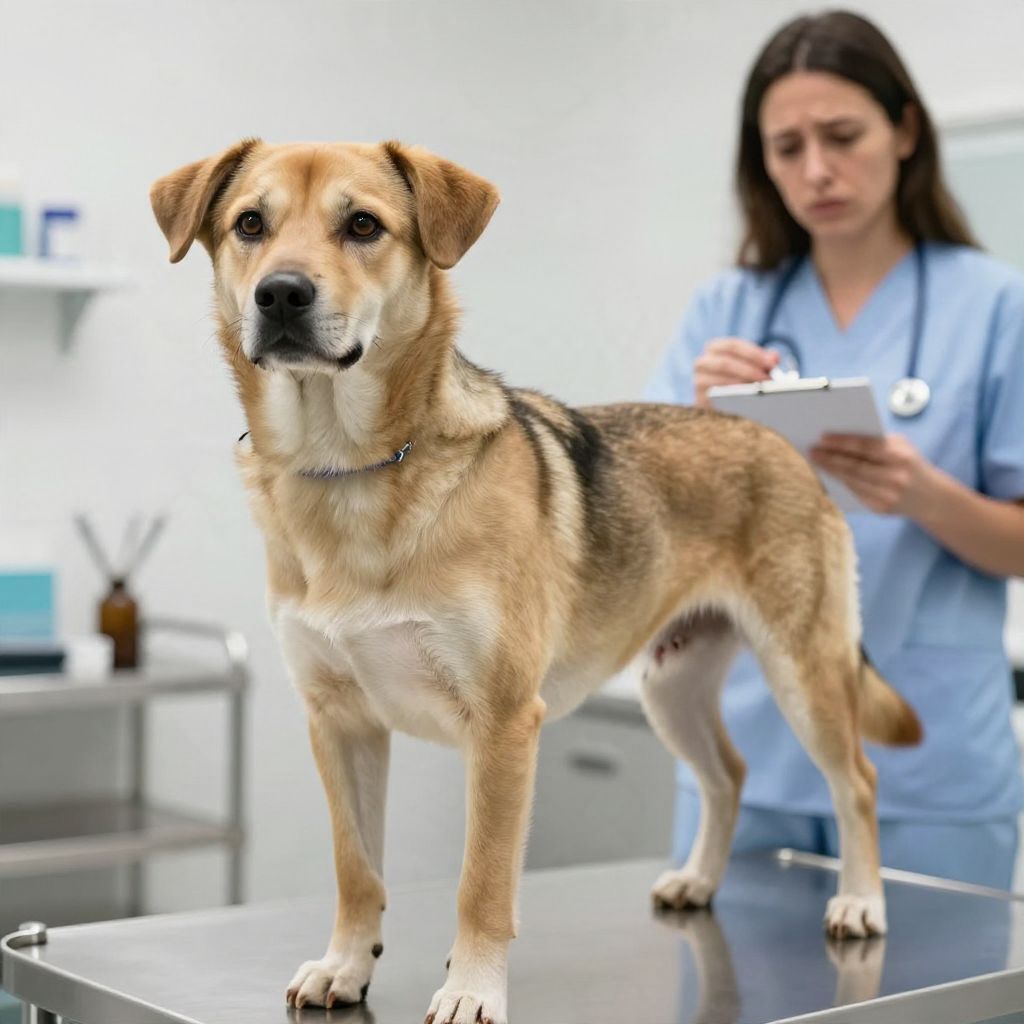
My dog is peeing blood, and that is always a sign you should take seriously. Blood in the urine can come from the bladder, kidneys, urethra, or reproductive tract, and it may be linked to infection, stones, injury, or other medical problems.
Some causes are urgent, especially if your dog is straining, in pain, unable to pee, weak, or vomiting. A veterinarian should evaluate the problem promptly so the right treatment can start as soon as possible.
My dog is peeing blood: what does it mean?
Blood in a dog’s urine, called hematuria, is not normal and should be checked by a veterinarian. It can happen with urinary tract infections, bladder stones, trauma, prostate disease, poisoning, inflammation, or kidney problems. The cause cannot be confirmed at home, and some cases need urgent care.
Why is my dog peeing blood?
There are several possible reasons, and the exact cause depends on your dog’s age, sex, breed tendencies, medical history, and symptoms. A dog with a few drops of blood after a long walk may have a different problem than a senior dog with frequent accidents or a puppy that is straining.
Common medical causes
- Urinary tract infection: Often causes frequent urination, discomfort, and small amounts of bloody urine.
- Bladder or kidney stones: Can irritate the urinary tract and may cause straining, pain, or blockage.
- Injury or trauma: A fall, bite, car accident, or rough play can damage the urinary tract.
- Prostate disease: In intact male dogs, prostate enlargement or infection can affect urination.
- Kidney disease: May cause blood in urine along with increased thirst, vomiting, or lethargy.
- Poisoning or toxin exposure: Some toxins can affect blood clotting or the urinary system.
- Inflammation or cancer: Less common, but possible, especially in older dogs.
What the color can tell you
Urine may look pink, red, orange-brown, or have visible clots. Sometimes the blood is only seen on the fur, bedding, or in a puddle after urination. Even if the color seems mild, it still deserves veterinary attention.
When is blood in dog urine an emergency?
Seek urgent veterinary care right away if your dog cannot pass urine, is straining repeatedly, seems painful, has a swollen belly, is vomiting, collapses, or becomes very weak. A urinary blockage can become life-threatening, especially in male dogs, and should not wait until morning.
Red-flag signs to watch for
- Repeated attempts to pee with little or no urine produced
- Crying, pacing, or obvious pain while urinating
- Blood plus vomiting, lethargy, or loss of appetite
- Fever or shivering
- Accidents in the house with frequent small urinations
- Swollen abdomen or signs of distress
- Known toxin exposure, such as rodenticide or human medication
What you should do first
Do not try to treat bloody urine with leftover antibiotics, pain relievers, or home remedies. Some human medications are dangerous for dogs, and giving the wrong treatment can delay diagnosis or worsen the problem.
- Call your veterinarian and describe the symptoms clearly.
- If your dog cannot urinate, go to an emergency clinic immediately.
- Keep your dog calm and limit strenuous activity until seen.
- Offer fresh water unless your veterinarian has told you otherwise.
- Bring a urine sample if your vet asks for one and you can collect it safely.
Helpful details to note before the visit
- When the blood started and how often it appears
- Whether your dog is straining, leaking, or peeing more often
- Any vomiting, fever, pain, or appetite changes
- Recent trauma, new foods, medications, or toxin exposure
- Whether your dog is spayed or neutered
How veterinarians usually diagnose the cause
Your veterinarian may recommend a physical exam, urinalysis, urine culture, bloodwork, and sometimes imaging such as X-rays or ultrasound. These tests help identify infection, stones, inflammation, kidney disease, or other causes that can look similar from the outside.
What treatment may involve
Treatment depends entirely on the cause. A urinary infection may need prescription medication, while stones may require diet changes, pain control, procedures, or surgery. If your dog is blocked or dehydrated, fluid therapy and emergency stabilization may be needed first.
Never assume the blood will go away on its own. Even if your dog seems comfortable, the underlying problem may still be present and get worse without treatment.
Can breed, age, or size affect the risk?
Yes, but breed and body type only influence risk; they do not determine the diagnosis. Some dogs are more prone to certain urinary issues, while age and sex can also matter. For example, older dogs may be more likely to have chronic disease, and intact males can have prostate-related problems.
Individual factors that matter
- Age: Puppies, adults, and seniors have different likely causes.
- Sex and reproductive status: Intact males and females may face different risks.
- Medical history: Prior infections or stones can increase recurrence risk.
- Diet and water intake: These can influence urinary health in some dogs.
- Activity level and trauma risk: Active dogs may be more prone to injury.
What not to do at home
When your dog is peeing blood, a few common mistakes can make things worse. The safest approach is to get professional guidance quickly rather than guessing at the cause.
- Do not give human pain relievers or antibiotics.
- Do not use essential oils or unproven detox products.
- Do not force exercise if your dog seems painful or weak.
- Do not delay care because the blood seems small in amount.
- Do not restrict water unless your veterinarian specifically instructs you to do so.
How to support your dog while waiting for the vet
If your dog is stable and your veterinarian has advised a routine visit, keep the environment calm and easy to access. Short leash walks may help you observe urination, but avoid long outings or rough play until the cause is known.
Practical comfort steps
- Provide easy access to water and a quiet resting area
- Take your dog out more often to monitor urine output
- Use a clean container or pad if your vet wants a urine sample
- Keep other pets from bothering a sore or anxious dog
How to lower the chance of future urinary problems
Prevention depends on the diagnosis, but a few habits support urinary health in many dogs. These steps do not replace veterinary care, especially if your dog has already had blood in the urine.
- Encourage regular water intake
- Keep up with routine veterinary checkups
- Follow prescription diets exactly if your vet recommends one
- Do not ignore repeated accidents or straining
- Ask your vet about follow-up testing after treatment
When to call your vet even if the blood stops
Call your veterinarian if the urine looks normal again but your dog had blood recently, especially if the problem recurs. Intermittent symptoms can still point to infection, stones, or another issue that needs diagnosis before it becomes more serious.
If you want to read more about related urinary and bleeding concerns, you may also find what causes bladder stones in dogs helpful, and this guide on dog pooping blood may help you tell urinary signs apart from digestive ones.
Bottom line: If your dog is peeing blood, contact a veterinarian promptly, and go to emergency care right away if your dog cannot urinate or seems in pain. Fast evaluation is the safest way to protect your dog and treat the cause correctly.