
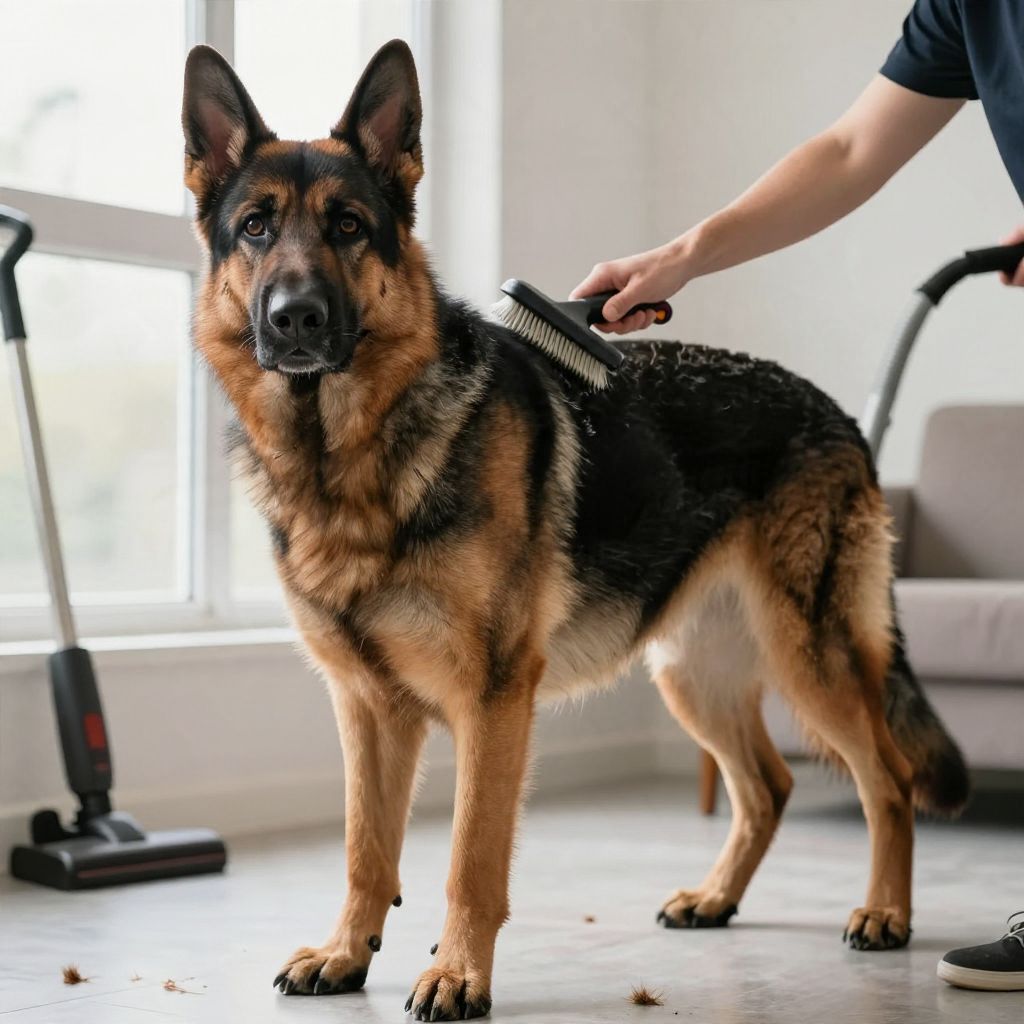
Do German Shepherds shed a lot? Yes—most German Shepherds are heavy shedders, and many owners notice year-round hair plus bigger seasonal “coat blow” periods. Their double coat is built for weather protection, not low-maintenance living.
That said, shedding varies by individual dog, coat health, season, and grooming routine. With the right brushing, bathing, nutrition, and health care, you can usually keep loose hair more manageable without trying to stop shedding completely.
Do German Shepherds Shed A Lot?
Yes. German Shepherds are known for moderate to heavy shedding because they have a dense double coat. You can expect regular hair around the home, with heavier shedding during seasonal coat changes. Brushing, bathing, and good health care can reduce loose hair, but they will not eliminate shedding.
Why German Shepherds Shed So Much
The German Shepherd coat has two layers: a protective outer coat and a soft undercoat. The undercoat helps with temperature control, and it naturally loosens and renews throughout the year.
Shedding is normal, but it can look more dramatic in certain situations:
- Seasonal changes: many dogs shed more in spring and fall.
- Indoor living: dogs in climate-controlled homes may shed more evenly year-round.
- Stress or change: moving, boarding, or routine disruption can affect coat condition.
- Health issues: skin disease, parasites, allergies, or hormonal problems can increase hair loss.
What “Normal” Shedding Looks Like
Normal shedding usually means loose hair on furniture, clothing, and floors, plus hair coming out during brushing. You may also see a thicker coat release during seasonal changes. The dog should still have healthy skin, normal energy, and no obvious bald spots or irritation.
Contact your veterinarian if shedding seems sudden, patchy, or paired with itching, redness, odor, dandruff, or changes in behavior. Those signs suggest more than routine coat turnover.
How to Manage German Shepherd Shedding
You cannot stop a German Shepherd from shedding, but you can make it much easier to live with. The best approach is regular grooming combined with skin and coat support.
Brush consistently
Frequent brushing removes loose undercoat before it ends up on your floors. Many owners do best with several short brushing sessions per week, and more often during heavy shedding periods.
- Use a tool suited for double coats, such as an undercoat rake or slicker brush.
- Brush gently so you do not irritate the skin.
- Focus on high-shedding areas like the neck, chest, back, and hindquarters.
Bathe when needed
Bathing can help loosen dead hair, but overbathing may dry the skin and make shedding worse. Use a dog-safe shampoo and rinse thoroughly. If you are unsure how often your dog should be washed, this guide can help: how often should you wash your dog?
Dry and de-shed carefully
After bathing, drying with a towel or dryer on a safe, low-heat setting can help release loose coat. Never use hot air directly on the skin. If your dog is nervous, keep sessions short and calm.
Keep the home easier to clean
- Vacuum frequently, especially rugs and upholstery.
- Use washable throws on favorite resting spots.
- Keep a lint roller or pet hair remover handy.
- Brush outdoors when possible to reduce indoor hair spread.
Does Diet Affect Shedding?
Yes, diet can influence coat quality, though it will not change the fact that German Shepherds shed. A balanced, complete diet supports healthy skin and hair growth.
Good nutrition may help reduce excessive dryness or brittle coat, while poor nutrition can contribute to dull fur and increased hair loss. If you are changing foods, do it gradually to avoid stomach upset. If your dog’s coat looks unhealthy despite a good diet, ask your veterinarian whether a medical issue could be involved.
When Shedding May Signal a Health Problem
Not all hair loss is normal shedding. Some causes are minor, while others need veterinary attention. A German Shepherd that suddenly sheds more than usual may be dealing with a skin or systemic problem.
Common warning signs
- Patchy hair loss or bald spots
- Constant scratching, licking, or chewing
- Red, flaky, scabby, or greasy skin
- Bad odor from the skin or ears
- Visible fleas, flea dirt, or other parasites
- Changes in appetite, weight, or energy
- Recurrent ear infections or skin infections
When to call the vet urgently
Seek prompt veterinary care if your dog has open sores, significant swelling, sudden widespread hair loss, severe itching, trouble breathing, facial swelling, vomiting after a suspected toxin exposure, or seems very unwell. These are not normal shedding signs.
Do Puppies and Older German Shepherds Shed Differently?
Yes, age can change what you see. German Shepherd puppies usually go through coat changes as they mature, and you may notice extra loose hair during those transitions. Older dogs may also have coat changes related to health, grooming habits, or mobility limits.
Senior dogs may need gentler grooming if their skin is more sensitive or if arthritis makes standing uncomfortable. Short, calm brushing sessions are often better than long grooming marathons.
Temperament and Grooming: What to Expect
German Shepherd temperament varies, but many are intelligent, alert, and sensitive to handling. That can make grooming easy for some dogs and challenging for others, depending on early socialization and training history.
If your dog dislikes brushing or bathing, use reward-based training:
- Start with brief touch sessions and treats.
- Introduce the brush slowly before using it.
- Reward calm behavior and short periods of cooperation.
- Stop before your dog becomes overwhelmed.
- Increase duration gradually over multiple sessions.
A fearful or reactive dog should not be forced through grooming. If handling is difficult, ask a professional groomer or certified trainer for help with cooperative care.
Common Mistakes That Make Shedding Seem Worse
Some habits can make coat management harder or irritate the skin.
- Skipping brushing: loose undercoat builds up and sheds all at once.
- Using the wrong tools: harsh tools can damage the coat or skin.
- Overbathing: this may dry the skin and increase flaking.
- Ignoring itching or bald spots: medical causes can worsen without treatment.
- Relying only on supplements: supplements are not a fix for underlying disease.
How to Tell Whether Shedding Is Too Much
Ask yourself whether the shedding is just messy or actually abnormal. Routine shedding is annoying but predictable. Excessive shedding is more concerning when it comes with skin changes, discomfort, or sudden coat loss.
Helpful questions include:
- Has the shedding changed suddenly?
- Is my dog itchy, uncomfortable, or licking more than usual?
- Are there bald patches, redness, or sores?
- Has my dog’s diet, environment, or health changed recently?
If the answer to several of these is yes, a veterinary exam is a good idea.
Practical Routine for Managing a Shedding German Shepherd
A simple routine often works better than occasional deep cleaning. Consistency matters more than perfection.
- Brush several times a week, increasing frequency during heavy shedding.
- Bathe only as needed with a dog-safe shampoo.
- Check skin for flakes, redness, fleas, or sores while grooming.
- Feed a complete, balanced diet and keep fresh water available.
- Address itching, odor, or hair loss early with your veterinarian.
Conclusion
German Shepherds do shed a lot, but that is normal for the breed’s double coat. If you brush regularly, bathe appropriately, and watch for skin or health changes, shedding becomes much easier to manage. If the hair loss seems excessive or comes with irritation, schedule a veterinary visit.
If you want more help managing coat care, you may also find why is my dog shedding so much? useful for spotting when shedding crosses from normal to concerning.