
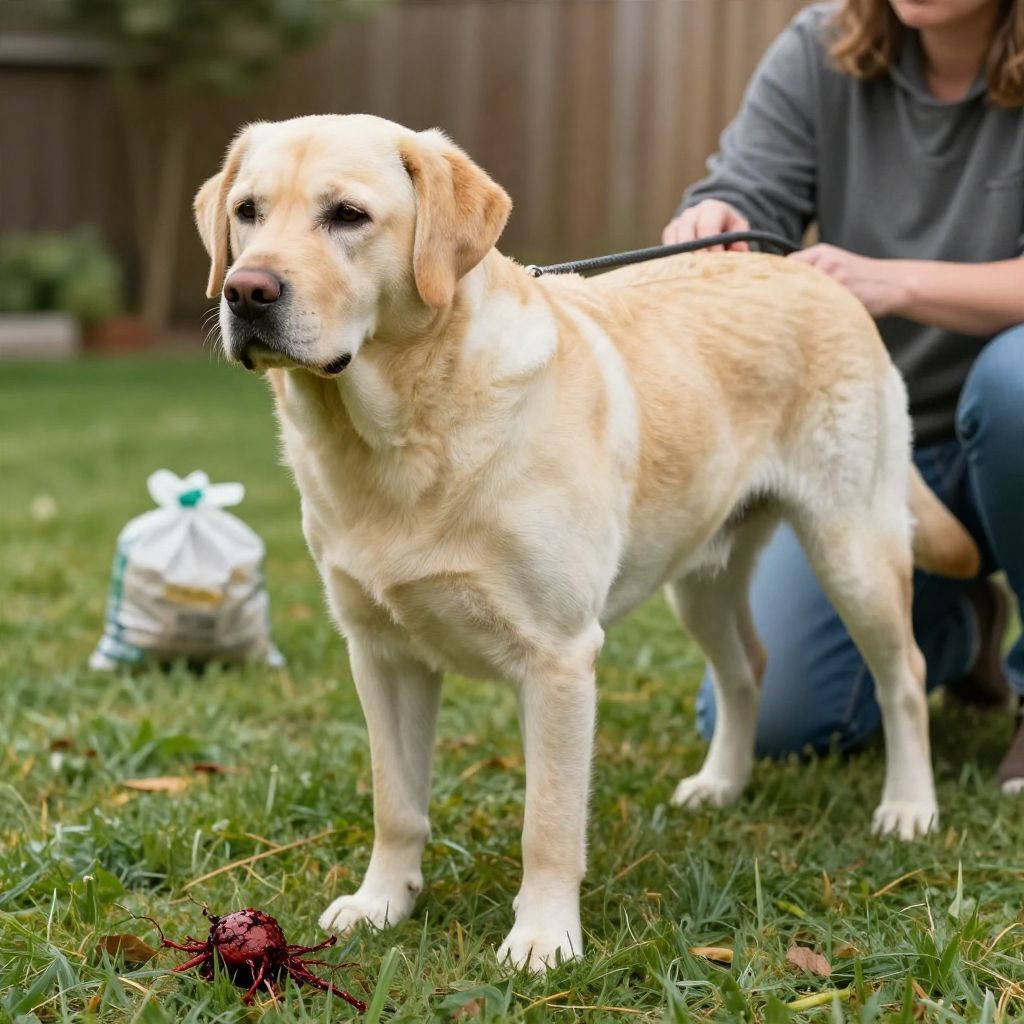
If your dog is pooping blood, take it seriously. Blood in the stool can happen for many reasons, from mild intestinal irritation to a medical emergency, and the right response depends on your dog’s other symptoms.
Because bloody stool can worsen quickly, watch your dog closely and contact a veterinarian promptly. If your dog seems weak, has repeated vomiting, a swollen belly, pale gums, or large amounts of blood, seek urgent care right away.
Why is my dog pooping blood?
Blood in a dog’s stool can come from the stomach, intestines, anus, or rectum. Small streaks of bright red blood may suggest irritation lower in the digestive tract, while dark, tarry stool can signal bleeding higher up and needs prompt veterinary attention.
What the blood may look like
The appearance of the blood can help you describe the problem to your vet, but it does not tell you the exact cause on its own.
Bright red blood
Bright red blood on the stool, on the outside of the feces, or on the bedding often points to bleeding near the end of the digestive tract. Common causes can include colitis, anal irritation, straining, parasites, or small tears from hard stool.
Dark or black stool
Black, tar-like stool can mean digested blood. This is more concerning because it may come from bleeding higher in the digestive system and should be assessed quickly.
Mucus with blood
Blood mixed with mucus often suggests inflammation in the colon. Dogs with this pattern may also have urgent bowel movements, diarrhea, or discomfort when defecating.
Common reasons a dog may poop blood
There are many possible causes, and the most likely one depends on your dog’s age, diet, vaccination status, environment, and overall health.
- Dietary upset from sudden food changes, rich foods, or scavenging
- Intestinal parasites such as worms or protozoa
- Colitis, which is inflammation of the large intestine
- Anal gland or rectal irritation
- Foreign material that irritates or injures the gut
- Infections that affect the intestines
- Injury to the digestive tract or rectal area
- Toxins or medications that can cause bleeding or stomach irritation
- Bleeding disorders or organ disease in some dogs
Puppies, senior dogs, and dogs with existing illness may be at higher risk for complications, but any dog can develop bloody stool.
When dog poop blood is an emergency
Some dogs need immediate veterinary care, not watchful waiting. If you see any of the signs below, contact an emergency vet right away.
- Large amounts of blood or repeated bloody diarrhea
- Vomiting along with bloody stool
- Weakness, collapse, or severe lethargy
- Pale gums
- Swollen or painful abdomen
- Straining with little or no stool coming out
- Signs of dehydration, such as dry gums or sunken eyes
- A puppy, toy-breed dog, or older dog acting unwell
- Possible toxin exposure, foreign-body ingestion, or trauma
Do not wait if your dog seems sick in addition to passing blood. Bloody stool plus vomiting, pain, or weakness can become serious fast.
What you should do at home right away
You can take a few safe, practical steps while arranging veterinary advice. These steps are supportive, not a substitute for diagnosis.
- Check the stool carefully and note whether the blood is bright red, dark, or mixed with mucus.
- Observe your dog’s behavior for vomiting, appetite loss, pain, straining, or lethargy.
- Keep fresh water available unless your vet has told you otherwise.
- Prevent scavenging and remove access to trash, bones, toys, socks, or spoiled food.
- Collect a fresh stool sample if you can do so safely, since your vet may want to test it.
- Call your veterinarian and describe the symptoms clearly.
If your dog is otherwise bright and the blood is only a small streak, your vet may still want to examine your dog soon, especially if the problem repeats.
What not to do
Some common home responses can make the situation worse or delay needed care.
- Do not give human pain relievers or anti-diarrhea medicines unless your vet specifically instructs you to do so.
- Do not assume the problem is minor just because your dog is still eating.
- Do not fast a puppy, diabetic dog, or medically fragile dog without veterinary guidance.
- Do not use harsh cleansers or rectal treatments unless prescribed by a veterinarian.
- Do not wait several days if the bleeding continues or your dog worsens.
How veterinarians may evaluate bloody stool
Your vet will choose tests based on your dog’s signs and history. The goal is to find the cause and treat it safely.
History and physical exam
Your veterinarian will ask about diet changes, treats, chewing habits, access to garbage, deworming, recent travel, medications, and whether your dog has vomited or strained.
Stool testing
A fecal exam can help detect parasites or other intestinal problems. Bringing a fresh sample can speed up diagnosis.
Additional testing
Depending on the case, your vet may recommend bloodwork, imaging, or other diagnostics to check for infection, inflammation, foreign material, organ disease, or bleeding problems.
Why age, size, and health history matter
The same symptom can mean different things in different dogs. A young puppy with bloody diarrhea may need faster intervention than a healthy adult with one small streak of blood and no other signs.
- Puppies can dehydrate quickly and may be more vulnerable to infections and parasites.
- Small dogs may become weak faster if they lose fluids or stop eating.
- Senior dogs may have more complex medical issues or medication-related side effects.
- Dogs with chronic disease may need tailored treatment and closer monitoring.
How to help prevent future episodes
You cannot prevent every cause of bloody stool, but you can lower the risk of some common triggers.
- Feed a consistent, balanced diet and make food changes gradually.
- Keep trash, bones, spoiled food, and unsafe objects out of reach.
- Use regular parasite prevention and routine fecal checks as recommended by your vet.
- Watch your dog during walks so they do not eat unknown items.
- Keep vaccinations and wellness visits current.
- Ask your vet before giving new supplements, chews, or medications.
When bloody stool is mild but still worth a call
Even if your dog looks comfortable, call your vet if the blood keeps appearing, the stool becomes looser, or your dog’s appetite changes. Repeated episodes can point to a problem that needs treatment, even when the first sign seems small.
If your dog is pooping blood, the safest next step is to assess the whole picture: amount of blood, stool consistency, energy level, appetite, vomiting, and pain. When in doubt, contact your veterinarian promptly, and seek urgent care for any red-flag symptoms.
For related digestive concerns, you may also find these guides helpful: why is my dog vomiting yellow? and why is my dog having diarrhea?