
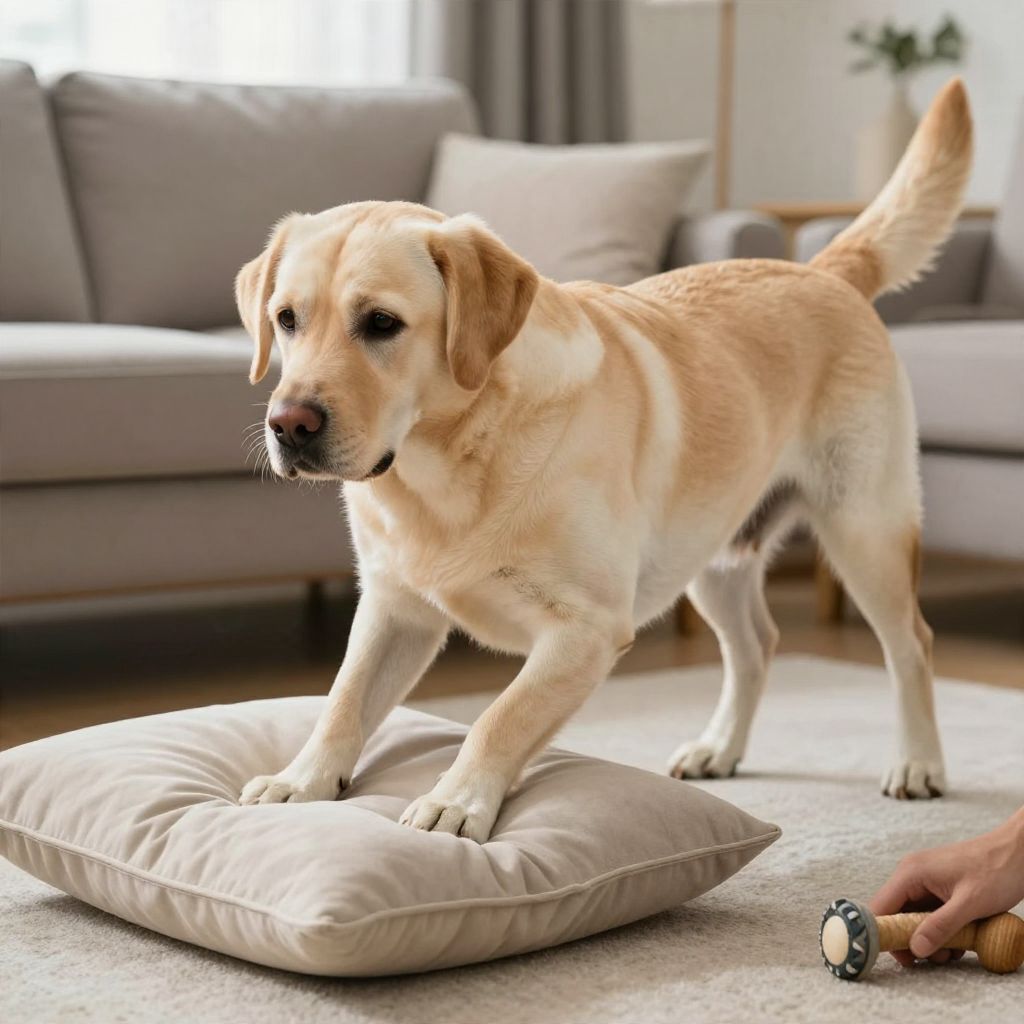
Why do dogs hump pillows? In many cases, it’s normal canine behavior linked to excitement, stress, play, habit, or self-soothing. It can also happen during sexual maturity, but mounting is not always sexual.
The key is to look at when it happens, how often, and whether your dog seems uncomfortable, overstimulated, or unwell. Most cases can be managed with calm redirection, routine changes, and training.
Why do dogs hump pillows?
Dogs hump pillows for several reasons, including excitement, boredom, anxiety, overarousal, attention-seeking, learned habit, or sexual behavior. Some dogs do it occasionally and harmlessly, while others do it so often that it becomes a behavior problem. If it is sudden, intense, or paired with other symptoms, check with a veterinarian.
Common reasons dogs hump pillows
Excitement or overstimulation
Many dogs hump when they are highly aroused, such as during play, visitors arriving, or a busy household moment. The pillow becomes an easy outlet for that energy.
This is especially common in young dogs, but any dog can do it when excited. If your dog starts humping during play, that may be a sign they need a break rather than more stimulation.
Stress or anxiety
Some dogs use humping as a coping behavior when they feel uncertain, frustrated, or anxious. It may show up during changes at home, loud noises, separation, or conflict with other pets.
If the behavior appears during stressful situations, focus on reducing triggers and building a calmer routine. Humping may be one piece of a larger stress picture rather than a standalone issue.
Boredom and excess energy
A dog with too little exercise, mental enrichment, or structured activity may turn to repetitive behaviors like pillow humping. This is more likely if the dog has limited outlets for natural behaviors such as sniffing, chewing, and problem-solving.
Adding walks, training games, food puzzles, and appropriate chew items can help reduce the urge to hump out of boredom.
Sexual maturity
Intact dogs may hump more often once they reach sexual maturity, but mounting is not limited to intact dogs. Neutered and spayed dogs can still do it for nonsexual reasons.
Even when hormones play a role, the behavior can become a habit if it is repeatedly practiced. Early management matters because repeated rehearsal makes any behavior more ingrained.
Attention or learned habit
If humping reliably gets a big reaction from people, some dogs learn to repeat it. Even scolding can feel like attention to a dog that wants engagement.
Over time, the behavior may become automatic. In these cases, the goal is to stop rewarding the behavior unintentionally and redirect the dog before it escalates.
Medical discomfort or irritation
Sometimes humping is related to physical discomfort, including skin irritation, urinary issues, anal gland problems, or pain in the genital area. A dog may also hump because something feels “off,” even if the cause is not obvious.
If the behavior is new, sudden, or paired with licking, scooting, frequent urination, discharge, or signs of pain, your veterinarian should evaluate your dog.
Is pillow humping normal?
Occasional pillow humping can be normal dog behavior, especially in young, energetic, or highly excited dogs. It becomes more concerning when it is frequent, compulsive, disruptive, or linked to distress or medical signs.
Normal does not always mean desirable. If the behavior bothers you or seems to be increasing, it is reasonable to address it with training and management.
What to do when your dog humps a pillow
- Stay calm. Avoid yelling or physically wrestling the pillow away, which can increase arousal.
- Interrupt early. Use a neutral cue like “off” or “leave it,” then guide your dog to another activity.
- Redirect to a better outlet. Offer a chew toy, sniffing game, or short training session.
- Remove access if needed. Put pillows away temporarily if they trigger the habit.
- Reward calm behavior. Praise and treat your dog when they settle quietly.
The goal is not punishment. It is to make the unwanted behavior less rewarding and to teach a more appropriate alternative.
How to prevent pillow humping
Increase exercise and enrichment
Dogs often hump less when their physical and mental needs are better met. A tired dog is not always a well-balanced dog, but regular activity can reduce excess arousal.
- Daily walks with sniffing time
- Training sessions using positive reinforcement
- Food puzzles or scatter feeding
- Chew toys appropriate for your dog’s size and chewing style
- Calm decompression time after exciting events
Watch for patterns
Notice when the behavior happens. Common triggers include guests, rough play, evening zoomies, boredom, or times when your dog is left with soft bedding.
Once you identify patterns, you can manage the environment more effectively. For example, you may need to supervise around pillows, separate dogs during high-energy play, or create a calmer post-walk routine.
Teach alternative behaviors
Training a few useful cues can help prevent humping before it starts. Practice them when your dog is calm, then use them in real-life situations.
- Settle on a mat or bed
- Come when called
- Leave it for pillows and other tempting items
- Place to move to a designated spot
Manage the environment
Management is often the fastest way to reduce the behavior while training is underway. It also prevents your dog from practicing the habit again and again.
- Keep pillows out of reach when unsupervised
- Use baby gates or closed doors if needed
- Provide a dog bed or mat in a separate area
- Supervise closely during high-energy times
When pillow humping may signal a problem
Contact your veterinarian if the behavior is new, sudden, or much more frequent than usual. A medical issue is more likely if your dog also seems restless, painful, itchy, or changes their bathroom habits.
Seek urgent veterinary care if your dog has any of the following:
- Straining to urinate or inability to urinate
- Blood in urine or genital discharge
- Swollen, red, or painful genital area
- Severe agitation, collapse, or obvious pain
- Repeated vomiting, lethargy, or other sudden illness signs
If the humping is compulsive, hard to interrupt, or tied to anxiety, a certified trainer or veterinary behaviorist can help you build a humane behavior plan.
Does neutering or spaying stop pillow humping?
Not always. Hormones can influence mounting in some dogs, but humping often continues for reasons unrelated to reproduction. Neutering or spaying may help in some cases, but it is not a guaranteed fix.
If you are considering surgery mainly to address humping, talk with your veterinarian about your dog’s age, health, and the likely cause of the behavior. The best plan depends on the individual dog, not a one-size-fits-all rule.
Common mistakes to avoid
- Do not punish or scare your dog. This can increase stress and make the behavior worse.
- Do not assume it is always sexual. Many dogs hump for emotional or behavioral reasons.
- Do not ignore sudden changes. New humping can point to discomfort or illness.
- Do not accidentally reward it. Big reactions can reinforce attention-seeking dogs.
- Do not wait if there are red flags. Pain, urinary changes, or discharge need veterinary attention.
What if your puppy humps pillows?
Puppies may hump pillows during play, excitement, or overstimulation. This does not automatically mean anything is wrong, but it does mean your puppy may need more structure and rest.
Young dogs often need frequent naps, short training sessions, and help learning how to settle. If your puppy gets wild, remove the pillow, lower the excitement, and redirect to a calm activity before the habit becomes stronger.
What if an older dog suddenly starts humping pillows?
A sudden change in an older dog deserves attention. While behavior changes can happen with age, new humping may reflect discomfort, cognitive changes, pain, or another medical issue.
Schedule a veterinary visit if the behavior is new or increasing. A health check is especially important if your senior dog also has stiffness, accidents, restlessness, or changes in appetite or sleep.
Bottom line
Why do dogs hump pillows? Usually because of excitement, stress, boredom, habit, or sometimes medical discomfort. Most dogs do best with calm redirection, better enrichment, and consistent management rather than punishment.
If the behavior is sudden, frequent, or paired with pain or urinary signs, contact your veterinarian. For more behavior context, you may also find is dog mounting a sign of dominance and why do female dogs hump helpful.