
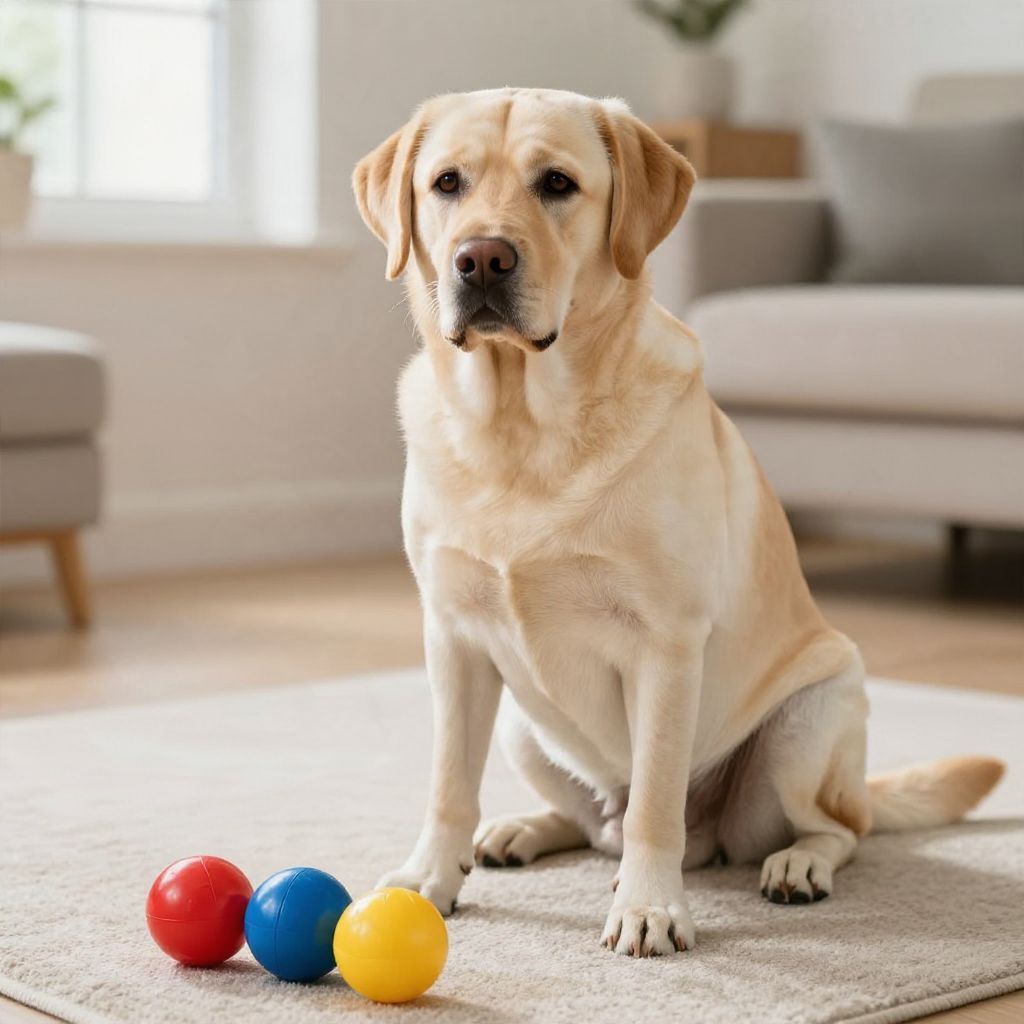
Can dogs see in color? Yes, but not the full rainbow humans do. Dogs mainly see blues and yellows, while reds and greens can look muted or grayish.
This matters for toys, training gear, and safety cues. Understanding your dog’s vision can help you choose better enrichment, improve visibility, and notice when eye problems may need a veterinarian’s attention.
Can dogs see in color?
Yes. Dogs can see color, but their color vision is limited compared with humans. They are generally considered dichromatic, meaning they detect a narrower range of colors, with blues and yellows standing out best. Reds, oranges, and greens usually appear less vivid or blend together.
How dog color vision works
Dog eyes have fewer color-detecting cone cells than human eyes. That means dogs do not process color the same way you do, but they still use vision effectively for movement, contrast, and brightness.
What colors are easiest for dogs to notice?
- Blue is usually easy for dogs to distinguish.
- Yellow is also commonly visible and useful for toys or training items.
- Gray, brown, and muted tones may be harder to separate from the background.
What colors may be confusing?
- Red can look dark, brownish, or grayish.
- Green may blend into grass or foliage.
- Orange may not stand out as much as you expect.
That does not mean your dog “sees in black and white.” It means the world likely looks less colorful and more dependent on contrast, shape, and motion.
What this means for toys, training, and play
If you want your dog to spot an object quickly, choose colors that contrast with the environment. A blue toy on green grass is often easier to find than a red toy on the same lawn.
Practical toy tips
- Pick blue or yellow toys for outdoor play when possible.
- Use high-contrast colors indoors, especially on patterned floors or carpets.
- Choose toys that are easy to see and easy to grip.
- Rotate toy shapes and textures so your dog can use smell, touch, and sight together.
Color is only one part of visibility. Some dogs rely more on scent or movement than on color, especially during fast games like fetch.
Does breed, age, or health change what dogs can see?
Yes, individual differences matter. Breed, age, and eye health can affect how well a dog sees, even if color vision itself is broadly similar across dogs.
Breed and body size
Some breeds may be more prone to inherited eye conditions than others, but there is no simple rule that every dog of a breed sees the same way. Head shape, eye placement, and genetic risk can influence vision, but each dog is an individual.
Puppies
Puppies are not born with fully mature vision. Their eyesight improves during early development, so younger puppies may be less coordinated when tracking objects or navigating unfamiliar spaces.
Senior dogs
Older dogs may develop cloudy lenses, retinal changes, or other age-related eye issues that reduce vision. If your senior dog starts bumping into furniture, hesitating on stairs, or missing toys more often, schedule a veterinary exam.
Eye disease and injury
Any dog can develop vision problems from injury, infection, inflammation, pressure changes in the eye, or chronic disease. These issues can affect clarity, contrast, and comfort more than color alone.
Signs your dog may have a vision problem
Because dogs adapt well, vision loss can be easy to miss. Watch for changes in behavior, movement, and confidence rather than assuming your dog is just being cautious.
- Bumping into furniture, walls, or doorframes
- Reluctance to go into dim rooms or down stairs
- Startling more easily when approached
- Missing tossed toys or treats
- Cloudy, red, or watery eyes
- Pawing at the eyes or squinting
- Uneven pupils or a sudden change in eye appearance
Urgent veterinary care is needed if vision changes happen suddenly, if the eye looks painful or swollen, if your dog is squinting hard, or if you notice a sudden cloudy eye, discharge, or obvious trauma.
When eye symptoms are an emergency
Some eye problems can worsen quickly and threaten vision. Do not wait to “see if it clears up” when the signs are severe or sudden.
- Sudden blindness or disorientation
- One eye suddenly becoming red, cloudy, or enlarged
- Severe squinting or obvious pain
- Bleeding, a cut, or a foreign object in the eye
- Head tilt, imbalance, or other neurologic signs along with eye changes
If you are unsure, call your veterinarian or an emergency clinic right away. Eye problems are often easier to treat early.
How to choose colors for a visually healthy dog
Even if your dog sees color well enough for everyday life, you can make training and play easier by using contrast thoughtfully.
For fetch and outdoor play
- Use blue or yellow balls and frisbees on grass or dirt.
- Avoid toys that blend into the background.
- Choose larger toys if your dog has trouble tracking small objects.
For training equipment
- Use clearly visible markers, mats, or target objects.
- Keep cues consistent so your dog learns the routine, not just the color.
- Pair visual cues with verbal cues and rewards.
For safety gear
- Pick high-contrast harnesses, leashes, and collars for visibility.
- Use reflective or light-colored gear for low-light walks.
- Do not rely on color alone for nighttime safety; use lights and reflective materials too.
Common mistakes people make
When people ask, “Can dogs see in color?” they sometimes assume the answer means dogs cannot recognize objects well. In reality, dogs are very capable learners, but they use different visual priorities than humans.
- Assuming red toys are always easy to see — they may disappear in grass or dim light.
- Thinking color is the main factor — scent, movement, and texture matter a lot.
- Ignoring sudden vision changes — these need veterinary attention.
- Using punishment for “not seeing” — if your dog misses cues, first check visibility, distance, and health.
How to help a dog with reduced vision
If your dog’s eyesight is declining, you can still support a safe, confident routine. Small changes at home often make a big difference.
- Keep furniture in the same place when possible.
- Block stairs or hazards until your dog is comfortable.
- Use verbal cues before touching or approaching your dog.
- Keep walk routes predictable.
- Use scent markers or textured mats to help with navigation.
- Ask your veterinarian about the cause of vision loss and next steps.
Dogs with reduced vision often do best with calm handling, consistent routines, and gentle environmental management. If your dog seems anxious or confused, a certified trainer or veterinary behaviorist can help you adjust safely.
Bottom line
Yes, dogs can see in color, but not like humans. They usually see blues and yellows best, while reds and greens are less distinct. If your dog’s vision seems to change suddenly, or if an eye looks painful, cloudy, or injured, contact a veterinarian promptly.
If you want to learn more, related reading on whether dogs can see colors and which colors dogs see best may help you choose better toys and training tools.