
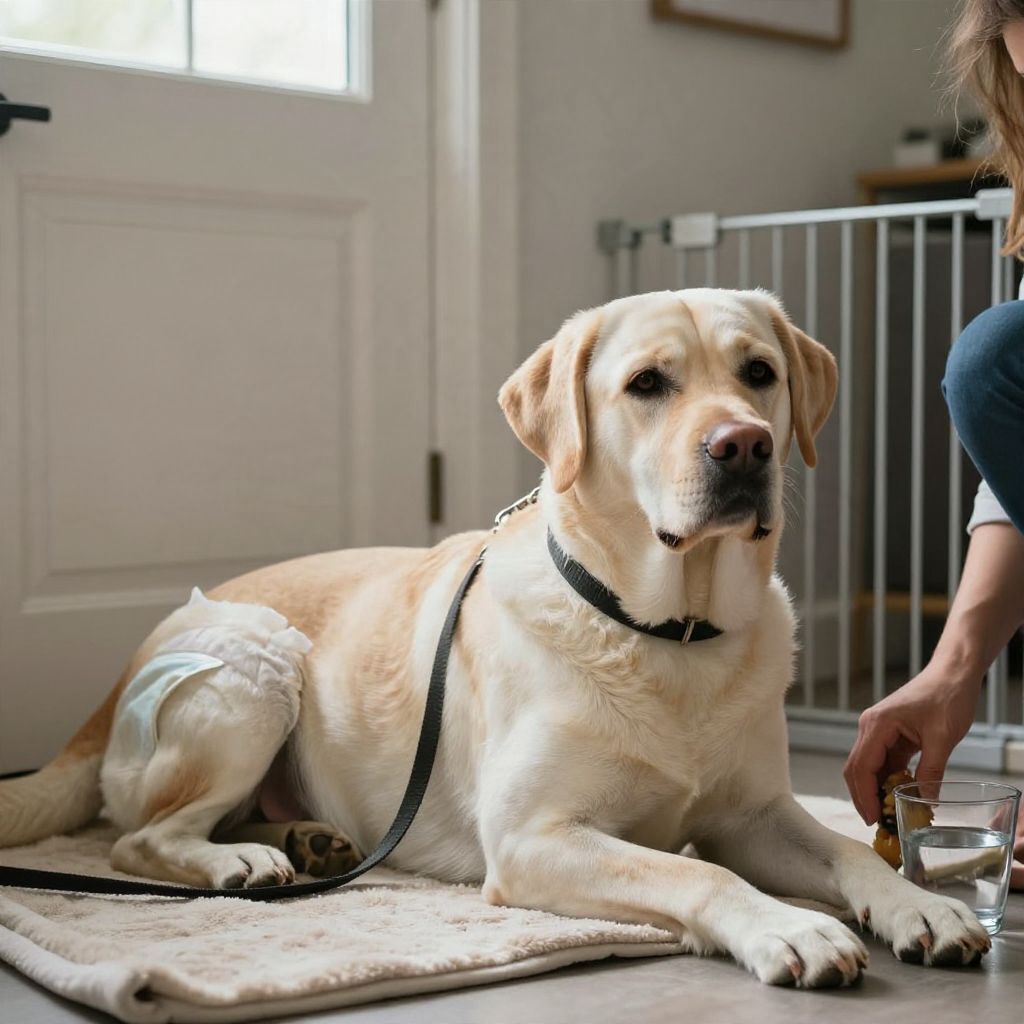
If your dog is in heat, the first priority is preventing an unplanned pregnancy and keeping her calm, clean, and safe. Heat cycles are normal, but they can bring bleeding, restlessness, clinginess, and strong interest from male dogs.
Most dogs do best with close supervision, secure confinement, and a temporary pause on off-leash outings and dog park visits. If you notice heavy bleeding, severe pain, lethargy, or any unusual discharge, contact your veterinarian promptly.
What to do when your dog is in heat?
Keep her away from intact male dogs, use secure leash-only outings, manage bleeding with washable bedding or dog diapers, and monitor her behavior closely. Provide calm exercise, avoid boarding or daycare, and call your vet if symptoms seem extreme, prolonged, or unusual for her.
How to keep your dog safe during heat
A female dog in heat can attract male dogs from surprising distances, so prevention matters more than training alone. Even a well-trained dog may try to slip out if she is restless or if a male dog is nearby.
- Use leash-only walks and avoid off-leash areas.
- Check fences, gates, and doors before every outing.
- Never leave her unsupervised in a yard, even briefly.
- Separate her from intact males in the home or household.
- Tell caregivers and visitors that she is in heat.
If you have multiple dogs, keep them physically separated rather than relying on trust or familiarity. Heat-related behavior can change quickly, and an accidental tie can happen in seconds.
Why supervision matters so much
During heat, a dog may become more determined to escape, more vocal, or more distracted by smells. These changes are temporary, but they can create real safety risks if she bolts through an open door or fence gap.
How to manage bleeding and cleanliness
Bleeding during heat is common, but the amount varies from dog to dog. Some dogs have noticeable spotting, while others stay very clean and leave little evidence.
- Use washable blankets or covers on beds and furniture.
- Consider dog diapers for indoor management, especially in shared living spaces.
- Change diapers often to reduce skin irritation and odor.
- Gently clean the vulva area if needed with a damp cloth.
Do not use human menstrual products that fit poorly or restrict movement. A diaper should be comfortable, secure, and checked frequently so it does not rub or trap moisture.
When bleeding is not normal
Call your veterinarian if the discharge is very heavy, has a foul smell, looks pus-like, or continues long after the heat cycle should be ending. These signs can point to a problem that needs medical attention.
What behavior changes are normal during heat?
Many dogs act a little different in heat. They may seem clingier, more distractible, more restless, or more interested in male dogs and outdoor smells. Some dogs also become quieter or less eager to exercise.
These changes are usually temporary, but they can vary by age, temperament, and previous heat cycles. A young dog may seem more unsettled, while an older dog may show subtler signs.
Helpful ways to support her behavior
- Keep routines predictable.
- Offer calm enrichment, like sniffing games or food puzzles.
- Use short, structured walks instead of high-excitement outings.
- Give her a quiet resting space away from household chaos.
Reward calm behavior with praise, treats, or a favorite chew if she tolerates it well. Avoid scolding, punishment, or trying to “snap her out of it”; that does not address the cause and can increase stress.
Exercise, walks, and enrichment during heat
Your dog still needs movement and mental stimulation, but the goal is safer, lower-risk activity. Choose controlled exercise rather than busy public places where intact males may be present.
- Take shorter leash walks in quiet areas.
- Use the yard only if it is fully secure and supervised.
- Try indoor enrichment such as scent games, training refreshers, and puzzle feeders.
- Avoid dog parks, daycare, and group play unless your veterinarian and facility specifically advise otherwise.
If your dog is especially energetic, more frequent short outings may help more than one long walk. If she seems tired or uncomfortable, let her rest and keep activity gentle.
Feeding and grooming during a heat cycle
Most dogs can stay on their normal balanced diet during heat unless your veterinarian recommends otherwise. Appetite may stay the same, increase slightly, or decrease a bit depending on the dog.
Offer fresh water and watch for changes in eating habits. A temporary appetite dip can happen, but a dog that refuses food for more than a day, vomits, or seems unwell should be checked by a vet.
Grooming tips
- Brush her regularly if she tolerates it.
- Keep the rear area clean and dry.
- Check for skin irritation if you use diapers.
- Use gentle handling if she seems more sensitive than usual.
Bathing is usually fine if your dog is comfortable, but avoid overdoing it. Too much washing can irritate the skin, especially if she is already wearing diapers or has discharge.
How long heat lasts and what to expect
Heat cycles do not look exactly the same in every dog. The length, bleeding pattern, and behavior changes can vary with age, body size, and individual cycle history.
For a general overview of cycle timing, you may also want to read about how often female dogs go into heat and how long a dog bleeds when in heat.
What matters most is knowing your dog’s normal pattern. If her cycle seems much longer, shorter, heavier, or more painful than usual, ask your veterinarian for guidance.
When to call the veterinarian
Some heat-related changes are normal, but certain signs should never be ignored. Your veterinarian can help you tell the difference between a routine cycle and a health issue.
- Heavy bleeding or bleeding that seems excessive for her size
- Foul-smelling, green, yellow, or pus-like discharge
- Marked lethargy or weakness
- Vomiting, fever, or loss of appetite
- Obvious pain, a swollen abdomen, or hunched posture
- Heat signs that seem to last unusually long
- Any possibility of mating if you are trying to prevent pregnancy
These signs can indicate infection, uterine disease, or another medical problem. Do not wait if she seems seriously ill.
Should you spay your dog?
If you do not plan to breed your dog responsibly, ask your veterinarian whether spaying is a good option and when the timing should be. Spaying removes future heat cycles and prevents pregnancy, but the best timing can depend on age, breed, size, and health.
There is no one-size-fits-all answer, especially for larger breeds or dogs with medical concerns. Your vet can help you weigh benefits, risks, and the right timing for your individual dog.
Common mistakes to avoid
- Assuming a fenced yard is always enough.
- Taking her to dog parks or daycare during heat.
- Leaving her unsupervised around intact males.
- Using punishment for normal heat behavior.
- Ignoring unusual discharge or illness signs.
One of the biggest mistakes is underestimating how motivated intact males can be. Even a brief lapse in supervision can lead to an accidental mating.
What to do if an accidental mating happens
If your dog mates during heat, contact your veterinarian as soon as possible. Do not try unsafe home methods to end a pregnancy or separate dogs that are tied together by force.
Your vet can explain the next steps, discuss pregnancy risk, and help you make informed decisions based on timing and your dog’s health.
Conclusion
When your dog is in heat, focus on strict supervision, secure separation from male dogs, clean and comfortable management, and calm routine care. Most heat cycles are temporary, but unusual bleeding, pain, discharge, or illness should be checked by a veterinarian right away.