
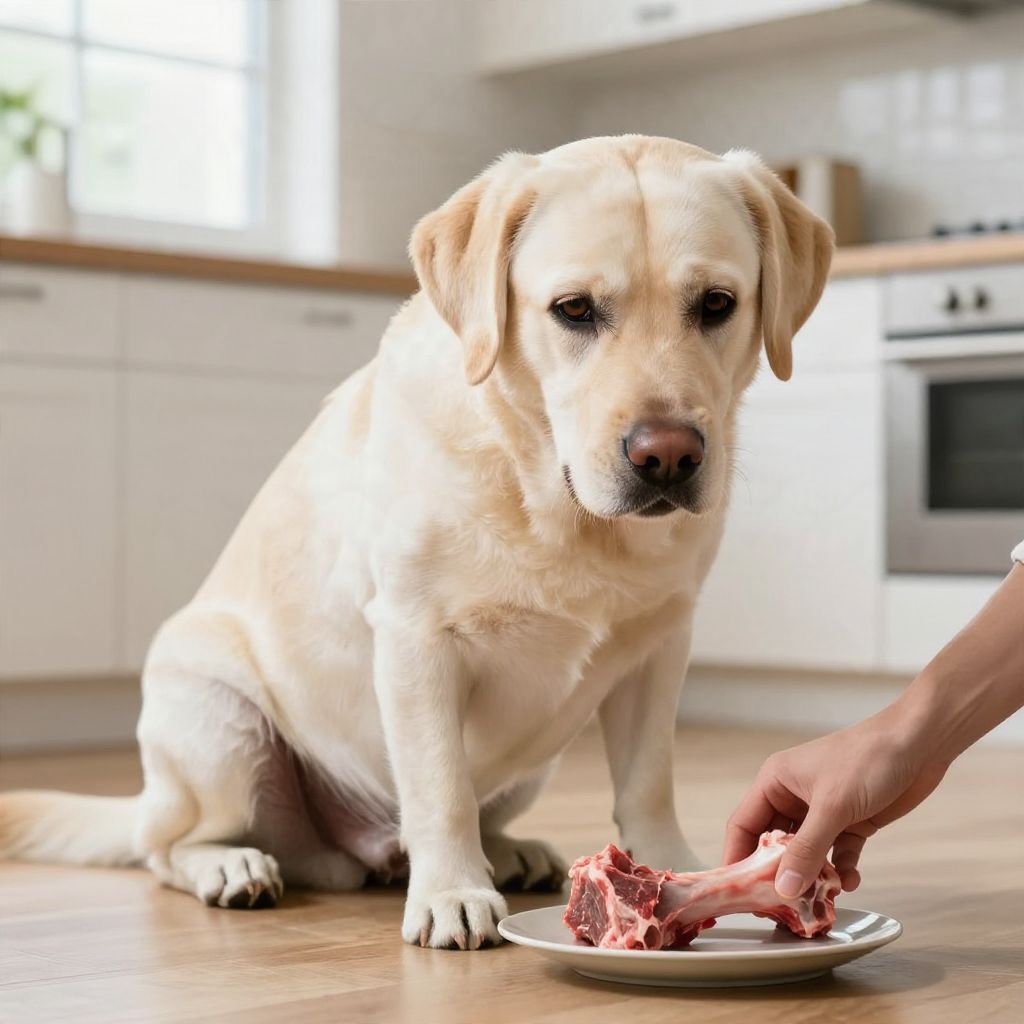
Can dogs eat beef bones? Sometimes, but not always safely. The answer depends on whether the bone is raw or cooked, its size, how hard it is, and your dog’s chewing style.
Many beef bones can cause broken teeth, choking, mouth injuries, or digestive blockage. If you want to offer a bone, safety and supervision matter more than the type of meat alone.
Can dogs eat beef bones?
Dogs may handle some raw, appropriately sized beef bones better than cooked ones, but no bone is risk-free. Cooked beef bones are especially dangerous because they can splinter, while raw bones can still cause choking, tooth fractures, constipation, or intestinal obstruction.
Why beef bones can be risky
Even when a dog seems eager and experienced, bones can create problems quickly. The main concern is not just the bone itself, but how your dog chews, swallows, and reacts to it.
Common risks
- Choking if a piece breaks off or the bone gets stuck.
- Broken teeth, especially with very hard weight-bearing bones.
- Mouth cuts from sharp edges or splinters.
- Stomach upset or constipation from bone fragments.
- Intestinal blockage if large pieces are swallowed.
- Pancreatitis risk in some dogs if the bone has lots of fat or marrow and your dog is sensitive to rich foods.
Why cooked beef bones are a bigger problem
Cooking changes bone structure and makes many bones brittle. That brittleness increases the chance of sharp shards that can injure the throat, stomach, or intestines. For that reason, cooked beef bones are generally considered unsafe for dogs.
Are raw beef bones safer than cooked ones?
Raw beef bones are usually less likely to splinter than cooked bones, but “safer” does not mean “safe.” Raw bones can still carry bacteria, damage teeth, or cause digestive trouble, especially in puppies, senior dogs, or dogs that gulp food instead of chewing carefully.
When raw bones may be considered
- Your dog is healthy and has no history of chewing-related injuries.
- The bone is large enough that your dog cannot swallow it whole.
- You can supervise the entire chewing session.
- Your veterinarian has not advised against bones because of dental, digestive, or medical concerns.
When raw bones are a poor choice
- Your dog cracks teeth on hard objects.
- Your dog tends to swallow large pieces.
- Your dog has a sensitive stomach or a history of blockage.
- Your dog is very young, very old, or has dental disease.
Which dogs should avoid beef bones?
Some dogs are more likely to get hurt or sick from bones, even if the bone looks appropriate. Individual health and behavior matter more than breed alone.
- Puppies, because their teeth and jaws are still developing and they may swallow pieces too fast.
- Senior dogs, especially those with worn teeth, gum disease, or slower digestion.
- Dogs with dental problems, fractured teeth, or a history of painful chewing.
- Dogs with gastrointestinal disease, pancreatitis, or a previous blockage.
- Dogs that resource guard, because bones can trigger conflict around people or other pets.
- Dogs that gulp food rather than chew slowly.
How to choose a safer beef bone
If your veterinarian says a bone is appropriate, choosing the right one matters. The goal is to reduce the chance of swallowing, splintering, or tooth damage.
Safer selection tips
- Choose a raw bone rather than a cooked one.
- Select a bone that is larger than your dog’s mouth so it cannot be swallowed whole.
- Prefer bones meant for chewing, not thin bones that break easily.
- Avoid bones with sharp edges, cracks, or loose fragments.
- Use a bone only for supervised chewing, not as an all-day chew toy.
What to avoid
- Cooked bones of any kind.
- Small bones that can be swallowed.
- Very hard weight-bearing bones if your dog has a history of cracked teeth.
- Bones left out for long periods, especially in warm weather.
How to feed a beef bone more safely
If you decide to offer a beef bone, think of it as a short, supervised activity rather than a treat to leave around. Even careful dogs can get into trouble in just a few minutes.
Before you give it
- Make sure your dog is calm and not overly excited.
- Offer the bone in a quiet area away from other pets.
- Check that your dog can chew without rushing.
- Remove the bone if it starts to splinter, shrink, or crack.
While your dog is chewing
- Stay nearby and watch for coughing, gagging, or frantic chewing.
- Take the bone away if your dog tries to swallow large chunks.
- Stop the session if your dog becomes possessive, tense, or reactive.
- Do not let children handle the bone or interrupt the dog while chewing.
After the chew session
- Throw away small, broken, or sharp pieces.
- Watch for vomiting, constipation, reduced appetite, or discomfort over the next day or two.
- Provide fresh water.
Signs your dog may be having trouble after eating a beef bone
Some problems show up right away, while others appear hours later. Any sign of distress after chewing a bone deserves attention, especially if symptoms are worsening.
Call your veterinarian promptly if you notice
- Repeated vomiting or retching
- Drooling, pawing at the mouth, or trouble swallowing
- Refusing food or water
- Constipation or straining to pass stool
- Abdominal pain, restlessness, or a hunched posture
- Blood in vomit or stool
Seek urgent veterinary care now if your dog has
- Choking or difficulty breathing
- A bone visibly stuck in the mouth or throat
- Collapse, severe weakness, or extreme distress
- A swollen abdomen with repeated vomiting
- Inability to keep water down
Are beef bones good for dogs nutritionally?
Beef bones are not a necessary part of a balanced canine diet. While they may provide enrichment or a bit of flavor, they should never replace complete dog food. The nutritional value is not worth the safety risk for many dogs.
If your goal is enrichment, there are safer options than bones. Many dogs enjoy food puzzles, lick mats, stuffed toys, or vet-approved chews that are less likely to splinter or break teeth.
Safer alternatives to beef bones
If you want to satisfy your dog’s chewing instinct without taking on as much risk, consider alternatives that fit your dog’s age, size, and chewing style.
- Veterinary dental chews designed for dogs.
- Rubber chew toys made for strong chewers.
- Food puzzles for mental enrichment.
- Stuffed and frozen toys with dog-safe fillings.
- Appropriate edible chews recommended by your veterinarian.
For dogs that love chewing, the best option is one that keeps them engaged without creating a choking or blockage risk.
Common mistakes dog owners make with beef bones
Most bone-related accidents happen when owners assume a bone is “natural” and therefore safe. Natural does not always mean harmless.
- Giving cooked bones after a meal.
- Leaving a bone with a dog unsupervised.
- Choosing a bone that is too small.
- Assuming a dog that handled bones before will always be fine.
- Ignoring early signs like gagging, drooling, or constipation.
Bottom line: should you give your dog a beef bone?
For many dogs, the safest answer is no, especially if the bone is cooked. If you do offer a raw beef bone, keep it large, supervised, and short-lived, and stop immediately if your dog shows any sign of trouble. When in doubt, ask your veterinarian what is safest for your dog’s age, teeth, and health.
If you want to compare bone safety, you may also find these guides helpful: can dogs eat lamb bones and can dogs have steak bones.