
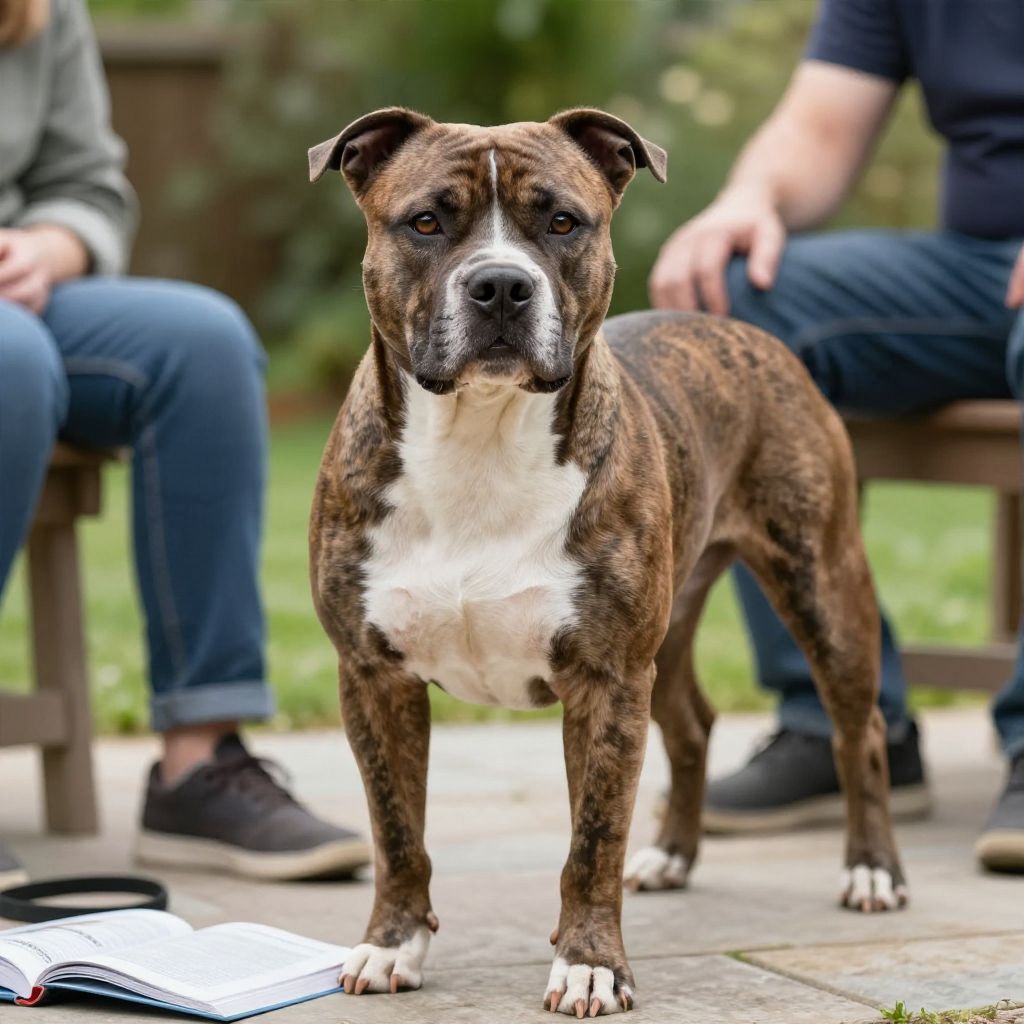
If you’re asking, “Is a Staffordshire Terrier a pitbull?” the short answer is: sometimes people use “pitbull” as an umbrella term, but a Staffordshire Terrier is not always the same thing as a pit bull. The exact answer depends on which Staffordshire breed you mean and how the term is being used.
Understanding the difference matters for training, care, health, and even breed labeling. It also helps you focus on the dog in front of you, because temperament and behavior are shaped by genetics, socialization, training, and life experience—not just a breed name.
Is a Staffordshire Terrier a pitbull?
“Pitbull” is a broad, informal label that often includes dogs such as the American Pit Bull Terrier, American Staffordshire Terrier, and sometimes Staffordshire Bull Terrier. So a Staffordshire Terrier may be called a pitbull in everyday conversation, but that is not always a precise breed identification.
What people mean by “pitbull”
The word pitbull is used inconsistently. Some people mean a specific breed, while others use it for several bully-type dogs with similar looks.
Commonly confused labels
- American Staffordshire Terrier: Often grouped with pitbull-type dogs in casual use.
- Staffordshire Bull Terrier: A separate breed, smaller and distinct from the American Staffordshire Terrier.
- American Pit Bull Terrier: Another distinct breed that is frequently called a pitbull.
This is why two people may look at the same dog and use different names. Breed labels can be influenced by appearance, shelter records, local laws, and owner reports.
How to tell if a Staffordshire Terrier is a pitbull-type dog
There is no single visual test that reliably identifies a dog’s breed mix. If you need a more accurate answer, look at the dog’s registration papers, breeder records, or a DNA test, while remembering that DNA results can still be imperfect.
What to look for
- Official breed documentation, if available
- Veterinary records that list breed history
- Shelter or rescue notes, which may be based on appearance rather than proof
- DNA testing, used as a clue rather than absolute truth
Even with a clear breed label, individual dogs vary. A calm, well-socialized Staffordshire-type dog may behave very differently from another with the same label and a poor training history.
Breed traits: what Staffordshire-type dogs are often like
Staffordshire-type dogs are often described as people-oriented, energetic, sturdy, and eager to engage with their families. Many are affectionate and enjoy training, play, and routine. But these are tendencies, not guarantees.
Typical strengths
- Strong attachment to their people
- High interest in play and interactive exercise
- Often responsive to reward-based training
- Can do well in active households with structure
Common challenges
- May become bored without enough physical and mental activity
- Can be strong and enthusiastic on leash
- Some may need extra help with dog-to-dog social skills
- Excitement can look like stubbornness if training is inconsistent
These traits are not unique to pitbull-type dogs, and they do not mean a dog is “good” or “bad.” They simply help you plan care that fits the individual dog.
Temperament: what matters more than the label
A dog’s temperament comes from many factors, including genetics, early experiences, socialization, training, health, and daily routine. Breed can influence tendencies, but it does not determine behavior on its own.
What helps shape a stable temperament
- Early, positive exposure to people, sounds, handling, and safe environments
- Consistent, reward-based training
- Predictable routines for sleep, meals, exercise, and rest
- Good pain management and veterinary care
- Careful introductions to other dogs and new situations
If your Staffordshire-type dog is reactive, fearful, or overly aroused, that is not a breed flaw. It is a training and management issue that can often improve with the right plan.
Training a Staffordshire Terrier or pitbull-type dog
These dogs often do best with positive reinforcement, clear rules, and short, engaging sessions. Harsh methods can increase fear, frustration, and defensive behavior, especially in powerful dogs that are already excitable or sensitive.
Practical training priorities
- Teach name response and attention cues first.
- Reward calm behavior before asking for more difficult skills.
- Practice loose-leash walking early, before pulling becomes a habit.
- Use sit, down, stay, and leave it in low-distraction settings first.
- Build reliable recall with safe, gradual practice.
For dogs that lunge, bark, or struggle around other dogs, a qualified force-free trainer or veterinary behaviorist can help you build a safer plan. Avoid dog parks until your dog has solid social skills and you can trust their behavior in busy settings.
Exercise and enrichment needs
Many Staffordshire-type dogs need more than a quick walk. They usually benefit from both physical exercise and mental work, but the right amount depends on age, health, and individual energy level.
Good enrichment options
- Sniff walks
- Food puzzles and scatter feeding
- Short training games
- Tug with clear rules
- Fetch or chase games in a safe area
- Chew toys that are appropriate for the dog’s size and chewing style
Too little activity can lead to nuisance behaviors such as jumping, chewing, or pacing. Too much high-impact exercise, especially in puppies, can be hard on growing joints, so balance activity with rest.
Socialization and living with other pets
Many Staffordshire-type dogs can live peacefully with other dogs or pets, but introductions should be thoughtful and supervised. Early socialization helps, yet it should never mean forcing interactions.
Safer introduction tips
- Start in neutral, low-stress environments
- Use parallel walks before face-to-face greetings
- Keep sessions short and end on a calm note
- Watch for stiff posture, hard staring, growling, or repeated avoidance
- Separate pets when you cannot supervise
If your dog has a history of conflict with other animals, do not assume they will “grow out of it.” Work with a qualified professional and manage interactions carefully.
Health and care considerations
Staffordshire-type dogs are not defined by one single health problem, but like all dogs, they can develop skin issues, allergies, orthopedic problems, dental disease, and weight gain. Your veterinarian can help you tailor care to your dog’s age and body condition.
Routine care that matters
- Regular veterinary checkups
- Parasite prevention recommended by your vet
- Dental care, including brushing if your dog tolerates it
- Weight monitoring to avoid excess strain on joints
- Age-appropriate exercise and rest
Because many of these dogs are muscular and energetic, it can be easy to miss subtle discomfort. Limping, stiffness, reluctance to jump, or sudden behavior changes can signal pain and should be checked by a vet.
Grooming and home care
Most Staffordshire-type dogs have relatively simple grooming needs, but that does not mean grooming should be skipped. Regular care helps you spot skin problems, lumps, parasites, and nail issues early.
Basic grooming checklist
- Brush weekly, or more often during shedding
- Trim nails before they get too long
- Clean ears only as directed by your vet
- Check skin folds, paws, and coat for redness or irritation
- Bathe only as needed with a dog-safe shampoo
If your dog has itching, recurrent ear infections, or hair loss, ask your veterinarian about allergies or other underlying causes rather than assuming it is “just normal shedding.”
Common mistakes owners make
Many behavior and care problems are preventable. The most common mistakes are usually about management, not the breed itself.
- Waiting too long to start training
- Using punishment instead of teaching desired behavior
- Not providing enough exercise or enrichment
- Allowing rough, uncontrolled dog play
- Ignoring early signs of fear, stress, or pain
- Assuming a strong-looking dog does not need socialization
Strong dogs need the same kindness and structure as any other dog, plus extra attention to safety and impulse control.
When to get professional help
Contact a veterinarian if your dog shows sudden behavior changes, unexplained aggression, limping, vomiting, breathing trouble, collapse, severe itching, or signs of pain. If behavior is the main issue, a certified trainer or veterinary behaviorist can help.
Urgent red flags
- Difficulty breathing
- Severe swelling, hives, or facial swelling
- Collapse or inability to stand
- Uncontrolled bleeding
- Seizures
- Sudden severe aggression with no clear trigger
Do not wait if your dog seems seriously ill or injured. Prompt veterinary care is the safest choice.
The bottom line
A Staffordshire Terrier may be called a pitbull in casual speech, but the terms are not always identical. What matters most is your dog’s individual temperament, training, health, and daily care. If you focus on positive training, safe socialization, exercise, and routine vet care, you give your dog the best chance to thrive.
If you want to understand the label better, you may also find it helpful to read about what “pibble” means and what pitbulls were originally bred for.