
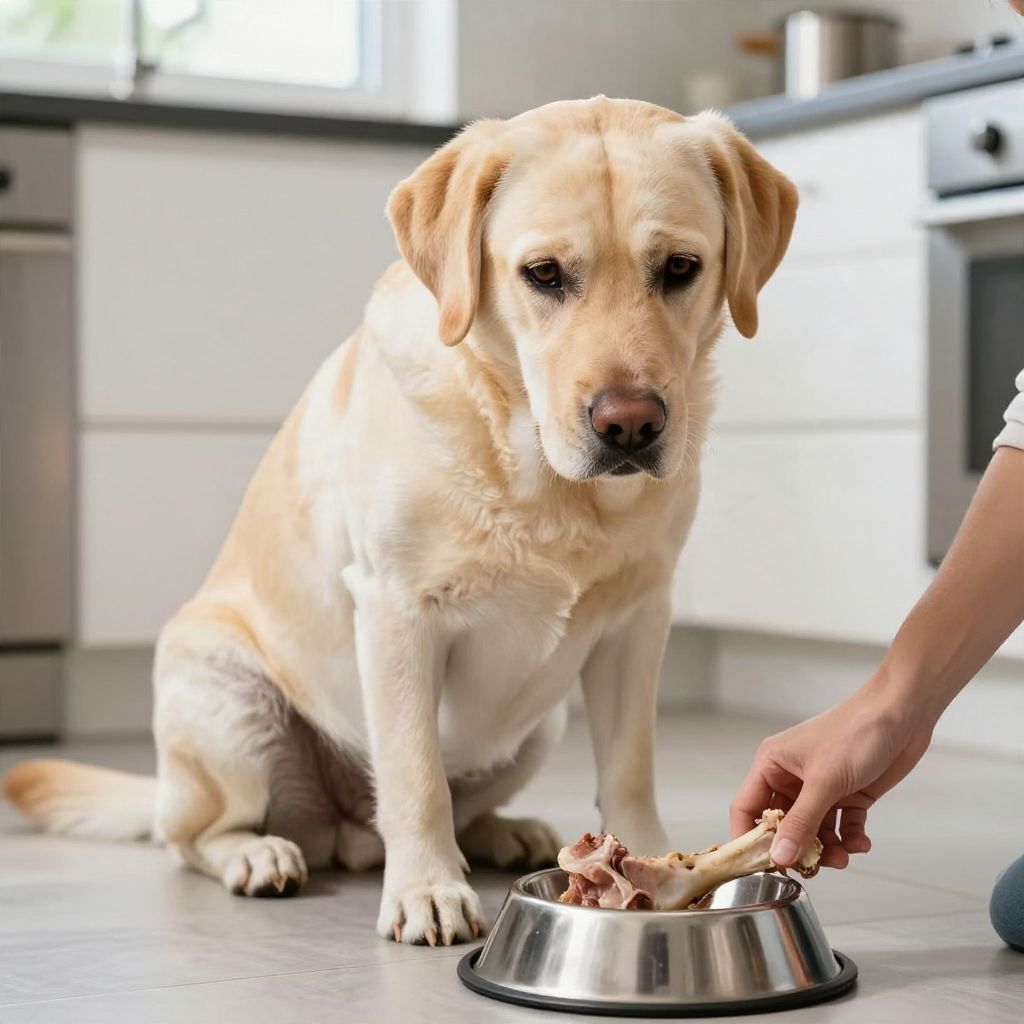
Can dogs have cooked pork bones? In most cases, no. Cooked pork bones can splinter, crack teeth, and cause choking or serious digestive injury, even if your dog seems eager to chew them.
If your dog already swallowed one, stay calm and watch closely for warning signs. The safest next step depends on the bone size, how it was cooked, and whether your dog is showing symptoms.
Can Dogs Have Cooked Pork Bones?
No—dogs should not be given cooked pork bones. Cooking makes bones harder, drier, and more likely to splinter into sharp fragments that can injure the mouth, throat, stomach, or intestines. Even a large, seemingly sturdy bone can break into dangerous pieces.
Why Cooked Pork Bones Are Risky for Dogs
Cooked pork bones are unsafe because they can break unpredictably. A dog may bite down and create sharp shards, or swallow a piece that becomes stuck or tears tissue on the way through the digestive tract.
Common dangers include
- Choking if a piece lodges in the throat
- Broken teeth from hard bone pressure
- Mouth injuries from sharp edges
- Esophageal blockage if a fragment gets stuck
- Stomach or intestinal injury from splinters
- Constipation or obstruction from bone fragments
Risk is not limited to one type of dog. Size, chewing style, and health matter. A small dog may be more likely to choke, while a large, powerful chewer may be more likely to crack a tooth or break the bone into harmful pieces. Puppies, senior dogs, and dogs with dental disease are often at higher risk.
What to Do If Your Dog Ate a Cooked Pork Bone
If your dog swallowed a cooked pork bone, contact your veterinarian right away for guidance. Do not try to make your dog vomit unless a veterinarian specifically instructs you to do so. Bone fragments can cause more damage coming back up.
- Remove any remaining bone pieces from reach.
- Check your dog’s mouth only if it is safe to do so.
- Note the size of the bone and whether it was fully swallowed or only chewed.
- Call your veterinarian or an emergency clinic for advice.
- Monitor your dog closely for symptoms over the next 24 to 72 hours, or as directed by your vet.
Emergency warning signs
Seek urgent veterinary care immediately if you notice any of these signs:
- Repeated gagging, choking, or trouble breathing
- Drooling, pawing at the mouth, or obvious mouth pain
- Vomiting or repeated retching
- Bloated abdomen or severe discomfort
- Refusing food or water
- Blood in vomit or stool
- Straining to defecate or inability to pass stool
- Lethargy, collapse, or sudden weakness
Even if your dog seems normal at first, a problem can still develop later. A fragment may move through the digestive tract and cause irritation or obstruction hours to days afterward.
Can Dogs Eat Pork Bones in Any Form?
Cooked pork bones are the main concern, but raw bones are not automatically safe either. Raw bones may still break teeth, carry bacteria, or cause digestive upset. Whether a raw bone is appropriate depends on your dog’s size, chewing habits, health status, and your veterinarian’s advice.
Safer approach if you want a chew
- Choose vet-approved chew toys designed for your dog’s size and chewing strength
- Supervise chewing sessions
- Remove a chew once it becomes small enough to swallow
- Avoid any bone that has been cooked, smoked, roasted, or pressure-cooked
If you are looking for a general bone-safety comparison, you may also find it helpful to read about whether dogs can eat beef bones and pork chop bone safety for dogs.
Signs Your Dog May Have a Bone Problem
Symptoms can vary depending on where the bone fragment is stuck or injured tissue is irritated. Some dogs show signs right away, while others seem fine until inflammation or blockage builds.
Watch for these changes
- Chewing on one side of the mouth
- Bleeding from the gums or mouth
- Bad breath after chewing
- Loss of appetite
- Constipation or very hard stool
- Diarrhea, especially with mucus or blood
- Restlessness, pacing, or repeated attempts to vomit
- Hunched posture or abdominal tenderness
These signs do not confirm a bone injury on their own, but they are reason to call a veterinarian promptly. If your dog is a puppy, toy breed, senior dog, or has a history of gastrointestinal problems, be especially cautious.
Why Some Dogs Are More Vulnerable
Any dog can be harmed by a cooked pork bone, but some dogs are more likely to have complications. The risk depends on individual factors, not just breed.
- Puppies may swallow pieces quickly and have smaller airways and digestive tracts.
- Small dogs are more likely to choke on fragments.
- Power chewers may crack bones into sharp pieces or break teeth.
- Senior dogs may have worn teeth or slower digestion.
- Dogs with dental disease may be more prone to pain, tooth fractures, or infection.
- Dogs with sensitive stomachs may be more likely to vomit or develop GI upset.
What Not to Do After Your Dog Eats a Cooked Pork Bone
Well-meaning home responses can sometimes make the situation worse. Avoid guessing, and do not use unsafe tricks to “move it along.”
- Do not give laxatives unless your veterinarian tells you to.
- Do not induce vomiting without professional instruction.
- Do not feed large amounts of food to “cushion” the bone.
- Do not give sharp, hard treats in hopes of pushing fragments through.
- Do not wait for severe symptoms if your dog is struggling to breathe, vomiting repeatedly, or in obvious pain.
How Veterinarians May Help
Your veterinarian may recommend an exam, imaging, or monitoring depending on the bone size, timing, and your dog’s symptoms. In some cases, a bone fragment in the mouth or throat may be removed quickly. In others, your vet may advise observation or further treatment if obstruction or injury is suspected.
The right plan depends on your dog’s condition, not a one-size-fits-all rule. If you are unsure whether the bone was swallowed or only chewed, tell the clinic exactly what happened and when.
How to Prevent Future Bone Accidents
Prevention is much easier than treating a bone injury. If your dog is attracted to table scraps, set clear food boundaries and keep cooked bones out of reach.
- Dispose of cooked bones immediately in a secure trash can.
- Keep plates, counters, and picnic areas clear.
- Teach “leave it” and “drop it” using reward-based training.
- Offer safe chew alternatives approved for your dog.
- Supervise your dog around barbecue scraps, holiday meals, and kitchen trash.
- Ask guests not to feed bones or leftovers.
Safe Chew Alternatives to Consider
If your dog likes to chew, choose products made for canine chewing rather than leftover human bones. The best option depends on your dog’s chewing strength, age, and dental health.
- Durable rubber chew toys
- Vet-approved dental chews
- Food-dispensing toys for enrichment
- Soft chews for dogs with dental sensitivity, if approved by your vet
Always supervise new chews at first. If a toy starts breaking into pieces or becomes small enough to swallow, remove it.
Bottom Line
Can dogs have cooked pork bones? No—cooked pork bones are unsafe and can cause choking, broken teeth, or serious internal injury. If your dog has eaten one, call your veterinarian promptly and watch for emergency signs. The safest choice is to keep cooked bones away and offer dog-safe chews instead.