
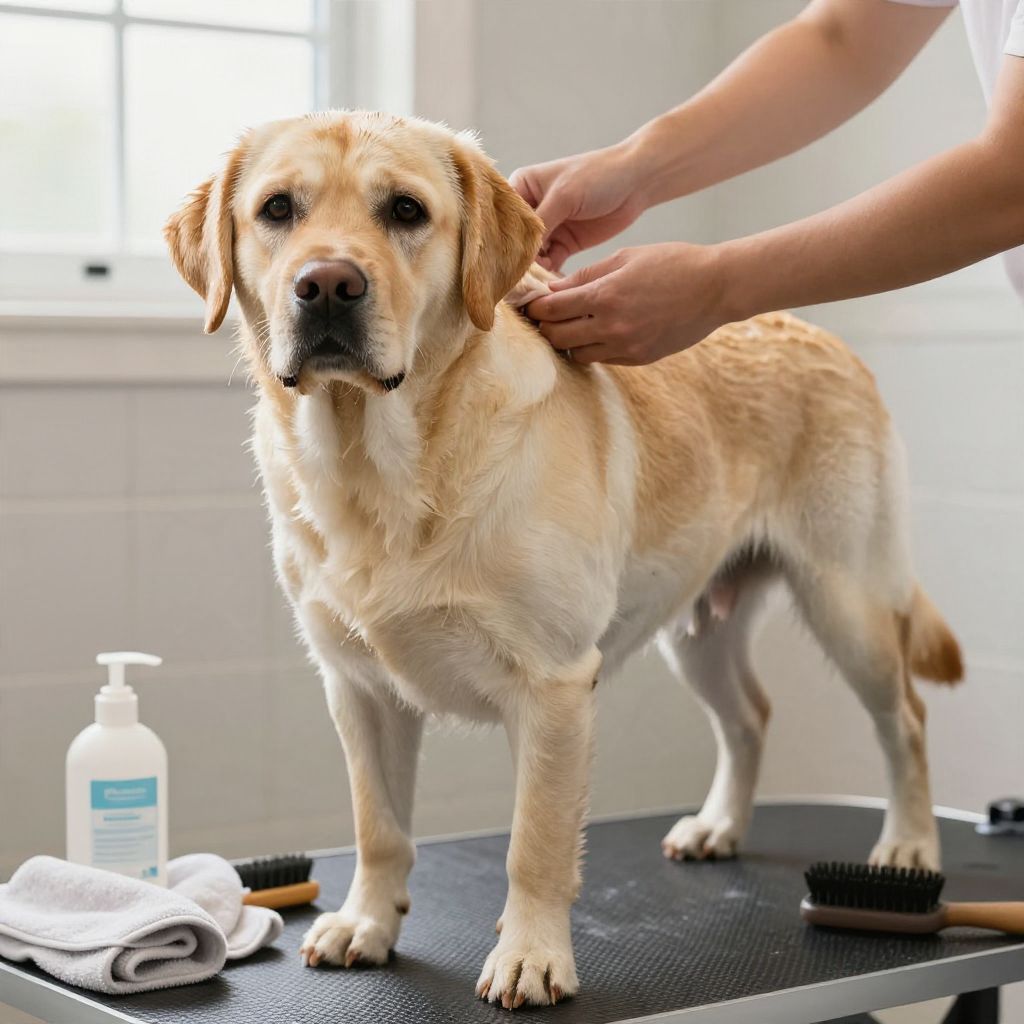
Why does my dog stink? A bad odor can come from normal dog oils, dirt, moisture, diet, or an underlying health problem. Some smells are harmless and easy to fix, but sudden, strong, or persistent odor can signal skin, ear, dental, anal gland, or infection issues.
The key is to notice where the smell is coming from and whether your dog has other symptoms like itching, redness, discharge, pain, or changes in appetite. That helps you decide whether home grooming is enough or a vet visit is needed.
Why does my dog stink?
Most bad dog odors come from skin buildup, dirty ears, dental disease, anal gland problems, or an infection. If the smell is new, very strong, or paired with itching, discharge, pain, or behavior changes, your dog should be checked by a veterinarian.
Common reasons dogs smell bad
1. Dirty coat and skin oils
Dogs naturally produce skin oils, and those oils can trap dirt, pollen, and debris. If your dog has a thick coat, a curly coat, or spends time outdoors, odor can build up faster between baths.
Moisture also matters. A damp coat from rain, swimming, or a wet harness can create a musty smell, especially if the fur does not dry fully.
2. Skin infections or allergies
Skin problems are a common reason a dog smells sour, yeasty, or “off.” Allergies can lead to licking and scratching, which damages the skin barrier and makes infection more likely.
Watch for:
- Red or irritated skin
- Greasy, flaky, or scabby patches
- Repeated licking or chewing
- A yeasty or rancid odor
- Hair loss or hot spots
These signs warrant a veterinary exam because treatment depends on the cause.
3. Ear infections
Ear odor often smells sweet, musty, or foul. Dogs with floppy ears, lots of ear hair, allergies, or frequent swimming may be more prone to ear issues, but any dog can develop one.
Common warning signs include head shaking, ear scratching, redness, dark discharge, or sensitivity when you touch the ears. Ear infections can worsen quickly, so do not ignore the smell.
4. Dental disease
Bad breath is one of the most common odor complaints, and it is often linked to plaque, tartar, gum inflammation, or oral infection. A dog with dental disease may also drool more, chew on one side, or avoid hard food.
Because oral problems can be painful and sometimes affect the heart, kidneys, or overall health, persistent bad breath should not be dismissed as “normal dog breath.”
5. Anal gland problems
If your dog smells fishy, especially near the rear end, anal glands may be involved. Some dogs have trouble emptying these glands naturally, and the odor can become strong if the glands are full, irritated, or infected.
Other signs include scooting, licking the rear, straining, or discomfort when sitting. A veterinarian can tell whether the glands need treatment or whether another issue is causing the smell.
6. Yeast or bacterial infections
Yeast and bacterial overgrowth can affect the skin, ears, paws, and folds of the body. These infections often create a strong, unpleasant smell that may be sweet, musty, or cheesy.
Skin folds, armpits, groin areas, and between the toes are common trouble spots, especially in dogs with loose skin or heavy coats. The smell often returns if the underlying cause is not addressed.
7. Diet and digestive issues
Sometimes a dog smells bad because of gas, stool residue, or digestive upset. Diet changes, food intolerance, scavenging, or poor stool quality can all contribute to odor.
If your dog has frequent gas, loose stools, vomiting, or a sudden change in appetite along with odor, your vet can help you sort out whether the problem is digestive, dietary, or something else.
8. Something stuck in the coat or mouth
Dogs can pick up dead animals, mud, feces, trash, or other foul-smelling material on walks or in the yard. Long-haired dogs may hold onto odor longer because debris gets trapped in the coat.
Check the coat, paws, mouth, and under the collar or harness if the smell seems sudden and localized.
How to figure out where the smell is coming from
Start by narrowing the source. That makes it easier to tell whether you are dealing with a grooming issue or a health problem.
- Smell the ears for yeast, discharge, or a sour odor.
- Check the mouth for bad breath, drooling, or visible tartar.
- Inspect the skin for redness, flakes, bumps, or greasy patches.
- Look at the rear end for stool, irritation, or fishy odor.
- Notice the paws for licking, redness, or a corn-chip smell that can suggest yeast.
If the smell seems to come from one area rather than the whole dog, that often points to a localized issue such as an ear, skin, or anal gland problem.
What you can do at home
Some odor problems improve with better grooming and hygiene. Keep the approach gentle and avoid harsh products that can irritate the skin.
- Bathe your dog with a dog-safe shampoo as needed, not too often.
- Dry the coat thoroughly after baths, rain, or swimming.
- Brush regularly to remove loose hair and debris.
- Wipe muddy paws and clean the collar or harness.
- Brush teeth with dog-safe dental products if your vet says it is appropriate.
- Keep bedding, blankets, and crates clean.
Do not use human deodorants, essential oils, or strong cleaning products on your dog’s skin. These can irritate, poison, or mask the problem without fixing it.
When a vet visit is the right next step
See your veterinarian if the odor is persistent, worsening, or paired with other symptoms. A smell that keeps coming back after bathing often means there is an untreated medical cause.
Get urgent veterinary care if your dog has any of the following:
- Facial swelling or trouble breathing
- Severe pain, bleeding, or a rapidly spreading skin lesion
- Foul odor with pus, open wounds, or significant discharge
- Repeated vomiting, collapse, or extreme lethargy
- A swollen, painful rear end or inability to defecate normally
- Eye discharge, head tilt, or loss of balance with ear odor
These signs can indicate infection or another serious problem that should not wait.
Why some dogs smell worse than others
Breed, coat type, size, age, and health all affect odor, but none of them guarantee a smell problem. For example, dogs with floppy ears, skin folds, or dense coats may need more frequent cleaning because moisture and debris can collect more easily.
Older dogs may also develop dental disease, arthritis-related grooming difficulty, or skin changes that make odor more noticeable. Puppies can smell bad too, especially if they get into messy places or have an ear or skin issue.
Common mistakes that make the smell worse
- Bathing too often and stripping the skin barrier
- Using the wrong shampoo or harsh home remedies
- Ignoring ear odor because the dog is still acting normal
- Assuming all bad breath is harmless
- Waiting too long when the smell keeps returning
- Trying to express anal glands without guidance if you are unsure how
If you are unsure what is causing the odor, a veterinarian can examine the skin, ears, mouth, and anal area and recommend the safest treatment.
How to prevent your dog from stinking again
Prevention depends on the cause, but a steady routine helps most dogs stay cleaner and more comfortable.
- Groom on a schedule that matches your dog’s coat and lifestyle.
- Keep ears dry and monitor them after swimming.
- Support dental care with vet-approved brushing or dental products.
- Feed a complete, balanced diet and address digestive issues early.
- Watch for repeated itching, licking, or scooting.
- Schedule regular vet checks, especially if odor is recurring.
If your dog’s smell changes suddenly, that change matters. New odor is often one of the first clues that something is wrong.
For more related reading, you may also find why dogs smell so bad and why a female dog may smell like fish helpful if you want to narrow down the cause.
The bottom line: if your dog stinks, start by checking the ears, mouth, skin, paws, and rear end, then improve grooming and cleanliness. If the odor is strong, persistent, or paired with other symptoms, book a veterinary exam so the real cause can be treated safely.