
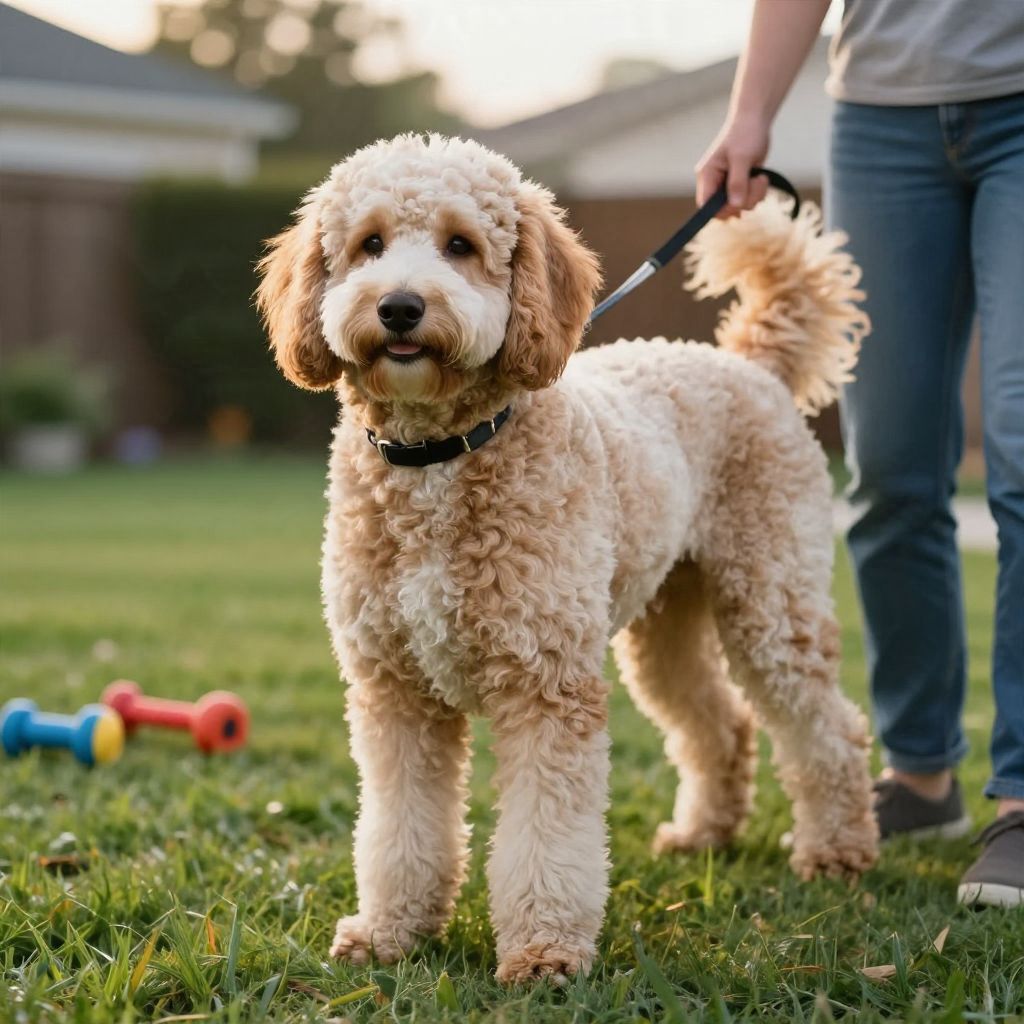
A Double Doodle is a mixed-breed dog that usually comes from crossing two Poodle mixes, most often a Goldendoodle and a Labradoodle. Because parentage can vary, appearance, coat type, size, and temperament can differ a lot from dog to dog.
If you’re considering one, it helps to understand that “Double Doodle” is not a single standardized breed. The term describes a hybrid dog whose traits depend on the parents, the breeding program, and the individual puppy.
What Is A Double Doodle?
A Double Doodle is typically a multigenerational designer dog created by breeding two doodle-type dogs, commonly a Goldendoodle and a Labradoodle. The result is usually a family companion with a Poodle-influenced coat and a temperament that can range from calm and social to energetic and bouncy.
What “Double Doodle” Means
The name usually means the dog has two layers of doodle ancestry, not that it is a separate recognized breed. Since doodle mixes are already crossbreeds, a Double Doodle can inherit a wide range of traits from several breeds in its background.
Why that matters for you
- There is no single official breed standard.
- Coat type, shedding, and grooming needs can vary.
- Adult size can differ depending on the parents used.
- Temperament is influenced by genetics, early socialization, and training.
What Do Double Doodles Usually Look Like?
Many Double Doodles have a soft, wavy, or curly coat, floppy ears, and a friendly, teddy-bear look. But appearance is not predictable enough to guarantee a certain coat texture, color, or size in every dog.
Common physical traits
- Wavy to curly coat, often low-shedding but not always
- Medium to large body size in many lines, though smaller dogs also exist
- Drop ears and expressive eyes
- Coat colors that may include cream, apricot, gold, brown, black, or combinations
Important: “Low-shedding” does not mean “no grooming.” Many doodle coats mat easily and need regular care.
What Is Their Temperament Like?
Double Doodles are often described as affectionate, social, and people-oriented, but that is a general tendency, not a promise. Their behavior depends on breeding quality, early handling, exercise, and training.
Typical personality tendencies
- Enjoying human companionship
- Being active and playful
- Responding well to positive training
- Sometimes showing sensitivity or excitement if undertrained or under-exercised
Because many doodle crosses include retriever and poodle lines, some dogs may be eager learners. Others may be more independent, mouthy, or easily overstimulated as puppies.
Are Double Doodles Good Family Dogs?
They can be good family dogs when matched to the household and given proper training and supervision. A well-socialized Double Doodle may fit active families, but any dog can become overwhelming if children are too rough, routines are inconsistent, or exercise needs are ignored.
Best fit for a home that can provide
- Daily exercise and play
- Consistent training
- Regular grooming
- Positive socialization with people, dogs, and everyday environments
If you have young children, teach them how to interact gently with dogs and always supervise play.
How Big Do Double Doodles Get?
Size can vary a lot because parent dogs may be different sizes. Some Double Doodles are medium-sized, while others grow quite large. If size matters to you, ask the breeder about the parents, previous litters, and expected adult range rather than assuming from the name alone.
When evaluating a puppy, look at the size of both parent dogs and ask how much variation has occurred in past litters. A responsible breeder should be able to explain what they expect, while still acknowledging uncertainty.
Do Double Doodles Shed?
Many shed less than average, but shedding is not the same as being allergy-safe. A Double Doodle may still release dander, saliva proteins, and loose hair, all of which can affect people with allergies.
What affects shedding and coat care
- Coat curliness and texture
- Which parent traits are inherited
- Seasonal coat changes
- How often the coat is brushed and groomed
If allergies are a major concern, spend time with the individual dog before committing.
Grooming Needs for a Double Doodle
Grooming is one of the biggest long-term responsibilities with this type of dog. Curly and wavy coats can mat quickly, especially behind the ears, under the collar, in the armpits, and around the legs.
Basic grooming routine
- Brush several times a week, or more often for curlier coats.
- Check for tangles after walks, play, and swimming.
- Keep ears clean and dry, especially after baths or water play.
- Trim nails regularly.
- Schedule professional grooming as needed to prevent mats.
Do not let mats build up until they pull on the skin. Severe matting can be painful and may require veterinary or professional clipping.
Exercise and Mental Stimulation
Most Double Doodles need more than a short daily walk. Many do best with a mix of physical exercise and brain work, especially if they come from active parent lines.
Helpful activities
- Leashed walks and sniffing time
- Fetch, tug, or structured play
- Food puzzles and sniffing games
- Short training sessions
- Safe off-leash time in secure areas, if reliably trained
Young dogs should not be overexercised with repetitive high-impact activity. Puppies need movement, but they also need rest and age-appropriate play.
Training a Double Doodle
Reward-based training usually works well with this type of dog. Many are intelligent and motivated by food, toys, and praise, but that can also mean they learn undesirable habits quickly if training is inconsistent.
Focus on these basics early
- House training
- Crate training, if you choose to use one humanely
- Loose-leash walking
- Come when called
- Settle and relax on cue
- Polite greetings without jumping
Keep sessions short, upbeat, and frequent. If your dog becomes frustrated, distracted, or overly excited, lower the difficulty and reward small successes.
Socialization Matters Early
Early socialization helps a Double Doodle become more adaptable and confident. This does not mean forcing interactions; it means creating calm, positive exposure to the world during puppyhood and continuing it through adolescence.
Good socialization experiences include
- Meeting friendly people of different ages and appearances
- Seeing dogs that are calm and well-mannered
- Experiencing car rides, grooming tools, and household sounds
- Walking on different surfaces and in different environments
If your dog seems fearful, do not flood them with too much too fast. Work gradually and consider help from a qualified trainer or veterinary behavior professional.
Health Considerations to Know
Because Double Doodles are mixed-breed dogs, their health risks can reflect the breeds in their background. That does not mean they will develop any specific condition, but it does mean you should ask about health testing and veterinary care in the breeding program.
Questions to ask a breeder or rescue
- What are the health histories of the parents?
- Have hips, eyes, heart, and other relevant screenings been done?
- What vaccinations, parasite prevention, and vet checks has the puppy had?
- How is the puppy being raised and socialized?
See your veterinarian if you notice ongoing itching, ear infections, limping, digestive upset, coughing, or unusual tiredness. These signs can have many causes and should not be guessed at online.
When to Call a Veterinarian Urgently
Some problems need prompt veterinary care, not watchful waiting. Seek urgent help if your Double Doodle has trouble breathing, collapses, has repeated vomiting, bloated or painful abdomen, seizures, uncontrolled bleeding, suspected poisoning, or cannot stand.
Other red flags
- Sudden weakness or severe lethargy
- Eye injury or sudden vision changes
- Inability to urinate
- Severe diarrhea with dehydration
- Heat stress signs such as heavy panting, drooling, or confusion
If you are unsure whether a symptom is urgent, call your veterinarian right away for guidance.
Common Mistakes People Make With Double Doodles
Many problems come from assuming the dog will automatically be easy because it is a doodle mix. In reality, these dogs still need structure, grooming, and training.
Avoid these mistakes
- Choosing a puppy based only on looks
- Skipping grooming because the coat “doesn’t shed much”
- Underestimating exercise and enrichment needs
- Using harsh punishment instead of teaching desired behavior
- Failing to socialize the puppy early and safely
Consistency matters more than breed labels. A well-managed mixed-breed dog usually does better than one expected to “just figure it out.”
Should You Get a Double Doodle?
A Double Doodle may be a good match if you want an affectionate, active companion and you are ready for grooming, training, and ongoing socialization. It may be a poor fit if you want a low-maintenance dog or cannot provide regular attention and exercise.
Before you decide, meet the individual dog if possible, ask detailed questions about the parents, and be honest about your lifestyle. The right match matters more than the trend.
If you want to compare other doodle-type mixes, you may also find What Is A Whoodle? helpful, along with What Is A Pomsky? for another mixed-breed overview.
In short, a Double Doodle is a doodle mix with variable traits, not a standardized breed. Focus on the individual dog, commit to grooming and training, and involve your veterinarian whenever health concerns or urgent symptoms appear.