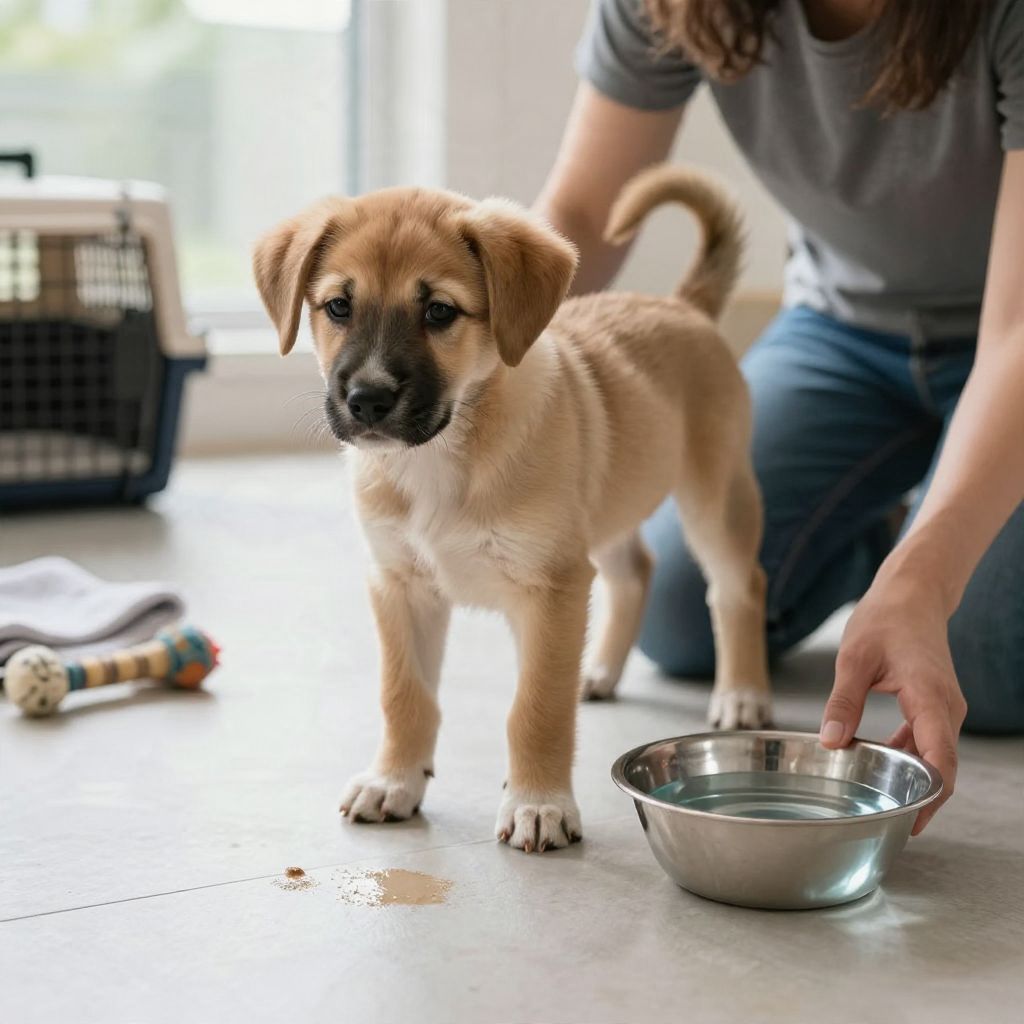
Why is my puppy throwing up? Puppies can vomit for many reasons, from eating too fast or getting into something they shouldn’t to infections, parasites, motion sickness, or a more serious illness. Because puppies can dehydrate quickly, it’s important to watch for warning signs and act early.
Some vomiting is mild and short-lived, but repeated vomiting, blood, lethargy, belly pain, or trouble keeping water down needs prompt veterinary attention. If your puppy is very young, unvaccinated, or may have eaten a toxin or foreign object, contact your vet right away.
Why is my puppy throwing up?
Puppies may vomit from minor stomach upset, diet changes, parasites, infections, motion sickness, or eating something inappropriate. If vomiting happens more than once, includes blood, or comes with weakness, diarrhea, pain, or dehydration, your puppy should be checked by a veterinarian as soon as possible.
Common reasons puppies vomit
Some causes are relatively mild, while others can become serious quickly in young dogs. The pattern of vomiting, your puppy’s age, vaccination status, and any other symptoms all matter.
1. Eating too fast or too much
Many puppies gulp food, water, or treats and then bring them back up. This is more likely after excitement, rough play, or a large meal.
2. Sudden diet changes
A quick switch in food can upset a puppy’s stomach. Even a higher-quality food can cause vomiting if the change is too abrupt.
3. Parasites and intestinal infections
Roundworms, hookworms, giardia, and other intestinal problems can cause vomiting, diarrhea, poor weight gain, and a dull coat. Puppies often need routine fecal testing and parasite prevention.
4. Viral or bacterial illness
Young puppies are more vulnerable to contagious diseases, especially if they are not fully vaccinated. Vomiting with diarrhea, fever, tiredness, or loss of appetite should be taken seriously.
5. Motion sickness or stress
Car rides, new environments, and anxiety can trigger vomiting in some puppies. This may improve with gradual training and shorter, calmer trips.
6. Eating something inappropriate
Puppies explore with their mouths. Toys, socks, sticks, trash, spoiled food, and household items can irritate the stomach or cause a blockage.
7. Toxins or medications
Chocolate, grapes, xylitol, certain plants, human medications, and many household chemicals can be dangerous. If you suspect toxin exposure, treat it as urgent.
What the vomit can tell you
The appearance of vomit does not give a diagnosis, but it can help you describe the problem to your vet. Look at how often it happens, what it looks like, and whether your puppy seems otherwise normal.
- Food or undigested kibble: may happen after eating too quickly or too much.
- Foamy or watery vomit: can happen with an empty stomach, irritation, or illness.
- Yellow bile: may appear when the stomach is empty, but repeated vomiting still needs attention.
- Blood or coffee-ground material: can signal bleeding and needs urgent veterinary care.
- Foreign material: string, fabric, plastic, or bone fragments may suggest your puppy swallowed something risky.
When vomiting is an emergency
Some signs mean you should not wait and see. Puppies can decline quickly, especially if they are small, very young, or already sick.
- Repeated vomiting or vomiting that won’t stop
- Blood in vomit or black, tarry stool
- Swollen belly, obvious pain, or a hunched posture
- Weakness, collapse, or extreme lethargy
- Not keeping water down
- Diarrhea along with vomiting, especially if severe
- Suspected toxin exposure or swallowed object
- Gagging, choking, or trouble breathing
- A puppy that is unvaccinated or not fully vaccinated
If you see any of these signs, contact a veterinarian immediately or go to an emergency clinic.
What you can do right away
If your puppy vomits once and otherwise seems bright, you can monitor closely while you arrange veterinary advice if needed. Keep things calm and avoid adding more stress to the stomach.
- Remove food for the moment unless your veterinarian has told you otherwise.
- Offer small amounts of fresh water, not a large bowl all at once.
- Keep your puppy quiet and indoors.
- Check for signs of dehydration, such as dry gums, sunken eyes, or low energy.
- Think about anything your puppy may have eaten, chewed, or been exposed to.
- Call your veterinarian if vomiting happens again or your puppy seems unwell.
Do not give human medicines, and do not try home remedies without veterinary guidance. Some common products are unsafe for dogs or can make vomiting worse.
How to help prevent future vomiting
Prevention depends on the cause, but a few practical habits can reduce stomach upset in many puppies.
Feed consistently
Use a quality puppy diet and change foods gradually over several days if your vet recommends a switch. Sudden changes are a common cause of digestive upset.
Slow down fast eaters
If your puppy inhales meals, try a slow-feeder bowl, puzzle feeder, or smaller, more frequent meals. This can help reduce regurgitation and vomiting after eating.
Limit access to unsafe items
Puppies should not have unsupervised access to socks, string, trash, toys that break apart, or anything they might swallow. Puppy-proofing is one of the best ways to prevent emergencies.
Keep up with parasite prevention
Follow your veterinarian’s recommendations for deworming, fecal checks, and parasite control. Parasites are a common and preventable cause of stomach problems in young dogs.
Use gradual training for car rides
If motion sickness is the issue, short positive trips, ventilation, and calm handling can help. Your veterinarian may also suggest medical options if the problem is frequent.
When to call your veterinarian even if the vomiting stops
Even if your puppy seems better after one episode, a call to the vet is still smart if the vomiting was unusual for your puppy or happened after a possible exposure. This is especially important for very young puppies and toy-breed puppies, which can become dehydrated faster.
Call your vet if your puppy has ongoing nausea, refuses food, has diarrhea, seems painful, or has a history of swallowing objects. Your vet may recommend an exam, stool test, or other diagnostics based on your puppy’s age and symptoms.
Helpful questions to track before the vet visit
Writing down a few details can help your veterinarian narrow down the cause more quickly. You do not need to solve the problem yourself before calling.
- How many times has your puppy vomited?
- What did the vomit look like?
- When did your puppy last eat or drink?
- Any diarrhea, coughing, fever, or lethargy?
- Could your puppy have eaten a toy, plant, food, or medication?
- Is your puppy fully vaccinated and on parasite prevention?
Common mistakes to avoid
When you are worried, it is easy to try quick fixes that can delay proper care. A cautious approach is safer for puppies.
- Waiting too long when vomiting is repeated or severe
- Giving human medications without veterinary advice
- Feeding rich treats or table scraps after vomiting
- Assuming all vomiting is “normal puppy behavior”
- Ignoring possible foreign-body or toxin exposure
Conclusion
If you are asking, “Why is my puppy throwing up?” the safest answer is to watch for the pattern and the warning signs. One mild episode may pass, but repeated vomiting, blood, pain, weakness, or possible toxin exposure needs prompt veterinary care. When in doubt, call your vet early.
If you want more guidance on vomiting in dogs, you may also find these helpful: my dog is throwing up and dog vomiting: when to worry.