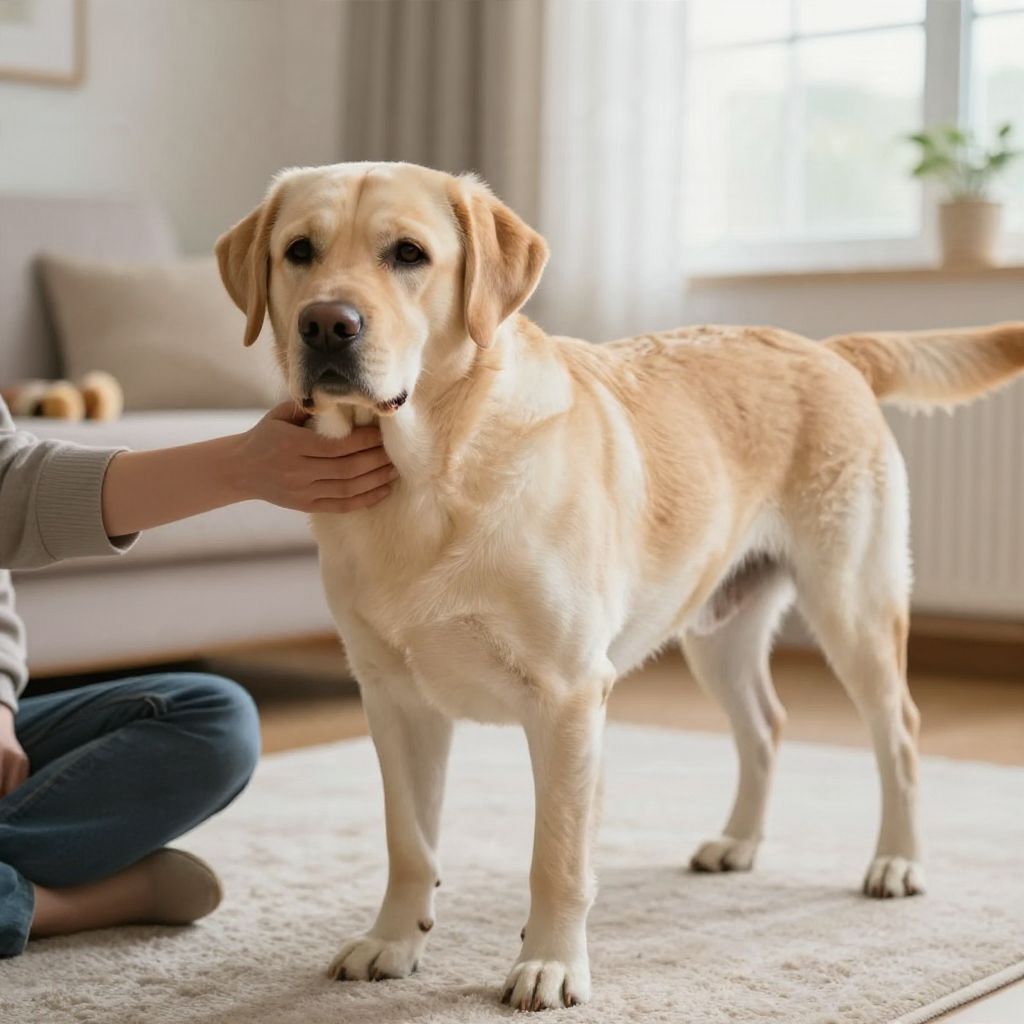
If you’re wondering where dogs like to be pet, the best answer is: it depends on the individual dog, but many enjoy gentle touch on the chest, shoulders, and the side of the neck. Some also like slow strokes along the back, while others prefer brief, light contact only.
The safest approach is to let the dog choose, watch body language, and start with low-pressure petting in less sensitive areas. Ears, paws, tail, and the top of the head can be fine for some dogs, but only if the dog clearly welcomes it.
Where Do Dogs Like To Be Pet?
Most dogs like being pet in places that feel predictable and non-threatening, such as the chest, shoulders, and side of the neck. Many dogs also enjoy slow strokes along the back. The best spot varies by dog, so watch for relaxed body language and stop if the dog leans away, stiffens, or moves off.
The Best Places to Pet Most Dogs
While every dog is different, these areas are often well tolerated and sometimes preferred:
- Chest: Often a safe starting point because it’s less intrusive than reaching over the head.
- Shoulders: Many dogs relax with gentle rubbing here.
- Side of the neck: Usually more comfortable than patting the top of the head.
- Upper back: Slow, steady strokes can feel calming to many dogs.
- Base of the ears: Some dogs enjoy this, but only if they already trust you.
These are not universal rules. A dog with arthritis, skin sensitivity, an ear infection, or a history of rough handling may dislike touch in places other dogs enjoy.
Places Many Dogs Do Not Like Being Touched
Some body areas are more likely to make a dog uncomfortable, especially if you do not know the dog well. Be cautious with:
- Top of the head: Many dogs tolerate it, but some find it threatening.
- Paws: Sensitive for many dogs and often linked to nail trimming or vet care.
- Tail: Often a no-go unless the dog clearly invites it.
- Belly: Some dogs love belly rubs, but others are simply rolling over to appease you, not asking for touch.
- Face, muzzle, or ears: These can be very sensitive and should be handled carefully.
If a dog is unfamiliar, avoid reaching directly toward the face or leaning over the body. That can feel intimidating even to friendly dogs.
How to Tell If a Dog Wants to Be Pet
The best way to know where dogs like to be pet is to read their body language first. A dog that wants contact usually looks loose, wiggly, and comfortable. A dog that wants space may look tense, still, or avoid your hand.
Signs a dog is open to petting
- Soft eyes and relaxed facial muscles
- Loose body posture
- Leaning in toward you
- Tail wagging in a loose, natural way
- Coming closer or nudging your hand
- Remaining near you after you stop petting
Signs to stop or back off
- Turning the head away
- Moving away or stepping back
- Stiff body or frozen posture
- Lip licking, yawning, or whale eye
- Raised hackles, growling, snapping, or showing teeth
- Trying to hide, crouch, or leave
These signals matter. A dog does not need to “be rude” to be uncomfortable; subtle signs often appear before more obvious warnings.
The Safest Way to Pet a Dog
If you want to pet a dog safely, especially one you do not know well, keep your approach calm and let the dog make the first move. A gentle, respectful introduction reduces stress and helps you find the spots the dog actually enjoys.
- Ask the owner first if the dog likes being pet.
- Approach slowly and avoid direct eye contact or looming over the dog.
- Offer the back of your hand at the dog’s side or chest area.
- Let the dog sniff or move closer.
- Use light, gentle strokes rather than firm patting.
- Pause and check whether the dog stays close or walks away.
If the dog stays relaxed, you can continue. If the dog shifts away, respect that choice immediately.
Why Some Dogs Like Certain Spots More Than Others
Preference can depend on a dog’s temperament, age, health, and past experiences. A confident, well-socialized dog may enjoy more handling than a shy or under-socialized dog. A painful joint, skin issue, or ear problem can also make a once-loved touch area uncomfortable.
Breed tendencies can matter, but they are not guarantees
Some breeds are often described as affectionate or people-oriented, while others may be more reserved or independent. Even so, breed labels do not predict every dog’s preferences. Individual personality and life experience matter more than assumptions.
Age and health can change preferences
- Puppies: Often enjoy touch, but they may also become overstimulated quickly. Keep sessions short and positive.
- Adult dogs: Usually have clearer preferences and boundaries.
- Senior dogs: May dislike touch in sore areas, especially around the hips, back, or neck.
If a dog suddenly stops enjoying petting in a certain area, that can be a clue that something hurts. A veterinary check is wise if the change is new or persistent.
How to Pet a Puppy vs. an Adult Dog
Puppies often benefit from calm, positive handling because it helps them learn that human touch is safe. Still, their tolerance is limited, and rough or prolonged petting can overwhelm them.
- Use short, gentle sessions.
- Pair petting with praise or a small treat if the puppy likes it.
- Stop before the puppy squirms, mouths, or tries to leave.
- Handle paws, ears, and mouth only in a gradual, positive way if needed for grooming or vet care.
Adult dogs may already know what they like. Some enjoy more prolonged contact, while others prefer brief greetings and then space.
Common Mistakes People Make When Petting Dogs
Even well-meaning people can make dogs uncomfortable. Avoid these common errors:
- Reaching over the head too quickly
- Hugging or restraining a dog that did not ask for it
- Patting hard or fast instead of using gentle strokes
- Ignoring signs that the dog wants to leave
- Touching sensitive areas without permission from the dog’s body language
- Assuming a wagging tail always means the dog wants more contact
Petting should feel like a choice for the dog, not something the dog must endure.
What If Your Dog Likes Petting Too Much?
Some dogs become overexcited when touched and may mouth, jump, or bounce around. That does not mean they are being “bad”; they may simply not know how to settle. A calm routine helps.
- Pet briefly, then pause.
- Reward calm behavior with attention or a treat.
- Teach a simple “sit” or “settle” cue before petting.
- End the interaction before the dog becomes frantic.
If your dog becomes nippy, hyperactive, or difficult to calm during touch, a qualified trainer can help you build better manners with reward-based methods.
When Petting Could Signal a Medical Problem
If your dog suddenly avoids touch, especially in a specific area, pain or illness may be involved. This is especially important when the change is new or paired with other symptoms.
Contact a veterinarian if you notice:
- Flinching, yelping, or snapping when touched
- Limping or stiffness
- Swelling, heat, redness, or hair loss
- Head shaking or ear sensitivity
- Sudden behavior changes
- Repeated licking or chewing at one spot
Seek urgent veterinary care if your dog has severe pain, cannot stand, has a deep wound, has trouble breathing, collapses, or shows signs of a serious allergic reaction such as facial swelling or widespread hives.
How to Build Trust With a Dog That Is Unsure About Touch
Some dogs need time before they enjoy petting. That is normal, especially for rescues, shy dogs, or dogs with limited socialization. Trust grows best when you respect their pace.
- Let the dog approach you first.
- Use a calm voice and slow movements.
- Offer treats if the dog is comfortable taking them.
- Pet only briefly in low-risk areas like the chest or shoulder.
- Stop before the dog shows stress.
Consistency matters more than intensity. A few positive interactions are better than one long session the dog dislikes.
Conclusion
So, where do dogs like to be pet? Usually on the chest, shoulders, side of the neck, or upper back, but the real answer depends on the individual dog. Watch body language, start gently, and respect boundaries. When in doubt, let the dog choose the contact and stop if they seem unsure.
If you want to learn more about canine preferences and communication, you may also find do dogs like being pet and why does my dog lick me so much helpful.