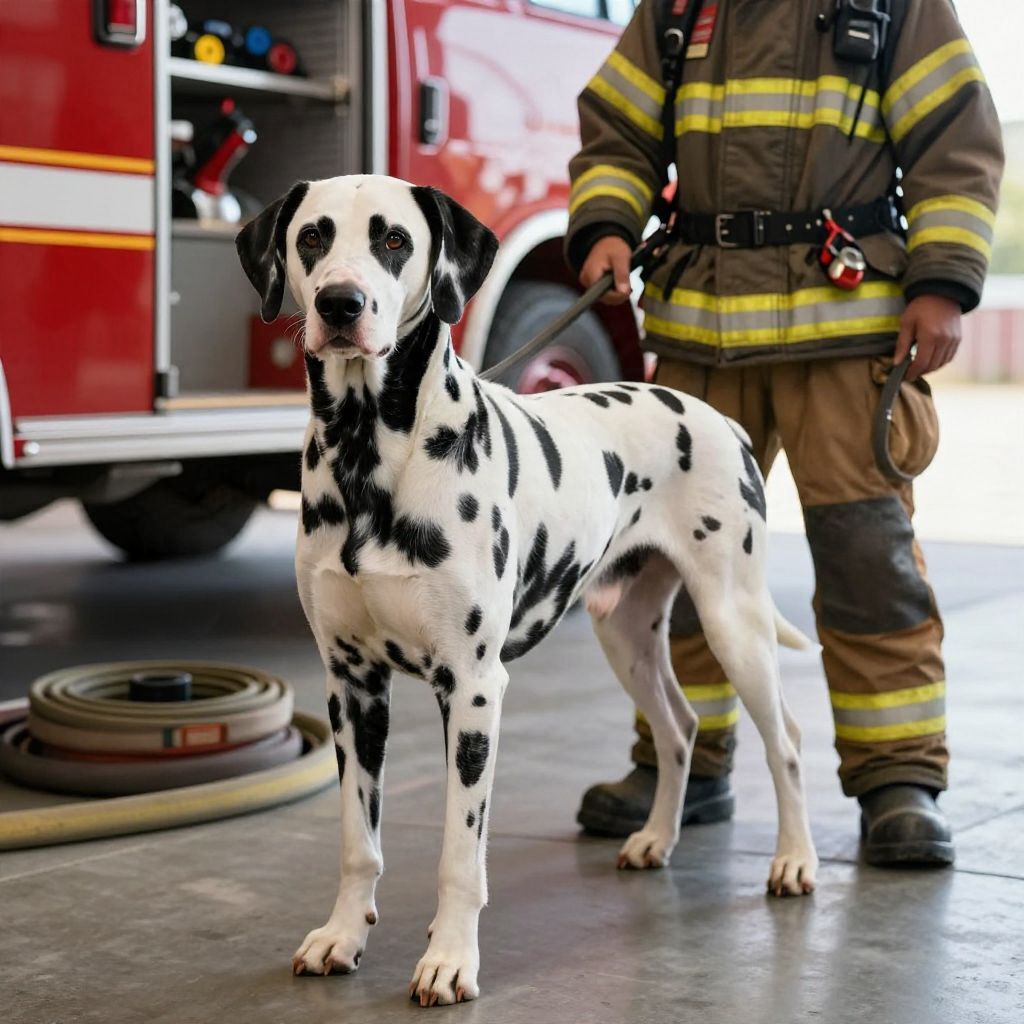
If you’ve ever wondered why are Dalmatians fire dogs, the short answer is history, not a special job they still do today. Dalmatians became linked with firehouses because they were strong, alert carriage dogs that could run alongside horse-drawn fire wagons and help keep the route clear.
Today, the “fire dog” image is mostly a tradition and a symbol. Modern fire departments use vehicles and equipment instead of horses, but Dalmatians remain closely associated with fire stations because of that memorable past.
Why Are Dalmatians Fire Dogs?
Dalmatians are called fire dogs because they historically worked with horse-drawn fire engines. Their stamina, speed, and comfort around horses made them useful for escorting wagons, calming horses, and helping firefighters move quickly through busy streets. The role is mostly historical now, but the association stuck.
The History Behind the Firehouse Connection
Before motorized fire trucks, fire crews often relied on horses to pull equipment. A dog that could run beside the team, stay focused in noisy streets, and work around horses was valuable.
Dalmatians fit that role well. Over time, they became a familiar sight around fire stations and on fire wagons, which helped create the “fire dog” identity that people still recognize today.
What Dalmatians were thought to do
- Run alongside horse-drawn fire wagons
- Help keep horses calm and focused
- Guard equipment when the crew was away
- Serve as a visible, recognizable companion for firefighters
It’s important to remember that this is a historical working relationship, not a guarantee that every Dalmatian will naturally love horses, crowds, or station life.
Do Dalmatians Still Work as Fire Dogs Today?
Usually, no. Modern fire departments use trucks, sirens, and technology instead of horses, so the original job is no longer needed. Some stations still keep Dalmatians as mascots, community ambassadors, or beloved companions, but that is different from the breed’s old working role.
If you see a Dalmatian at a firehouse today, it is more likely part of a tradition or public-relations role than an active working dog task.
Why This Breed Became So Closely Linked to Fire Stations
The connection stuck for a few practical and cultural reasons. Dalmatians were visually striking, memorable, and often seen around fire crews in the era of horse-drawn equipment. Once that image entered public memory, books, posters, and later movies reinforced it.
That means many people now think of Dalmatians and firehouses together, even though the original working need has disappeared.
Common reasons the image lasted
- The breed was easy to recognize and remember
- It had a real historical role with horse-drawn fire wagons
- Stories and media kept the tradition alive
- Firehouse mascots helped preserve the association
What Dalmatians Are Like as Pets
Although every dog is an individual, Dalmatians are often energetic, intelligent, and sensitive to their environment. That means they usually do best with consistent training, regular exercise, and early socialization.
They are not automatically the right fit for every home just because they are famous. A Dalmatian’s needs can vary with age, health, and temperament, so it helps to learn about the breed before bringing one home.
Things many owners should be ready for
- Daily exercise and mental stimulation
- Training that uses rewards and consistency
- Early socialization with people, dogs, and everyday sounds
- Regular grooming, even though the coat is short
Helpful Care Tips for a Dalmatian
If you live with a Dalmatian, focus on predictable routines and positive reinforcement. This breed can be active and alert, so structure helps prevent boredom and unwanted behavior.
Exercise and enrichment
Many Dalmatians benefit from brisk walks, play sessions, and training games. Mental work matters too, because a tired mind can be just as important as a tired body.
- Use daily walks or runs that match your dog’s age and fitness.
- Rotate toys to keep play interesting.
- Teach simple cues such as sit, stay, and recall with rewards.
- Offer puzzle toys or scent games for indoor enrichment.
Training and socialization
Start early if possible, but it is never too late to improve manners. Reward calm behavior, practice short sessions, and expose your dog gradually to new places, people, and sounds.
Avoid harsh corrections. Dalmatians, like many dogs, often learn best when training is clear, consistent, and rewarding.
Grooming and skin care
Dalmatians have short coats, but they still shed and need regular brushing. Grooming also gives you a chance to check the skin for irritation, lumps, or parasites.
- Brush weekly or more often during shedding periods
- Check ears, nails, and paws regularly
- Use dog-safe grooming products if bathing is needed
Health Concerns Owners Should Know About
Like all breeds, Dalmatians can have health issues that deserve attention. Not every dog will develop the same problems, but it is wise to know what to watch for and to keep up with veterinary care.
When to call a veterinarian
Contact your vet if you notice changes in appetite, energy, urination, stool, skin, or movement. Prompt care is especially important if your dog seems painful, is straining to urinate, or has repeated vomiting or diarrhea.
Emergency warning signs
Seek urgent veterinary care right away if your dog has any of the following:
- Difficulty breathing
- Collapse or extreme weakness
- Bloated abdomen or repeated unproductive retching
- Seizures
- Blood in urine or inability to urinate
- Severe injury or uncontrolled bleeding
Do not wait if your dog seems to be in distress. A veterinarian can determine what is happening and what treatment is needed.
Is a Dalmatian the Right Dog for You?
A Dalmatian may suit you if you want an active, trainable companion and you can provide regular exercise, structure, and attention. They are often happiest in homes that can keep up with their energy and offer consistent interaction.
If you want a very low-activity dog or you are away from home for long stretches, another breed may be a better match. The best choice is the dog whose needs fit your lifestyle, not just the one with the most famous history.
Common Mistakes New Dalmatian Owners Make
Because the breed has such a strong public image, people sometimes assume Dalmatians are easy or automatically suited to any active family. In reality, they need the same thoughtful care as any other dog.
- Skipping early training and socialization
- Underestimating exercise needs
- Using punishment instead of reward-based methods
- Ignoring signs of stress, boredom, or health problems
- Assuming every Dalmatian will behave the same way
The Bottom Line
Dalmatians are called fire dogs because they historically worked with horse-drawn fire wagons, not because they have a special modern firefighting job. Today, the title is mostly a tradition, but the breed’s history remains a big part of its identity. If you live with a Dalmatian, give them exercise, training, and regular veterinary care to help them thrive.
If you want to learn more about famous dog stories and breed history, you may also enjoy reading more dog breed information or exploring what kind of dog Cujo was.