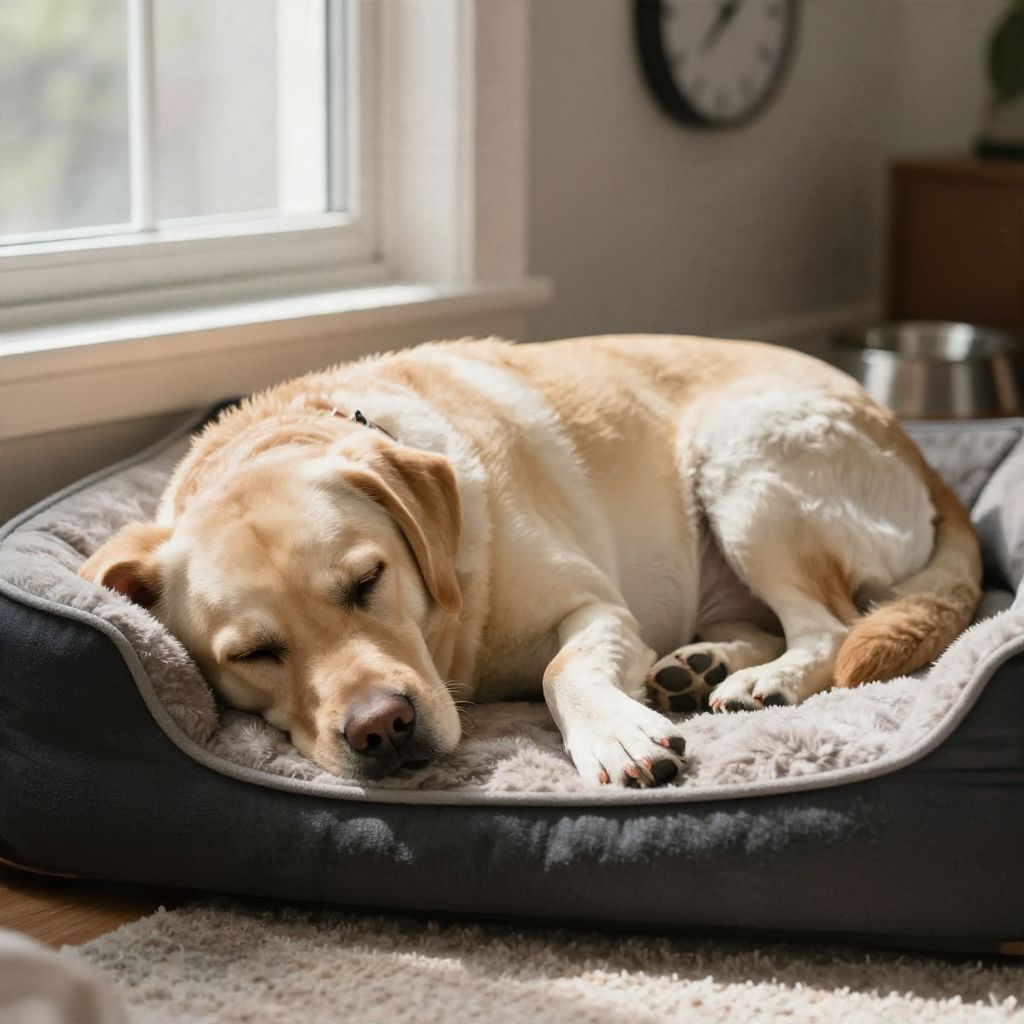
If you’re wondering how many hours a day does a dog sleep, the short answer is: most adult dogs sleep about 12 to 14 hours a day. Puppies, seniors, and less active dogs often sleep more, while highly active dogs may sleep a bit less.
Normal sleep varies with age, breed, health, routine, and activity level. A change in sleep can be harmless, but it can also signal pain, illness, stress, or boredom, so it helps to know what is typical for your dog.
How many hours a day does a dog sleep?
Most healthy adult dogs sleep about 12 to 14 hours in a 24-hour period, usually in several naps plus overnight sleep. Puppies may sleep 18 to 20 hours, and senior dogs often sleep more than younger adults. If your dog’s sleep changes suddenly, check with a veterinarian.
What affects how much a dog sleeps?
There is no single perfect number for every dog. Sleep needs depend on several factors, and the same dog may sleep more on quiet days and less on busy ones.
- Age: Puppies and older dogs usually need more rest.
- Activity level: Dogs that exercise, train, or play more may rest more deeply afterward.
- Health: Pain, infection, heart disease, hormone problems, and other illnesses can change sleep patterns.
- Temperament: Some dogs are naturally more relaxed, while others stay alert and nap less.
- Routine and environment: A noisy, stressful, or unpredictable home can reduce quality sleep.
- Diet and feeding schedule: Hunger, digestive upset, or poor nutrition can affect rest.
How much sleep do puppies need?
Puppies often sleep far more than adult dogs because growing bodies and brains need a lot of recovery time. Long naps are normal, especially after play, training, and meals.
It is common for puppies to cycle between bursts of energy and sudden deep sleep. That does not usually mean something is wrong.
- Very young puppies may sleep most of the day.
- Sleep helps support growth, learning, and immune function.
- Overtired puppies can become bitey, frantic, or extra hard to settle.
If you want more puppy-specific guidance, it can help to read about how long puppies sleep and how to build a healthy routine.
How much sleep do adult dogs need?
Most adult dogs settle into a pattern of sleeping overnight and napping during the day. Many will sleep more if they live in a calm home or if their exercise is spread out through the day.
Adult dogs that seem to “sleep all day” may still be normal, especially if they are relaxed, getting enough exercise, and waking easily for meals, walks, and interaction.
Typical signs your adult dog is sleeping normally
- They wake up fairly easily.
- They are interested in food, walks, and family interaction.
- Their sleep pattern is fairly consistent.
- They can rest after activity without seeming distressed.
Do senior dogs sleep more?
Yes, many older dogs sleep more than they did when younger. Aging can bring lower energy, stiffer joints, and lighter activity, all of which can increase rest time.
That said, a senior dog that suddenly becomes much sleepier, confused, restless at night, or reluctant to move should be checked by a veterinarian. Age can explain some changes, but it should not be used to dismiss new symptoms.
When is a dog sleeping too much?
Sleeping a lot is not automatically a problem, but a sudden or major increase in sleep deserves attention. The key question is whether the change is new and whether your dog seems otherwise normal.
Contact your veterinarian if your dog is sleeping more and also shows any of the following:
- Low appetite or refusing food
- Vomiting or diarrhea
- Limping, stiffness, or trouble getting up
- Weakness, wobbliness, or collapse
- Hiding, irritability, or unusual behavior
- Weight gain or weight loss
- Persistent coughing, panting, or breathing changes
- Confusion, disorientation, or nighttime restlessness
Emergency warning signs
Seek urgent veterinary care right away if your dog is hard to wake, collapses, has trouble breathing, has pale or blue gums, has seizures, or seems severely painful. These are not normal sleep changes.
Why some dogs sleep more than others
Some dogs simply have lower activity needs and spend more time resting. Others sleep more because they are under-stimulated, recovering from exercise, or living in a calm environment with little chaos.
Breed can influence energy level, but it does not determine sleep exactly. For example, a younger, active dog of any breed may nap less than an older, less active dog. Individual personality matters a great deal.
Common reasons a dog may sleep more
- They are a puppy or senior
- They had a busy day with exercise or training
- The home is quiet and comfortable
- They are bored and not getting enough engagement
- They are recovering from illness or surgery
- They are in pain or not feeling well
Why some dogs sleep less or seem restless
Dogs that sleep poorly may be uncomfortable, anxious, under-exercised, or dealing with an environmental issue such as noise or temperature. Restlessness can also happen with medical problems.
Watch for pacing, frequent waking, trouble settling, or a dog that seems tired but cannot relax. If this is new or persistent, a veterinary exam is a good next step.
Possible causes of poor sleep
- Too much noise or light at night
- Inconsistent schedule
- Late-night excitement or rough play
- Discomfort from arthritis or injury
- Itching, coughing, or digestive upset
- Anxiety or separation-related stress
How to support healthy sleep in your dog
A good routine can help your dog rest well without needing to force sleep. The goal is a predictable day with enough activity, comfort, and calm.
- Give regular exercise. Match activity to your dog’s age and fitness level.
- Use mental enrichment. Sniffing games, training, puzzle feeders, and chew time can reduce restlessness.
- Keep a steady schedule. Regular meals, walks, and bedtime help many dogs settle.
- Create a quiet sleep space. A comfortable bed in a low-traffic area can improve rest.
- Watch for discomfort. If your dog avoids lying down or changes positions often, pain may be involved.
- Track changes. Note sleep, appetite, bathroom habits, and energy if you are concerned.
Common mistakes owners make about dog sleep
It is easy to misread normal dog sleep as laziness or, on the other hand, to assume every sleepy dog is fine. A balanced view helps you notice real changes sooner.
- Assuming all extra sleep is normal. Sudden changes can be a health clue.
- Waking a dog repeatedly. Dogs need rest, especially puppies and seniors.
- Not providing enough activity. Some dogs nap more when they are under-stimulated.
- Ignoring pain signs. Stiffness, limping, or trouble rising should not be blamed on age alone.
- Comparing your dog to another dog. Sleep needs vary widely.
When to talk to a veterinarian
It is wise to contact a veterinarian if you notice a lasting sleep change, especially if it comes with other symptoms. Your vet can help sort out normal aging, routine changes, stress, and medical causes.
Schedule an appointment soon if your dog is sleeping much more or much less than usual for more than a few days, even if the signs seem mild. Early evaluation can make treatment easier if there is an underlying issue.
The bottom line
So, how many hours a day does a dog sleep? Most adult dogs sleep about 12 to 14 hours, while puppies and senior dogs often sleep more. What matters most is your dog’s usual pattern and whether any change is sudden, persistent, or paired with other symptoms.
If you are unsure whether your dog’s sleep is normal, keep a simple log for a few days and talk with your veterinarian. For more related reading, you may also find it helpful to learn why dogs sleep so much.