
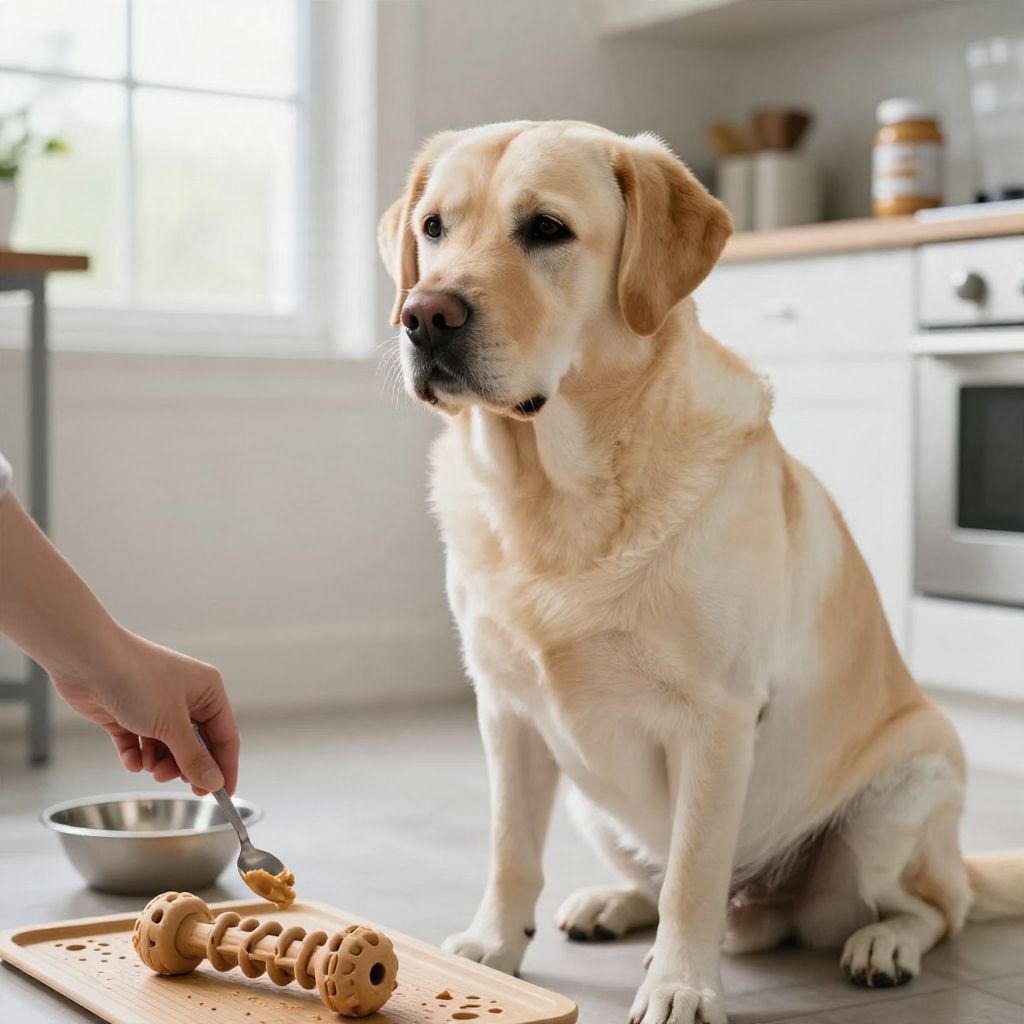
If you’ve ever seen your dog go wild for peanut butter, you’re not alone. Many dogs seem to love it, but the reason is usually a mix of smell, taste, texture, and learned associations.
Peanut butter can be a tasty treat for some dogs, but it should be given carefully. The type of peanut butter, the amount, and your dog’s health all matter, especially if your dog has allergies, pancreatitis risk, or needs weight control.
Why do dogs like peanut butter?
Dogs like peanut butter because it smells strong, tastes rich, and has a smooth, sticky texture that many dogs find rewarding. Some dogs also learn to associate peanut butter with treats, toys, or positive attention, so their excitement grows over time.
What makes peanut butter so appealing to dogs?
Several factors can explain why peanut butter is so popular with dogs. Individual preference matters, but these are the most common reasons.
1. Strong aroma
Dogs rely heavily on smell. Peanut butter has a powerful scent that can be especially interesting to them, even before they taste it.
2. Rich flavor and fat content
Many dogs are drawn to foods that taste rich and satisfying. Peanut butter’s fat and protein content can make it feel more rewarding than plain kibble or low-flavor treats.
3. Sticky texture
The thick, sticky texture can keep a dog engaged longer. That is one reason peanut butter is often used in puzzle toys, lick mats, and training distractions.
4. Learned excitement
If peanut butter appears before grooming, crate time, nail trims, or medication, your dog may start to expect something good. Over time, the food itself can become a cue for a positive event.
Is it normal for dogs to love peanut butter?
Yes, it is very normal. Many dogs enjoy peanut butter, but not every dog will. Preferences vary by age, breed tendencies, early food experiences, and individual temperament. A dog that ignores peanut butter is not unusual.
Is peanut butter safe for dogs?
Peanut butter can be safe for many dogs in small amounts if it does not contain harmful ingredients. The biggest concern is xylitol, an artificial sweetener that is dangerous for dogs. You should also consider calories, salt, and your dog’s medical history.
Check the label carefully
- Avoid xylitol or birch sugar entirely.
- Choose peanut butter with simple ingredients when possible.
- Watch for added sugar, excess salt, or other sweeteners.
- Use peanut butter as an occasional treat, not a meal replacement.
When peanut butter may not be a good choice
- Your dog is overweight or gains weight easily.
- Your dog has a history of pancreatitis or a sensitive stomach.
- Your dog has food allergies or suspected food intolerance.
- Your dog needs a very controlled diet for a medical reason.
What to do if your dog is obsessed with peanut butter
If your dog gets overly excited about peanut butter, that is usually not a problem by itself. Still, it helps to use it intentionally so it stays safe and useful.
- Offer only small amounts.
- Use it for training, enrichment, or medication support.
- Choose peanut butter without xylitol or unnecessary additives.
- Limit frequency if your dog is prone to weight gain.
- Keep jars and peanut butter-filled toys out of reach when not in use.
Use it as a training aid, not a habit
Peanut butter can help with crate training, cooperative care, or giving a dog a positive distraction during grooming. The goal is to make the experience easier, not to rely on peanut butter for every routine.
How much peanut butter can dogs have?
There is no universal amount that fits every dog. Portion size depends on your dog’s size, daily calorie needs, and overall health. In general, peanut butter should stay as a small treat rather than a regular part of the diet.
A tiny smear on a lick mat or inside a toy may be enough for many dogs. Larger dogs may tolerate a bit more than small dogs, but even then, moderation matters because peanut butter is calorie-dense.
Can puppies have peanut butter?
Yes, puppies can sometimes have peanut butter in small amounts if it is safe and plain. Because puppies are smaller and more sensitive to dietary changes, keep portions very limited and avoid anything with xylitol or extra sugar.
For puppies, peanut butter is best used sparingly for positive experiences, such as crate training or short handling sessions. It should not replace a balanced puppy diet.
Can senior dogs have peanut butter?
Many senior dogs can enjoy peanut butter if they are healthy enough for it. However, older dogs may be more likely to have weight issues, dental problems, or medical conditions that make rich treats less appropriate.
If your senior dog has a history of digestive upset, pancreatitis, or a special diet, ask your veterinarian whether peanut butter is a good option.
When peanut butter behavior may signal a problem
Most of the time, liking peanut butter is just a preference. But if your dog suddenly becomes extremely food-focused or starts acting unusually around food, it is worth paying attention.
Call your veterinarian if you notice:
- Vomiting or diarrhea after peanut butter
- Itching, facial swelling, hives, or other allergy signs
- Sudden loss of appetite for normal food but not treats
- Repeated lip licking, drooling, or nausea after eating
- Abdominal pain, restlessness, or a hunched posture
Seek urgent veterinary care if your dog may have eaten peanut butter containing xylitol, or if your dog has severe vomiting, collapse, weakness, trouble breathing, swelling, or signs of anaphylaxis.
What if your dog doesn’t like peanut butter?
That is perfectly normal. Some dogs dislike the taste, texture, or smell. Others may simply prefer different treats, such as plain cooked meat, commercial training treats, or dog-safe fruits and vegetables.
If your dog refuses peanut butter, do not force it. A different reward may work better for training and enrichment.
Common mistakes to avoid
- Giving peanut butter with xylitol or unknown sweeteners
- Using too much and adding unnecessary calories
- Assuming all “natural” peanut butter is automatically safe
- Using peanut butter to mask pills without checking whether your dog can swallow the treat safely
- Ignoring vomiting, diarrhea, or swelling after a new food
Safer ways to use peanut butter
When used thoughtfully, peanut butter can be a helpful tool. Keep the experience controlled and predictable so it supports your dog’s health rather than creating problems.
- Spread a thin layer on a lick mat for short enrichment sessions.
- Use a tiny amount inside a puzzle toy.
- Pair it with calm handling to build positive associations.
- Store it securely so your dog cannot chew the container or overeat it.
When to ask your veterinarian for advice
Check with your veterinarian if you are unsure whether peanut butter fits your dog’s diet. This is especially important if your dog has a medical condition, is on a prescription diet, or has had digestive problems after rich foods.
If you want to use peanut butter for training, your veterinarian or a qualified trainer can help you choose safer alternatives if needed.
In short, dogs like peanut butter because it smells strong, tastes rich, and feels rewarding to eat. Use it only as a small, safe treat, avoid xylitol, and ask your veterinarian if your dog has any health concerns.
If you want to learn more about canine food preferences, you may also find can dogs taste sweet? and why do dogs lick their lips? helpful.