
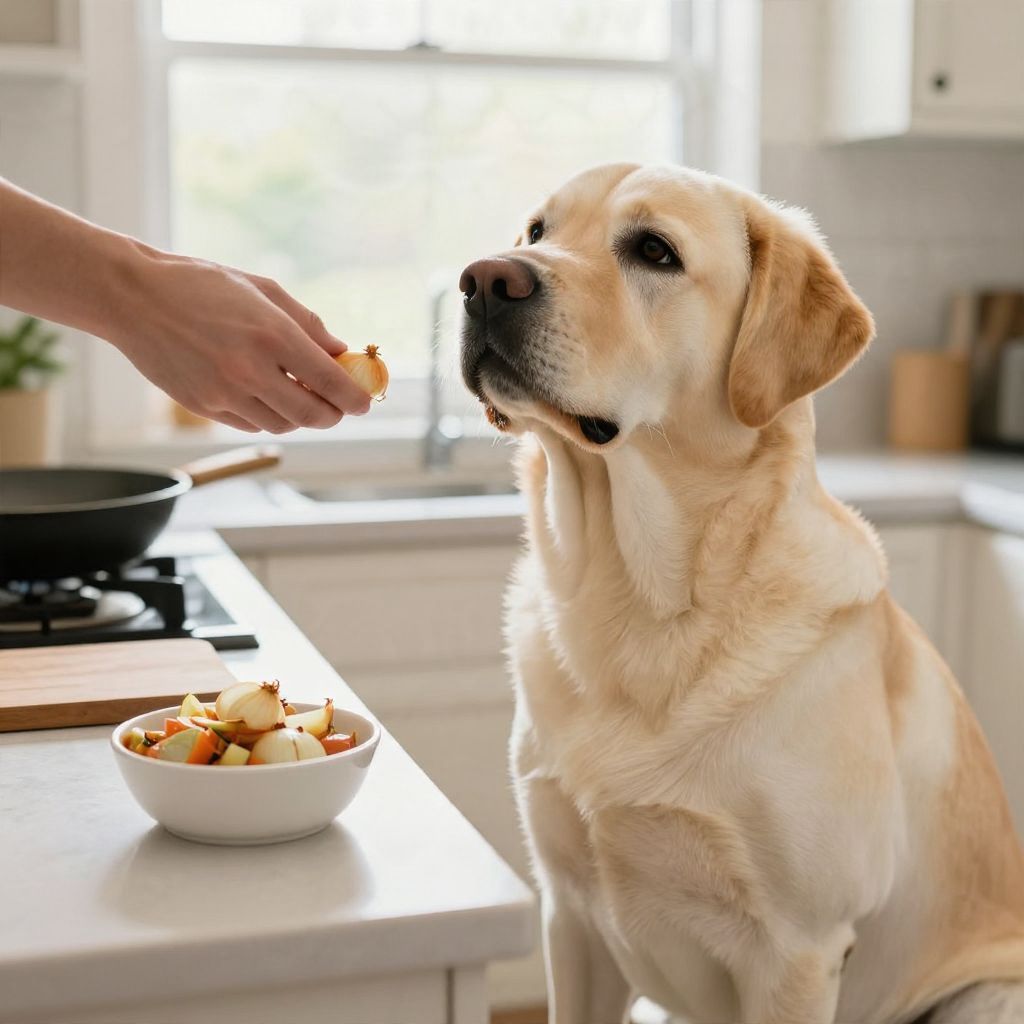
Can dogs eat onions cooked? No—cooked onions are still unsafe for dogs and can damage red blood cells, leading to anemia. The risk applies to onions in soups, casseroles, gravies, and leftovers, not just raw onion.
If your dog ate onion, the right response depends on how much, how your dog feels, and whether the onion was cooked, powdered, or mixed into a meal. When in doubt, call your veterinarian promptly.
Can Dogs Eat Onions Cooked?
No. Cooked onions are still toxic to dogs and should be avoided in any form. Heating, sautéing, roasting, boiling, or baking does not make onions safe, and onion powder or onion-heavy seasonings can be just as concerning.
Why Onions Are Dangerous for Dogs
Onions contain compounds that can harm a dog’s red blood cells. When enough red blood cells are damaged, the body cannot carry oxygen normally, which can lead to anemia and other serious problems.
This risk is not limited to one onion type. White, yellow, red, sweet, green onions, scallions, and chives can all be a problem, and concentrated forms such as onion powder may be especially risky in small amounts.
What Happens If a Dog Eats Cooked Onion?
Some dogs show no immediate signs, while others develop symptoms later. The timing and severity can vary based on the dog’s size, overall health, how much was eaten, and whether the onion was part of a concentrated dish or seasoning.
Common warning signs
- Vomiting or diarrhea
- Reduced appetite
- Lethargy or weakness
- Pale gums
- Fast breathing or a rapid heart rate
- Dark or reddish urine
- Collapse or trouble standing
Seek urgent veterinary care immediately if your dog has difficulty breathing, collapses, seems extremely weak, or has pale gums and dark urine. These can be signs of a serious emergency.
Does Cooking Make Onions Safe?
No. Cooking changes the texture and flavor, but it does not remove the toxic compounds that make onions unsafe for dogs. That means onion soup, onion rings, stir-fries, meatloaf, casseroles, and many sauces can all be risky if they contain onion.
Even if the onion pieces are small or blended into the dish, the danger can still be present. Seasonings and broths are worth checking carefully because onion may be hidden in ingredients you would not expect.
How Much Cooked Onion Is Too Much?
There is no safe amount to rely on for every dog, and you should not try to guess based on appearance alone. A small dog may be affected by less than a larger dog, but individual sensitivity varies, and repeated small exposures can also matter.
Because thresholds are not something you can safely estimate at home, it is best to treat any onion ingestion as a reason to contact a veterinarian or pet poison helpline for guidance.
What to Do If Your Dog Ate Cooked Onion
- Stop access to the food so your dog cannot eat more.
- Check the ingredients if the onion was part of a mixed dish, sauce, or seasoning.
- Call your veterinarian and explain what was eaten, how much, and when.
- Watch for symptoms over the next hours to days, even if your dog seems fine now.
- Follow professional advice about whether your dog needs an exam, monitoring, or treatment.
Do not try home remedies or wait for symptoms to “see what happens” if you know your dog ate a meaningful amount. Early veterinary advice is the safest approach.
Why Some Dogs Seem Fine at First
Onion toxicity does not always cause immediate illness. A dog may act normal before red blood cell damage becomes obvious, which is why a lack of early symptoms does not mean the food was harmless.
This delayed pattern is one reason onion exposure deserves attention even when the amount seems small or your dog only stole a bite from the table.
Are Certain Dogs More at Risk?
Any dog can be affected, but the practical risk can be higher for smaller dogs because they may receive a larger dose relative to body size. Puppies, senior dogs, and dogs with existing illness may also have less reserve if they become anemic.
Individual factors matter. A dog with a history of anemia, immune-mediated disease, or other medical concerns may need especially prompt veterinary guidance after any onion exposure.
Hidden Onion Sources to Watch For
Onion is often hidden in foods that look harmless. Check labels and ingredients carefully, especially for leftovers and prepared human foods.
- Soups and stews
- Gravy and sauces
- Pizza toppings
- Seasoned meats
- Stuffing and casseroles
- Baby food or broths with onion powder
- Snack foods or seasoning blends
When reading labels, remember that onion powder, dehydrated onion, and related seasonings can still be a concern.
What About Small Taste Tests or Table Scraps?
It is best not to offer onion “just a little” as a taste test. Dogs do not need onion for nutrition, and table scraps make it harder to control ingredients and portion sizes.
If your dog is used to sharing food, switch to dog-safe treats and keep human meals out of reach. Management is often easier than trying to correct the habit later.
Safe Alternatives to Share Instead
If you want to treat your dog, choose simple foods that are known to be dog-safe and served plain. These should still be given in moderation and should not replace a balanced dog food.
- Small pieces of plain cooked chicken or turkey
- Plain cooked pumpkin
- Carrot slices
- Green beans
- Apple slices without seeds
- Blueberries
Introduce any new food slowly, especially if your dog has a sensitive stomach or a history of food intolerance.
How Veterinarians May Handle Onion Exposure
Your veterinarian may ask what type of onion was eaten, how it was prepared, and whether your dog has shown any symptoms. They may recommend observation, an exam, or testing if the exposure was significant or if your dog is already unwell.
Do not delay calling if your dog is vomiting, weak, pale, or breathing fast. Those signs can indicate a more serious problem that needs prompt care.
Preventing Onion Accidents at Home
- Keep onions, garlic, and seasoning mixes stored securely.
- Do not leave cooking scraps within reach.
- Use covered trash cans.
- Teach family members and guests not to feed table food.
- Check ingredient labels on leftovers before sharing anything with your dog.
Prevention matters because many onion exposures happen quickly: a dropped slice, an unattended plate, or a dog reaching the counter can be enough.
When You Should Call the Vet Right Away
Contact a veterinarian promptly if your dog ate cooked onion and any of the following apply:
- Your dog is small, young, elderly, or has a medical condition
- The onion was part of a heavily seasoned dish or onion powder was involved
- You are unsure how much was eaten
- Your dog is showing vomiting, weakness, pale gums, or dark urine
- Your dog ate onion more than once or over a period of time
If severe symptoms are present, treat it as an emergency rather than waiting for a routine appointment.
Bottom Line
Can dogs eat onions cooked? No—cooked onions are still unsafe and can cause serious illness. If your dog ate onion, contact your veterinarian quickly, watch for warning signs, and keep onion-containing foods out of reach going forward.
If you want to learn more, see why onions are bad for dogs and whether dogs can have cooked onions.