
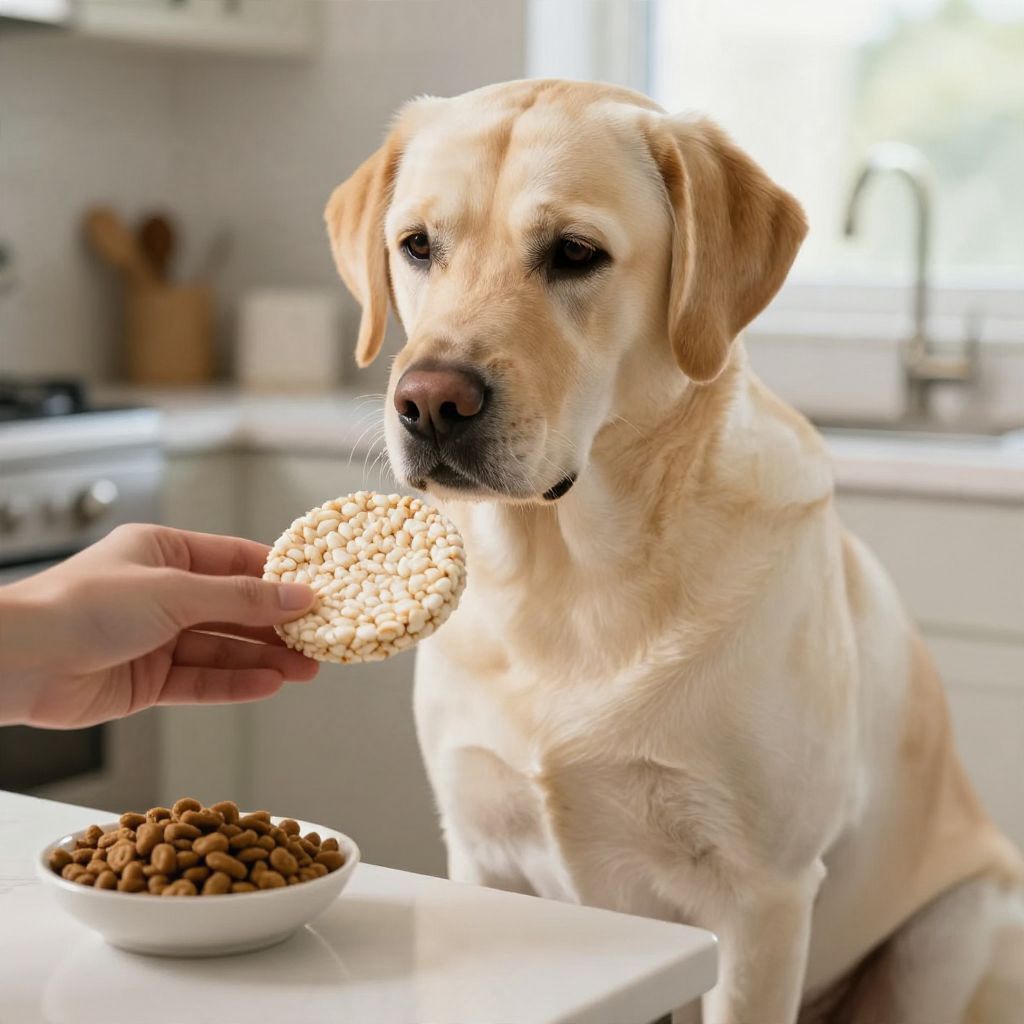
Can dogs have rice cakes? Yes, plain rice cakes are usually safe for dogs in small amounts, but they are not a nutritious snack and can cause problems if they contain salt, flavorings, chocolate, sweeteners, or other toppings.
If you want to share one, keep it plain, offer only a little, and watch for digestive upset. Dogs with diabetes, weight concerns, or sensitive stomachs may need extra caution, so your veterinarian’s advice matters.
Can dogs have rice cakes?
Yes, dogs can usually eat plain rice cakes in moderation. They are not toxic by themselves, but they offer little nutrition and can become a problem if they are flavored, salted, coated, or fed too often. Treat rice cakes as an occasional snack, not a regular part of your dog’s diet.
Are rice cakes safe for dogs?
Plain rice cakes made from simple puffed rice are generally low-risk for most healthy dogs. The main concern is not the rice itself, but what is added to it and how much your dog eats.
What makes a rice cake dog-safe?
- Plain ingredients with no seasoning, sugar, or artificial flavoring
- No chocolate, raisins, xylitol, or nut-based coatings
- Small portions appropriate for your dog’s size
- Simple texture that your dog can chew without choking
What makes rice cakes risky?
- Salted or flavored varieties
- Sweetened or frosted rice cakes
- Rice cakes with onion, garlic, spices, or seasoning blends
- Toppings such as peanut butter that may contain xylitol
- Large pieces that could be swallowed quickly
Potential risks of feeding rice cakes to dogs
Even when a rice cake is plain, it can still cause trouble if your dog eats too much. Some dogs tolerate it well, while others develop stomach upset or gain weight more easily.
Digestive upset
Too much dry, starchy food can lead to vomiting, loose stool, or gas in some dogs. Dogs with sensitive digestion may react even to small amounts.
Choking or gulping
Rice cakes can break into crumbly pieces, and eager dogs may swallow them quickly. This is a bigger concern for small dogs, brachycephalic breeds with short noses, and dogs that tend to inhale food.
Extra calories without much nutrition
Rice cakes are mostly carbohydrate and air. They do not provide meaningful protein, healthy fat, or the vitamins and minerals dogs need from a balanced diet.
Hidden ingredients
Many packaged rice cakes contain salt, sugar, seasoning, or flavor coatings. Some human snack products also include ingredients that are unsafe for dogs, so reading the label matters.
How much rice cake can a dog have?
There is no universal amount that is right for every dog. Size, activity level, age, health, and overall diet all matter. For most dogs, a few small bites of plain rice cake are enough.
Use these practical guidelines
- Offer a tiny piece first, especially if your dog has never had rice cake before.
- Wait and watch for stomach upset over the next day.
- Keep treats, including rice cakes, to a small part of daily calories.
- Reduce or avoid rice cakes if your dog is already getting many treats.
If your dog has a medical condition or is on a special diet, ask your veterinarian before sharing human snacks. What seems harmless for one dog may not be a good fit for another.
When rice cakes may not be a good choice
Some dogs should avoid rice cakes or only have them if your vet says they are appropriate. The issue is usually not allergy alone, but how the snack fits into the dog’s health needs.
Be extra cautious if your dog has:
- Diabetes or blood sugar regulation concerns
- Overweight or obesity
- Pancreatitis history or a sensitive digestive tract
- Food allergies or elimination diet instructions
- Kidney, heart, or other conditions that require sodium control
Puppies can usually have a tiny taste of plain rice cake, but they have smaller stomachs and can be more prone to digestive upset. Senior dogs may also need stricter portion control if they are less active or managing chronic disease.
How to safely feed rice cakes to your dog
If you decide to share rice cake, keep it simple and controlled. The safest approach is to offer a plain, unsalted version in a small amount and observe how your dog handles it.
Safe-feeding steps
- Choose a plain rice cake with no seasoning or sweet coating.
- Break it into small pieces instead of giving a whole cake.
- Offer it only as an occasional treat.
- Provide fresh water, especially if the snack is dry.
- Stop if you notice itching, vomiting, diarrhea, or unusual behavior.
Good times to use a small piece
- As a rare training reward when you need a low-mess snack
- As a tiny topper for a food puzzle, if your dog tolerates it well
- As an occasional shared snack, not a daily habit
What about flavored rice cakes?
Flavored rice cakes are much less suitable for dogs. Many contain added salt, sugar, spices, dairy powders, onion or garlic seasonings, or sweeteners that do not belong in your dog’s bowl.
Skip rice cakes with these ingredients
- Garlic or onion powder
- Chocolate or cocoa
- Artificial sweeteners, especially xylitol
- Large amounts of salt
- Spicy seasonings or hot sauce
- Chocolate drizzle, yogurt coating, or candy toppings
If you are unsure about the label, do not share it. A plain dog treat or a small piece of a dog-safe fruit or vegetable is usually a better option than a processed human snack.
Signs your dog may not have tolerated rice cake well
Most dogs that react poorly will show mild digestive signs first. These can happen within hours, though timing varies by dog and by how much was eaten.
Watch for:
- Vomiting
- Diarrhea or soft stool
- Excessive gas
- Bloating or abdominal discomfort
- Refusing food
- Itching, facial swelling, or hives
Get urgent veterinary help if your dog has trouble breathing, collapses, has repeated vomiting, a swollen face, severe lethargy, a distended abdomen, or seems unable to swallow. These can be emergency signs, not simple snack intolerance.
Safer snack alternatives to rice cakes
If you want a light treat, there are often better choices than rice cakes. The best option depends on your dog’s size, health, and what your veterinarian recommends.
- Small pieces of plain cooked pumpkin
- Plain cooked sweet potato in tiny amounts
- Dog-safe commercial treats made for your dog’s size
- Small pieces of plain cooked chicken, if appropriate for your dog’s diet
- Crunchy vegetables such as cucumber or carrot, if your dog tolerates them
Even “healthy” foods should stay within your dog’s calorie needs. Treats should support training and enrichment, not replace balanced meals.
Common mistakes dog owners make with rice cakes
Most problems come from assuming a human snack is automatically safe. A little planning can prevent upset stomachs and accidental exposure to harmful ingredients.
- Giving a whole rice cake to a small dog
- Choosing flavored or salted varieties
- Using rice cakes too often as a routine treat
- Adding peanut butter without checking the label for xylitol
- Ignoring stomach upset after the first taste
When to call your veterinarian
Contact your veterinarian if your dog has a chronic health condition, is on a prescription diet, or develops symptoms after eating rice cake. Your vet can help you decide whether the snack is appropriate for your dog’s individual needs.
Call promptly if your dog has ongoing vomiting, diarrhea lasting more than a day, repeated sneezing or coughing after eating, or any sign of pain, swelling, or breathing difficulty. If you suspect a harmful ingredient was eaten, do not wait for symptoms to become severe.
Bottom line
Plain rice cakes are usually safe for dogs in small amounts, but they are not a necessary or especially nutritious treat. Keep them plain, feed only a little, and avoid flavored or salted versions. If your dog has health issues or reacts badly, choose a better snack and ask your veterinarian.
If you want more guidance on this topic, you can also read can dogs eat rice cakes for a closer look at ingredients, portion ideas, and safety tips.